lunes, 1 de junio de 2026

Juliet and her Romeo: Nadine Sierra and Javier Camarena delight the Madrid audience with the Gounod's opera.


Madrid, May 30, 2026.

This season dedicated to William Shakespeare at the Teatro Real is reaching its conclusion, having offered, among other things, a delightful version of Benjamin Britten's A Midsummer Night's Dream last March, and Verdi's Otello in September. Now it's the turn of a classic opera, highly regarded by audiences and finely presented: Roméo et Juliette, by Charles Gounod, is coming to Madrid until mid-June. French opera has also provided examples of the fascination Shakespeare exerted: the main examples being this Gounod opera and Ambroise Thomas's Hamlet. The last time this opera was seen in the capital was in 2014 in a concert version with the legendary Roberto Alagna and Sonya Yoncheva, conducted by the legendary Michel Plasson. I almost went, but the opportunity didn't arise in the end, missing a unique chance to see the great French tenor in my city. However, I did have the opportunity to see this opera live once: in the spring of 2010, the much-missed Ópera Moncloa company performed it in the auditorium of the Complutense University's Faculty of Medicine, and later at the Moncloa Cultural Center. I don't recall being particularly impressed, except for the most famous aria, "Je veux vivre dans ce rêve," but I recognize that it is a charming work. And I have seen the great Juan Diego Flórez, a remarkable performer of this opera, singing the tenor aria "Ah, lève-toi soleil!" in several of his concerts. However, the Teatro Real didn't stage completely this opera since the 1910s!


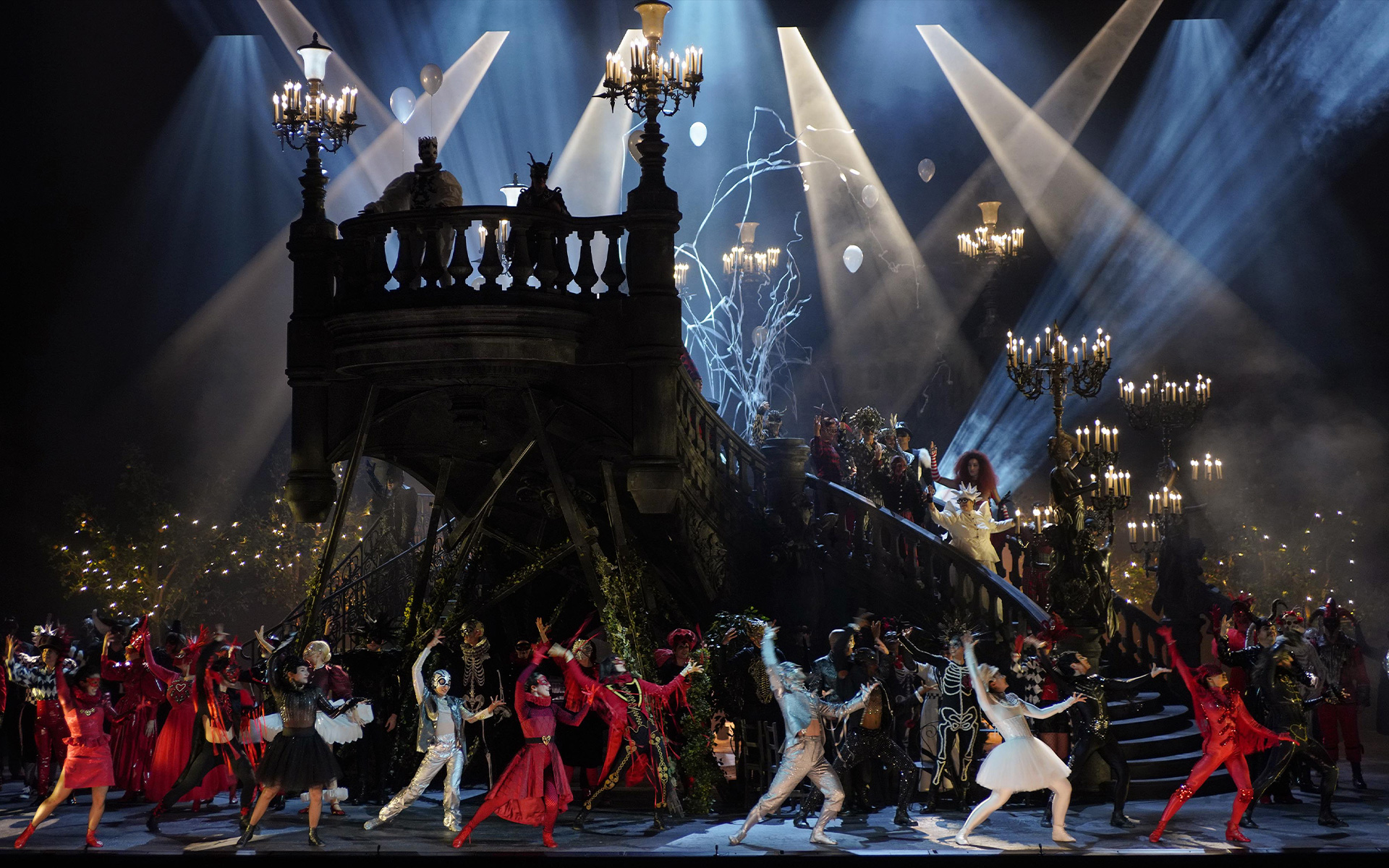
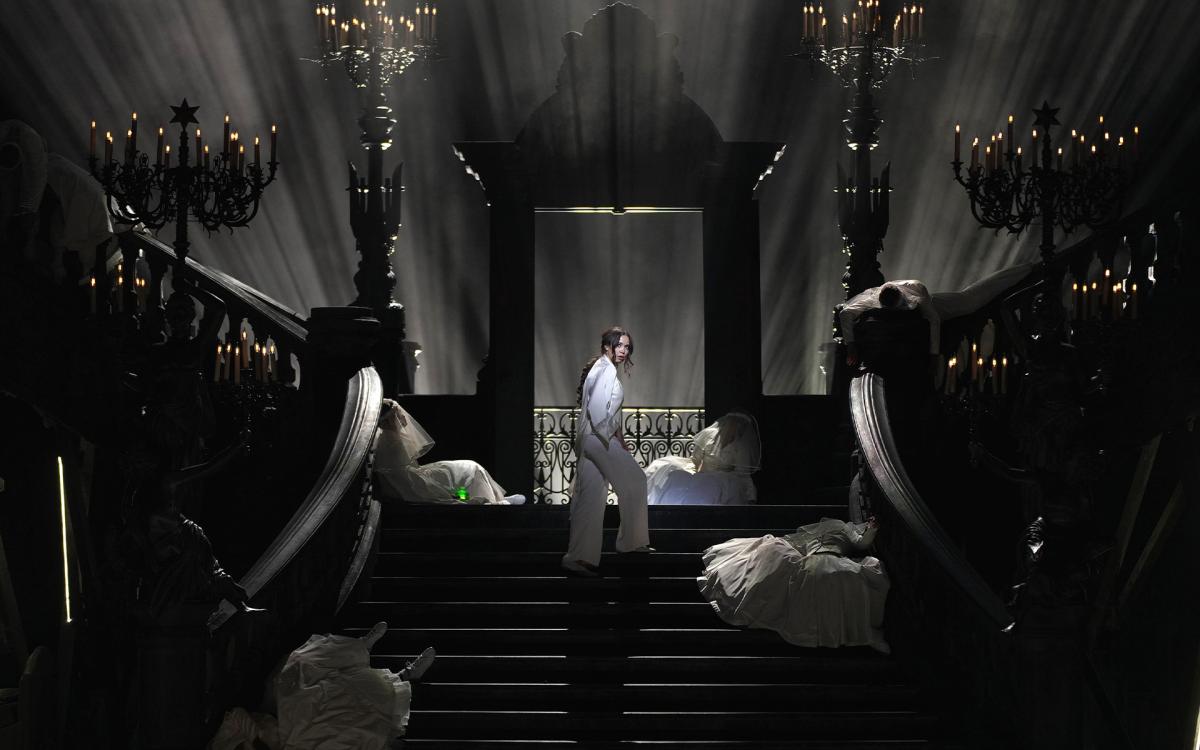
Now it returns to the Teatro Real in a spectacular staging from the Paris Opera, directed by Thomas Jolly, dominated by an enormous and ever-present staircase, a replica of the one in the palatial Opéra Garnier in the French capital. It is also accompanied by a light show by Antoine Travert , which was booed on opening night because the flashing lights reflected off the upper levels of the theater for an extended period. It is claimed that this has been fixed. Another novelty is the choreography by Josepha Madoki , which employs the urban dance style known as waacking, creating a modern contrast to this classic story. The enormous, baroque staircase, crowned by a big gate at its top, is decorated with chandeliers. It is a revolving stage, and as mentioned before, it is present in every scene of the opera. The most intimate scenes, such as the wedding in Act III, the lovers' duet at the beginning of Act IV, and the tragic ending where Juliet lies and then the lovers fall to their deaths, take place in a boat located beneath the platform's pillars. The production has a classic feel, reinforced by Sylvette Dequest's costumes , for the first act. It then becomes more modern, but in no way jarring. As for the lighting, it becomes problematic in the festive first act, as the light show involves the entire auditorium. The lights in the third-tier boxes cast a swirling glow that circled the entire hall, and then the ball lights did the same. It wasn't exactly comfortable, despite its visual impact.

The beautiful music was conducted by Carlo Rizzi, leading the Orchestra of the Teatro Real . The maestro's conducting began a bit too loud, but gradually balanced out, achieving some beautiful orchestral introductions in Acts Two through Five. Even so, at times it overpowered the singers. The  Teatro Real Choir, under the direction of José Luis Basso, once again demonstrated its excellent level. This chorus is capable of transitioning from powerful vigor to soft, breathtaking pianissimos, as its male members successfully did (something they are known for). 


Two casts, including two Romeos and three Juliets, have been called for these performances. The first is the most anticipated, featuring two highly acclaimed artists, favorites both in the capital and aworldwide: American soprano Nadine Sierra and Mexican tenor Javier Camarena. Both singers have delighted Madrid audiences for years. Camarena, with performances in La Fille du Régiment, L'Elisir d'Amore, Lucia di Lammermoor, La Favorite, and I Puritani, has brought Madrid audiences to a state of ecstasy, requesting encores for the first three. Sierra enchanted Madrid with her successful 2022 production of La Sonnambula, and again in 2025 with a Traviata in which she sang an unforgettable third act, on both occasions alongside Xabier Anduaga. 

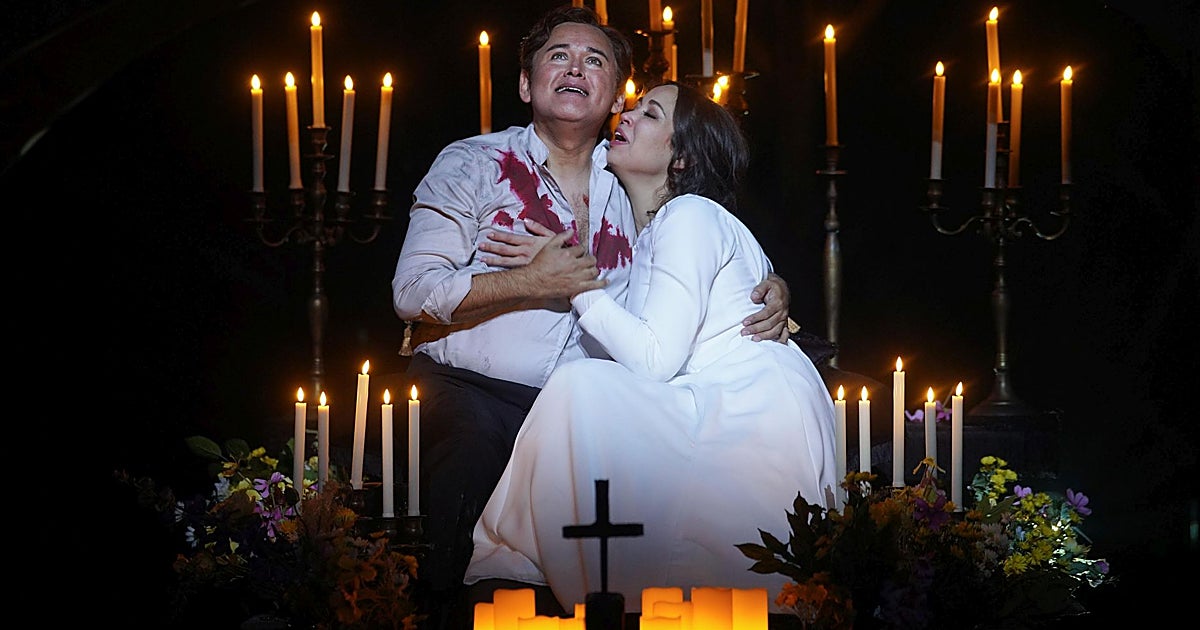
In this performance, Sierra once again stole the show, displaying her full vocal prowess from the very beginning. Her breathtaking high notes, her dazzling coloratura, her ability to sustain notes, and her capacity to be heard throughout the theater were already present in the famous aria "Je veux vivre dans ce rêve," but these qualities not only remained but improved as the opera progressed. The highlight of the performance was undoubtedly the great poison scene and aria in Act IV, where she was absolutely magnificent, and the ovation afterwards was so outstanding that I even thought they would ask for an encore. 

Camarena, for his part, improved throughout the performance. His rendition of the aria "Ah, lève-toi soleil" from the second act was gentle and very sensitive. From the third act onward, and specifically from the wedding scene, his voice reached its full potential, and the vigor he displayed from then on remained until the end of the performance. In the scene that closes the third act and ends with Tebaldo's death, his performance stood out for its dramatic intensity. He even finished with a powerful high note, which was unfortunately drowned out by the orchestra and chorus, but still perceivable. Another of the virtues of this voice is his ability to sing softly and exquisitely, as he did at the end of the second act. The chemistry with Sierra is evident, and thus in the duet of the fourth act, both acting and vocally, they conveyed a sweetly enamored couple. I would even say that in their scenes together, thanks to Sierra, Camarena shone.


As always, Roberto Tagliavini, the bass, is impressive as Frère Laurent, with his dark, fleshy and powerful voice, which conveys authority on stage.

In the rest of the large cast, we find the veteran Laurent Naouri as Capulet, Juliet's father, whose voice is quite worn, but still audible, and whose stage presence remains undiminished. The equally veteran Sonia Ganassi played the nurse Gertrude, also with a rather mature voice, though her lower register helps to portray the matronly nature of the character. Heloïse Mas stole the show in her brief scene thanks to her delightful rendition of Stephano's aria, sung with a deliciously rich voice. David Lagares also stood out with his imposing bass voice in his brief scenes as the Duke. Benjamin Appl and Maciej Kwaśnikowski were notable as Mercutio and Tybalt, respectively.


When an opera is well served, even with its flaws, enjoyment is always guaranteed. That was the feeling of the audience at the Teatro Real, which almost filled the hall, and confirmed Nadine Sierra as one of its favorite divas, rewarding her with a thunderous ovation. Performances continue until June 13, the last of which is to be telecasted to cultural centers, and on the MyOperaPlayer platform. I don't want to conclude my review without considering myself fortunate to have had the opportunity to see two stars, Camarena and Sierra, perform live at the height of their careers. This isn't the case with all major singers: Netrebko and Kaufmann have visited us in their later years. And we still await a full opera with Lise Davidsen, Jonathan Tetelman, or Benjamin Bernheim. So let's celebrate our fortune, then.


My reviews are not professional and express only my opinions. As a non English native speaker I apologise for any mistake.

Most of the photographs are from the internet and belong to its authors. My use of them is only cultural. If someone is uncomfortable with their use, just notify it to me.

Any reproduction of my text requires my permission. 

Julieta y su Romeo: Nadine Sierra y Javier Camarena deleitan a Madrid con Gounod.


Madrid, 30 de mayo de 2026.

Esta temporada dedicada a William Shakespeare en el Teatro Real se acerca a su final, tras haber ofrecido, entre otras cosas, una encantadora versión de El Sueño de una Noche de Verano de Benjamin Britten el pasado marzo, y Otello en septiembre. Ahora es el turno de una ópera clásica, valorada por el público y presentada con los mejores mimbres: Romeo y Julieta, en la versión operística de Charles Gounod, viene a Madrid hasta mediados de junio. En la ópera francesa también se dieron ejemplos de la fascinación ejercida por Shakespeare: siendo los principales ejemplos esta ópera de Gounod, y el Hamlet de Ambroise Thomas. La última vez que esta ópera se vio en la capital, fue en 2014 en una versión en concierto con el mítico Roberto Alagna y Sonya Yoncheva, dirigidos por el mítico Michel Plasson. Un servidor a punto estuvo de ir, pero no se dio la oportunidad al final, dejando pasar una única oportunidad de ver al gran tenor francés en el regio escenario. Sin embargo, sí tuve oportunidad de ver esta ópera en vivo una vez: en la primavera de 2010, la añorada compañía Ópera Moncloa la interpretó en el auditorio de la Facultad de Medicina de la Universidad Complutense, y posteriormente en el Centro Cultural Moncloa. No recuerdo que salvo el aria más famosa "Je veux vivre dans ce reve", me impresionara demasiado, pero reconozco que es una obra encantadora. Y he visto al gran Juan Diego Flórez, notable intérprete de esta obra, interpretar el aria Ah, lève-toi soleil! de tenor en varios de sus conciertos.

Ahora viene al Teatro Real en una espectacular producción procedente de la Ópera de París, dirigida por Thomas Jolly, presidida por una enorme y omnipresente escalera que es una réplica de la que hay en la palaciega Ópera Garnier, en la capital francesa. Además viene acompañada de un espectáculo de luces a cargo de Antoine Travert, la cual el día del estreno ha sido abucheada debido a que las luces destellantes impactaban en las zonas altas del teatro durante largo tiempo. Se asegura que se ha arreglado. Otra de las novedades es la coreografía de Josépha Madoki, que emplea la danza urbana llamada waacking, en un contraste moderno para esta historia clásica. La enorme y barroca escalinata, presidida por un portón en su nivel superior, está decorada con candelabros. Es un escenario giratorio, y como se ha mencionado antes, está presente en todas las escenas de la obra. Las escenas más íntimas, como la boda en el tercer acto, el dúo de los amantes en el inicio del cuarto, o el trágico final donde Julieta yace y luego los amantes caen muertos, tienen lugar en una barca situada debajo de los pilares de la plataforma. La producción tiene un regusto clásico, reforzado por el vestuario de Sylvette Dequest, para el primer acto. Luego se vuelve más moderno, pero en ningún caso resulta chocante. En cuanto a la iluminación, en el festivo primer acto se torna problemática, ya que el juego de luces involucra a la sala. Las luces de los palcos de la tercera planta emitieron un brillo que giraba por toda la sala, y luego las luces de bolas hicieron lo propio. No fue muy cómodo que digamos, pese a su impacto visual.


La bella música fue dirigida por Carlo Rizzi, al frente de la Orquesta del Teatro Real. La dirección del maestro empezó un poco subida de decibelios, pero se fue equilibrando hasta lograr unas bellas intervenciones en las introducciones orquestales de los actos segundo a quinto. Aun así, a veces llegó a sobrepasar a los cantantes. El Coro del Teatro Real, a cargo de José Luis Basso, volvió a mostrar su excelente nivel. Este coro es capaz de pasar del más potente vigor, a apianar logrando un efecto sobrecogedor, como lograron con éxito (algo habitual en ellos), sus integrantes masculinos. 

Dos repartos, incluyendo a dos Romeos y tres Julietas, han sido convocados para estas funciones. El primero de todos es el más esperado, pues cuenta con dos aclamadísimos artistas, favoritos en la capital y en el resto del mundo: la soprano estadounidense Nadine Sierra, y el tenor mexicano Javier Camarena. Ambos cantantes llevan años extasiando al público madrileño. Camarena con La Fille du  Régiment, L'Elisir d'Amore, Lucia di Lammermoor, La Favorite e I Puritani, ha llevado a los madrileños a tocar el cielo, bisando en las tres primeras. Y Sierra embrujó a los madrileños con aquella exitosa Sonnambula de 2022, y en 2025 con una Traviata en la que cantó un tercer acto de antología, en ambas ocasiones junto a Xabier Anduaga. 

En esta función, fue Sierra quien se llevó todo el protagonismo una vez más, mostrándose en plenitud de medios desde el inicio de la función. Sus agudos impresionantes, su pirotécnica coloratura, su facilidad para mantener notas, de hacerse oír en todo el teatro, estaban ya presentes en la famosa aria ""Je veux vivre dans ce rêve", pero que no solo se mantuvieron, sino que mejoraron aún más a medida que avanzaba la obra. El momento estrella de la función fue sin duda la gran escena y aria del veneno en el acto cuarto, donde estuvo pletórica, y la ovación tras acabarla fue tan grande que incluso pensé que pedirían un bis. 

Camarena, por su parte, fue de menos a más a lo largo de la función. Su interpretación del aria "Ah, lève-toi soleil" del segundo acto fue suave, muy sensible. A partir del tercer acto, y desde la escena de la boda, la voz alcanzó su plenitud, y el vigor que mostró desde entonces se mantendría hasta el final de la función. En la escena que cierra el tercer acto y que termina con la muerte de Tebaldo, la interpretación destacó por su dramatismo. Incluso terminó con un potente agudo, que desgraciadamente fue tapado por la orquesta y el coro. Otra de las virtudes que tiene esta voz es su capacidad de cantar en piano, de forma exquisita, como hizo al final del segundo acto. La química con Sierra es evidente, y así en el dúo del acto cuarto, a nivel actoral como vocal, ambos transmitieron a una pareja dulcemente enamorada. Incluso diría que gracias a Sierra, Camarena también brilló.

Impresionante como siempre el bajo Roberto Tagliavini como Frère Laurent, el sacerdote, con su oscura, carnosa y potente voz, que transmite autoridad en escena.

En el resto del largo elenco, podemos encontrar al veterano Laurent Naouri como Capulet, el padre de Julieta, quien tiene la voz ya muy gastada, pero aún se deja oír, y su entrega escénica sigue intacta. La también veterana Sonia Ganassi interpretó a la nodriza Gertrude, también con la voz ya bastante madura, aunque sus graves ayudan a retratar lo matronil del personaje. Heloïse Mas se robó la breve escena en la que aparece gracias a la divertida aria de Stephano, su personaje, interpretado con una voz deliciosamente carnosa. David Lagares también destacó con su imponente voz de bajo en sus breves escenas como el Duque. Notables Benjamin Appl y Maciej Kwaśnikowski como Mercucio y Tebaldo.


Cuando una ópera está bien presentada, aun con sus más y sus menos, el disfrute está siempre garantizado. Esa fue la sensación del público del Real, que llenó prácticamente la sala, y que confirmó a Nadine Sierra como una de sus divas favoritas, premiándola con una fortísima ovación. Hasta el 13 de junio hay funciones, siendo la última de ellas televisada a centros culturales y por MyOperaPlayer. No quiero cerrar mi crónica sin considerarme afortunado al tener la oportunidad de ver actuar en vivo a dos estrellas Camarena y Sierra, en la plenitud de sus carreras. No ocurre con todos los cantantes: Netrebko y Kaufmann nos han visitado en su madurez. Y aún esperamos una ópera completa con Lise Davidsen, Jonathan Tetelman o Benjamin Bernheim. Una suerte, pues.


Las fotografías y vídeos no son de mi autoría, si alguien se muestra disconforme con la publicación de cualquiera de ellas en este blog le pido que me lo haga saber inmediatamente. Cualquier reproducción de este texto necesita mi permiso.

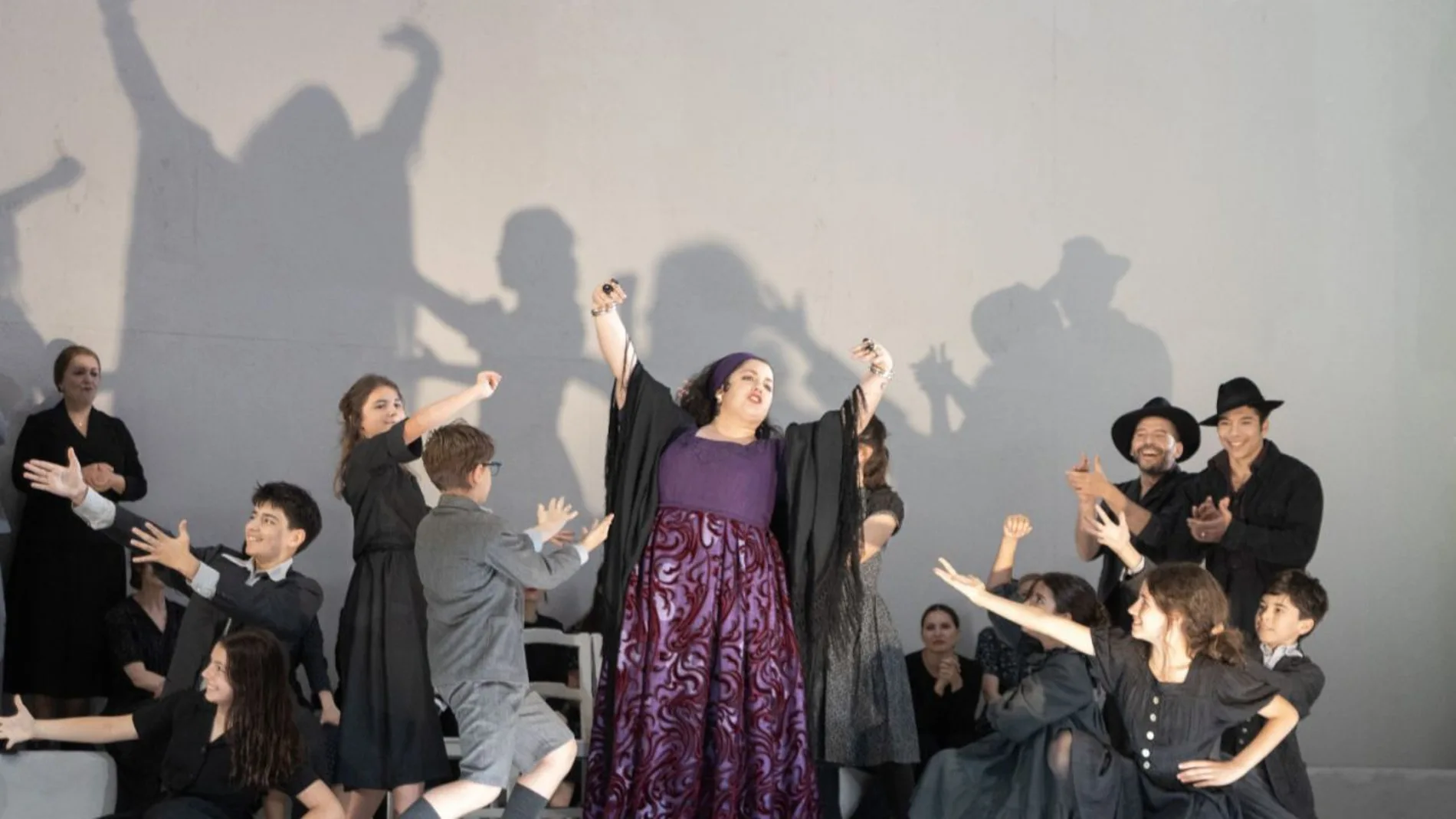
Las fotografías escénicas son propiedad del Teatro Real.