viernes, 10 de febrero de 2023

ESP/ENG : El Mahler más bucólico : Cuarta Sinfonía en el Teatro Monumental por Christoph König.

For English, please scroll down. 

Madrid, 9 de febrero de 2023.

ESPAÑOL

Prosigue la temporada 2022-2023 de la Orquesta de Radiotelevisión Española, en el ciclo Raíces, con una destacada presencia mahleriana. El flamante nuevo director musical de la formación, el alemán Christoph König, ha dirigido esta noche un programa ecléctico a más no poder, con obras de Luis de Pablo, Sergei Rachmáninov y con el plato fuerte de la noche: la Cuarta Sinfonía de Gustav Mahler.

Empezó la velada con un estreno de Luis de Pablo, "Música sin título", una de sus últimas obras, ya que por voluntad del autor no debía estrenarse hasta después de su muerte. El resultado fue el de una obra breve, de unos diez minutos, y al mismo tiempo interesante, ya que supone una síntesis de los estilos del autor, con bellas reminiscencias a la Segunda Escuela de Viena, además de un coro masculino que recordaba a lo llano del canto religioso. Siguió la velada con las tres canciones rusas op. 41 de Rachmáninov, unas potentes canciones para coro y orquesta, con toda la dureza de la escuela rusa, y donde el Coro de Radiotelevisión Española se lució.

Tras la pausa, la Orquesta se preparó para acometer la Cuarta Sinfonía de Mahler. Con una orquestación más pequeña, es esta quizá la más ligera de las sinfonías mahlerianas, unida por el bucolismo y la celebración de la naturaleza con la primera y la tercera sinfonías, y alejada de las más bombásticas y místicas segunda y octava, o del desgarrador dramatismo de la quinta y la sexta. En esta obra, la música destila ligereza, fantasía, es una recreación romántica, y al mismo tiempo clásica, de la naturaleza, como si fuese este el más animado de los viajes musicales que el maestro nos recrea a través de los bosques centroeuropeos. No tuvo éxito en su estreno, sin embargo hoy día es celebrada como una obra maestra. El primer movimiento, que se abre con los cascabeles, nos recrea una traviesa aventura por los bosques, con un lucimiento para el viento que recrea la caza. El segundo, de lucimiento para el violín, es el más breve. El tercero, el adagio, es el punto álgido de la obra, con una prolongada música, en la que exige de la orquesta primero la recreación de la belleza, para luego pasar por un inesperado y repentino clímax, poco antes de terminar el movimiento. El último incluye canto, y es llamado "Das himmlische leben", "La vida celestial" en español. En una confrontación entre el primer tema, el de los cascabeles, que irrumpe con fuerza, con el calmado, angelical canto de la soprano, que exalta la plenitud del mundo celestial, see cierra la obra.


König logra una interpretación ligera, rápida, apasionada de la orquesta, en contraste con la más lenta y opulenta de Pablo López el pasado octubre con la Tercera. La cuerda goza de buena forma, y hay que mencionar el trabajo de la concertina a este respecto, especialmente en el tercer movimiento. En el primero, el viento pudo lucir su excelente sonido, especialmente flautas y trompetas, si bien los violonchelos y contrabajos también tuvieron lucimiento en el segundo y tercero. El cuarto movimiento contó con la intervención de la soprano Regula Mühlemann, que si bien tiene una ligera y deliciosa voz, esta no es tan abundante en volumen, quedándose sobrepasada por la orquesta en muchas ocasiones, si bien se reconoce que es difícil sonar bien con la orquesta mahleriana detrás.

Al final, fue recibida la obra mahleriana con un fuerte aplauso, que da muestra una vez más de su popularidad en Madrid, en una deliciosa tarde en este teatro en la más castiza zona de la capital. Seguiremos con atención las próximas obras de Mahler en el Monumental.


ENGLISH

The most bucolic Mahler: His Fourth Symphony at the Teatro Monumental under Christoph König.

Madrid, February 9, 2023.

The 2022-2023 season of the Orquesta y Coro de Radiotelevisión Española, at the Teatro Monumental in Central Madrid, in its cycle called "Roots", which a strong mahlerite presence. Conducted by Christoph König, which is to become the new musical director of the orchestra, the program has been clearly eclectic, featuring works by Luis de Pablo, Sergei Rachmaninov and the main course: Gustav Mahler's Fourth Symphony, after the pause.

De Pablo's work, "Música sin título" (Untitled Music) has received its World Premiere tonight. The composer commanded his work to be premiered after his death. This ten-minute work sounds very interesting, with beautiful reminiscences from the Second Viennese School, or featuring a plain, religious-like male chorus. Rachmaninov's Three Russian songs are three powerful pieces, for chorus and orchestra, and here the Chorus gave a great rendition.

Mahler's Fourth Symphony is the most bucolic of his symphonies, more in common with his First and Third ones, and distant from the mysticism and majesty of his Second and Eighth, or the intense dramatism of Fifth and Sixth. This music is full of fantasy, vividness, charm, lightness, the most romantic, classic and cheerful musical travel in Mahler's catalogue. It wasn't too much celebrated in its premiere, and the following tour in early 1900s, but now it is celebrated as the masterpiece it is. The first movement, which opens with the jingle bells, recreates a funny, mischievous adventure through the woods. Here, in an important participation, both brass and woodwind recreate hunting. The second one, in which violin is the protagonist, is the shortest. The third one, the adagio, is the height of the work, demanding from the orchestra, first the recreation of beauty, to then go through an unexpected and sudden climax, shortly before the end of the movement. The fourth and final one called "Das himmlische leben", or "The Heavenly life" includes singing. In a contrast between the first theme, that of the jingle bells, which breaks in with complete force, and the calm, angelic song of the soprano, which hails the plenitude of the life in Heaven, the work closes. 

König obtains a vivid, light, with faster tempi, rendition from the orchestra, contrasting with Pablo González's slower, more majestic performance of Mahler's third last October. Strings are in a good shape, and we have to mention the concertino performance in the second movement or the cellos and basses during this and the third movements. Brass and woodwind gave a good performance in the First movements, specially flutes and trumpets which succeeded playing the themes in a descriptive way. For the final movement, the soprano Regula Mühlemann came to sing "Das Himmlische Leben. Her voice has a light, nice tone, but not a very big volume, and her voice not always won the volume battle with the Mahler orchestra, being surpassed by them in several occasions.

At the end, the performance was received with enthusiasm and several "bravos", they closed a great evening at the Monumental, confirming once again Mahler's fame and devotion from the Madrid audience.

Las fotografías no son de mi autoría, si alguien se muestra disconforme con la publicación  de cualquiera de ellas en este blog le pido que me lo haga saber inmediatamente. Cualquier reproducción de este texto necesita mi permiso.

My reviews are not professional and express only my opinions. As a non English native speaker I apologise for any mistake.
Most of the photographs are from the internet and belong to its authors. My use of them is only cultural. If someone is uncomfortable with their use, just notify it to me.
Any reproduction of my text requires my permission.

jueves, 26 de enero de 2023

From Heaven to Teatro Real, came down the angel: Strauss' Arabella for the first time in Madrid.


The collaboration between Richard Strauss and Hugo von Hoffmansthal has been one of the most fruitful ones in operatic history. Until the death of the latter in 1929, both artists bequeathed to the world masterpieces such as Elektra, Der Rosenkavalier, Ariadne auf Naxos or Die Frau ohne Schatten. As time transcurred, and music evolved into serialism, dodecaphonism, expressionism, Strauss's genius and style continued to look towards a more traditional musical language, with great symphonic works and lyrical romantic comedies, starred by Viennese aristocrats. Such is the case of Arabella, which was the last opera  in which Strauss and Hoffmansthal worked. By the time it was premiered in Dresden in 1933, the playwright had already died and Strauss had found a new librettist, the famous writer Stefan Zweig, whose collaboration with the composer since wouldn't be much longer, because in that same year the criminal Nazi Germany began its terrible walk in history.

I remember that, several times in Spanish opera forums, during his tenure at the Teatro Real, the late Gérard Mortier was suggested, in a blaming sense, for not bringing some non-seen-before classic operas, as an alternative to not repeating  ABC repertoire or staging "difficult" (for some) contemporary works created after 1950, such as Arabella, as one of those that had to be scheduled. Well, the time has come. This delicious musical comedy finally arrives in Madrid for the first time, 90 years after its premiere, and it does in a production from the Frankfurt Opera and the Barcelona Gran Teatre del Liceu, directed by Christof Loy, a regular guest in Madrid.

Arabella is a romantic comedy set in the 1860s Imperial Vienna: a ruined aristocratic family, looking for a rich husband for their beautiful (and desired) daughter, but she wishes to marry for love. The lucky one is the millionaire landowner Mandryka, not without trouble during the plot. On the other hand, in a parallel story, we have Zdenka, Arabella's sister, who is forced to dress as a boy, because her family can't  affort her maintenance and is put into a second place. In addition, she is in love with a soldier, Matteo, who is in love with Arabella.

Without giving up his minimalistic style, and as he did in his 2019 staging of Capriccio, resorting to elegance, Loy strips this work of any romanticism and delves not only into the psychology of the characters, but also into the decadent environment that surrounds Arabella's family and Viennese society, as well as Zdenka's frustration at hiding her identity and not having the man she loves. The result is a montage of great beauty, but not exempt from darkness and void, which gives this work a touch of introspection, and also statism in many scenes. The stage is a huge white stage box, which when the play begins, opens to show an empty, dilapidated hotel room where this run-down family lives. The aesthetics are more reminiscent of the Post-1945 Austria, during the challenging post-war (an era which certainly does fit with the necessity to marry their daughter to survive) than of the time of Kaiser Franz Joseph I. 

This is a staging which moves horizontally from one side to another, shows us the big hotel lobby, Arabella's dressing room, and even the hotel bathrooms, all behind that white box, which is closed in moments of greatest intimacy or big conflicts. In fact, in some occasions when the white box opens, leave behind only a black background, like in the end of the first act, with Arabella in the "white" area and in the background Zdenka in the "black", or in the end, when Mandryka and Arabella head into darkness, something that with the tender and radiant happiness with which they celebrate their imminent marriage.

David Afkham, whose name is a guarantee in this repertoire, after an unforgettable Salomé last summer with the Spanish National Orchestra, leads the Teatro Real Orchestra, in a conducting which transmits the richness, the delicious range orchestral colors of this work, whose music is reminiscent of the delicious atmosphere of Der Rosenkavalier. The tempi tend to be somewhat slow, but at the same time revealing the orchestral richness, the passages that recreating waltzes or in the passionate orchestral prelude of the third act, the orchestra had moments of brightness. In that prelude, the metal sounded spectacularly. Afkham transmits the charm, majestic richness of a music that never bores and always delights.


Sara Jakubiak in the main role, raised the level during her performance, reaching her dramatic height from the second act. Even with a sometimes nasal timbre, she delighted with her tender interpretation of "Aber der richtige" in act 1, until her voice reached its plenty, with an appreciable dramatic timbre, in acts 2 and 3.

Josef Wagner was a Mandryka with a beautiful and strong voice, as well as an impressing stage presence.

Sarah Defrise was an excellent Zdenka, with a beautiful dark tone, and also an excellent actress, conveying the loneliness of her character.

Matthew Newlin in the role of Matteo, has a beautiful tenor voice with excellent high notes, especially in the duet with Arabella in the third act.

One of the big surprises in the night was Martin Winkler as Count Waldner, Arabella's father. This somewhat guttural-sounding bass baritone sang Alberich a year ago, and now in a completely different role, that gutturality allows him him to draw a fitting grotesque, amusing aristocrat, as the desperate matchmaker father of his own daughter. And a compelling, comical, well sung performance.

Anne Sofie von Otter as Adelaide was at a good singing and acting level. Dean Power as Elemer was an excellent tenor. Elena Sancho-Pereg as Fiakermilli was able to handle the brief but difficult role, with her youthful and beautiful tone.


The rest of the cast and chorus performed at the same good level.

Undoubtedly, opera lovers in Madrid have an must date with this title, rarely seen outside of Germany and Austria as it requires great operatic, orchestral sources. So, the Teatro Real scores a point by programming this delicious opera.

My reviews are not professional and express only my opinions. As a non English native speaker I apologise for any mistake.
Most of the photographs are from the internet and belong to its authors. My use of them is only cultural. If someone is uncomfortable with their use, just notify it to me.
Any reproduction of my text requires my permission.

miércoles, 25 de enero de 2023

Arabella en el Teatro Real: La deliciosa comedia straussiana viene por primera vez a Madrid.


La colaboración entre Richard Strauss y Hugo von Hoffmansthal fue una de las más fructíferas de la historia de la ópera. Hasta el fallecimiento de este último en 1929, ambos artistas legaron al mundo obras maestras como Elektra, El Caballero de la Rosa, Ariadna en Naxos o La Mujer sin Sombra. A medida que el tiempo pasaba y la música evolucionaba, el genio de Strauss siguió mirando a un lenguaje musical más tradicional, con grandes obras sinfónicas y comedias románticas líricas, con aristócratas vieneses como protagonistas. Tal es el caso de Arabella, que fue la última ópera en la que trabajaron Strauss y Hoffmansthal. Para cuando se estrenó en Dresde en 1933, el dramaturgo ya había muerto y Strauss tenía un nuevo libretista, el afamado escritor Stefan Zweig, el cual no iba a seguir colaborando mucho con el compositor ya que en ese mismo año la criminal Alemania Nazi comenzaba su atroz andadura en la historia.

Recuerdo que, cuando en los foros de ópera, se achacaba al fallecido Gérard Mortier que trajese repertorio nuevo, pero más asequible, como alternativa a no repetir títulos trillados o traer  "difíciles" (para algunos) óperas posteriores a 1950, se mencionaba mucho a Arabella como una obra nunca vista en el Teatro Real, y de las que había que programar. Pues bien, el momento ha llegado. Por fin llega a Madrid, por primera vez, esta deliciosa comedia musical, después de 90 años de su estreno, y lo hace con una producción procedente de la Ópera de Frankfurt y del Liceu de Barcelona, dirigida por Christof Loy, habitual en Madrid.

Es Arabella una comedia romántica ambientada en la Viena Imperial, si bien el tema a tratar es algo con un trasfondo tan manido como poco agradable en el fondo: una familia aristocrática venida a menos busca un marido rico para su bella (y deseada) hija, pero esta desea casarse por amor, siendo el afortunado el millonario terrateniente Mandryka, no sin un sinfín de líos. Por otro lado, y como historia paralela, tenemos a la hermana Zdenka, a la que obligan a vestir de chico para no tener que mantenerla, y enamorada de un militar, Matteo, enamorado de Arabella, y por tanto relegada a un segundo plano. 

Sin renunciar a su estética minimalista, y en el caso de las comedias straussianas, recurriendo a la elegancia, Loy despoja esta obra de cualquier romanticismo y se adentra no solo en la psicología de los personajes, sino en el ambiente decadente que rodea a la familia de Arabella y a la sociedad vienesa, además de la frustración de Zdenka por ocultar su identidad y por no tener al hombre que ama. El resultado es un montaje de gran belleza, pero no exento de oscuridad, lo que le da a esta obra un toque más de introspección, y además de estatismo en muchas escenas.  El escenario es una enorme caja escénica blanca, que cuando empieza la obra, se abre para mostrar un salón vacío, una habitacion destartalada de hotel donde vive esta familia venida a menos. La estética recuerda más a los años 40-50 que a la época de Francisco José I, posiblemente se mueva la acción a la posguerra, donde mucha gente vivía con menos de lo justo, una época donde la gente hacía lo que fuera para sobrevivir. 

La puesta en escena es una puesta en movimiento, que nos va mostrando un gran recibidor, el vestidor de Arabella, un rellano e incluso los baños del hotel, todo detrás de esa caja blanca, que se cierra en los momentos de mayor intimismo. De hecho, hay momentos en los que detrás de la caja blanca solo hay un fondo negro, como en el final del primer acto, con Arabella en la zona "blanca" y al fondo Zdenka en la "negra", o en el final, cuando Mandryka y Arabella se dirigen hacia ese fondo negro, algo que  choca con la tierna y radiante felicidad con que celebran su inminente matrimonio. 

David Afkham, cuyo nombre es garantía en este repertorio tras una Salomé inolvidable el pasado verano con la Orquesta Nacional de España, se pone al frente de la Orquesta Titular del Teatro Real, con la que realiza una dirección que transmite la riqueza, la deliciosa gama de colores orquestales de esta obra, cuya música recuerda al ambiente delicioso de El Caballero de la Rosa. Los tempi tienden a cierta lentitud, pero recreándose en la opulencia orquestal, de hecho en los pasajes que recrean valses o en el apasionado preludio orquestal del tercer acto, la orquesta tuvo momentos de lucimiento. En dicho preludio el metal sonó espectacular.  Afkham transmite la dulzura y al mismo tiempo la riqueza de una partitura que nunca aburre y siempre deleita.


Sara Jakubiak en el rol titular fue de menos a más. Aun con un timbre más bien nasal, a medida que pasaba la función fue destacando, ya desde su tierna interpretación del "Aber der richtige" hasta sonar a plena voz, con un apreciable timbre dramático en el segundo acto. 

Josef Wagner fue un Mandryka con un bonito y robusto timbre, además de una importante presencia escénica.

Sarah Defrise fue una excelente Zdenka, con un precioso timbre oscuro, y además una excelente actriz, transmitiendo la soledad de su personaje.

Matthew Newlin en el rol Matteo, tiene una bella voz de tenor con excelentes agudos, especialmente en el dúo con Arabella en el tercer acto. 

Una de las grandes sorpresas fue Martin Winkler como el conde Waldner, padre de Arabella. Este barítono bajo de timbre un tanto gutural cantó Alberich hace un año, y ahora en un rol totalmente opuesto, esa guturalidad le da un toque grotesco y adecuado en el rol del desesperado padre casamentero de su propia hija. Y una actuación convincente y cómica.

Anne Sofie von Otter como Adelaide estuvo a un buen nivel vocal y actoral. Dean Power como Elemer fue un excelente tenor. Elena Sancho-Pereg como la Fiakermilli pudo con el breve pero difícil rol, con su juvenil y bello timbre.

El resto del elenco y el coro cumplieron al mismo buen nivel. 


Sin duda, los amantes de la lírica tienen una cita ineludible con esta ópera poco frecuente del maestro Strauss, raramente vista fuera de Alemania y Austria ya que requiere de grandes medios líricos para hacerlo. El Real se apunta un tanto con programar esta obra nueva que hace las delicias del espectador. 


Las fotografías no son de mi autoría, si alguien se muestra disconforme con la publicación  de cualquiera de ellas en este blog le pido que me lo haga saber inmediatamente. Cualquier reproducción de este texto necesita mi permiso.

sábado, 14 de enero de 2023

ESP/ENG The Dark Ring* returns in 2022: Newark... Is a new wagnerian city born?


Para leer en español, deslizar hacia abajo.

*Note: I used the "Dark Ring" expression to give a title this review, considering the company itself has chosen it to promote their mostly-African American cast Ring production, and with the approval of the director of the company. I hereby intend to avoid any kind of innecesary controversy on ethnics.

Thousands of miles from Germany, Richard Wagner's country, where two productions of his Ring have got global relevance (Bayreuth's disturbing production by Valentin Schwarz, and more recently the Berliner Staatsoper Ring conducted by Christian Thielemann),  in the New Jersey State, Trilogy:aoc has reprised their successful (which got Wagnerian's attention worldwide) 2017-2020, adventure and staged the cycle in just one year. Between March and November 2022, Trilogy has brought the mammoth, musical epic to the state for the second time in its history. The cycle starting in March 26 with Rheingold would have finished last month with Götterdämmerung, but due to Covid reasons their Walküre performance scheduled for last May took finally place on November 12.


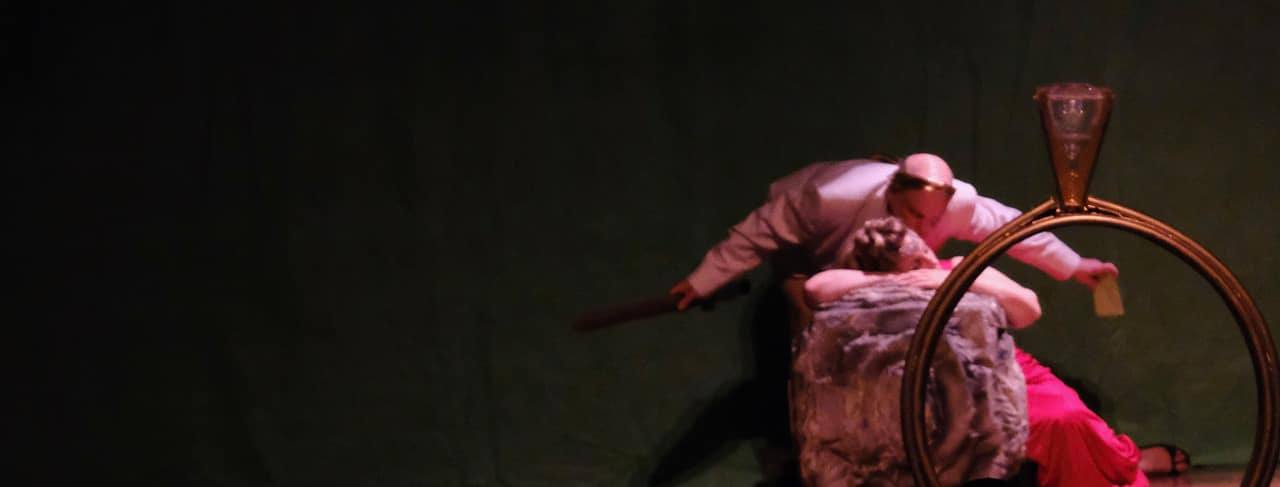
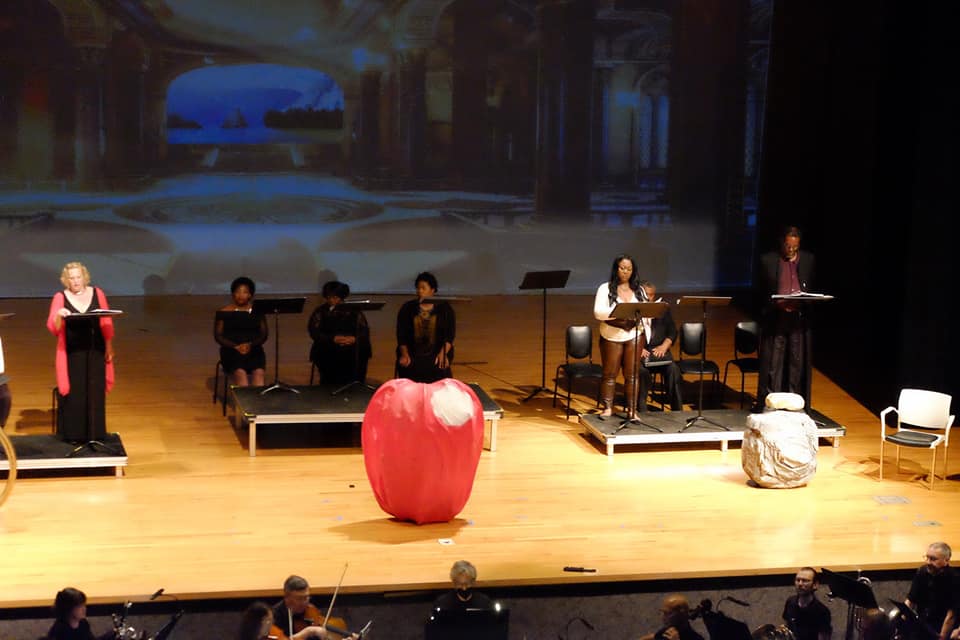
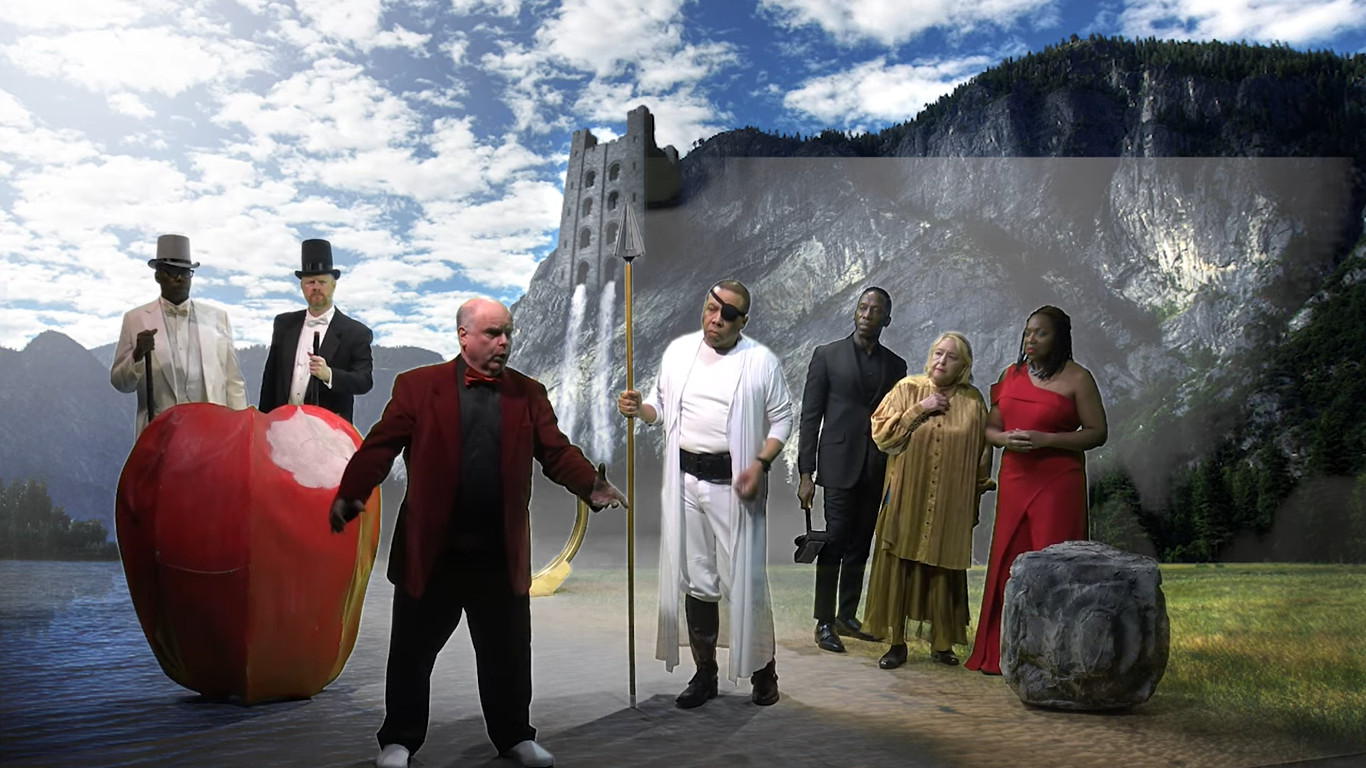
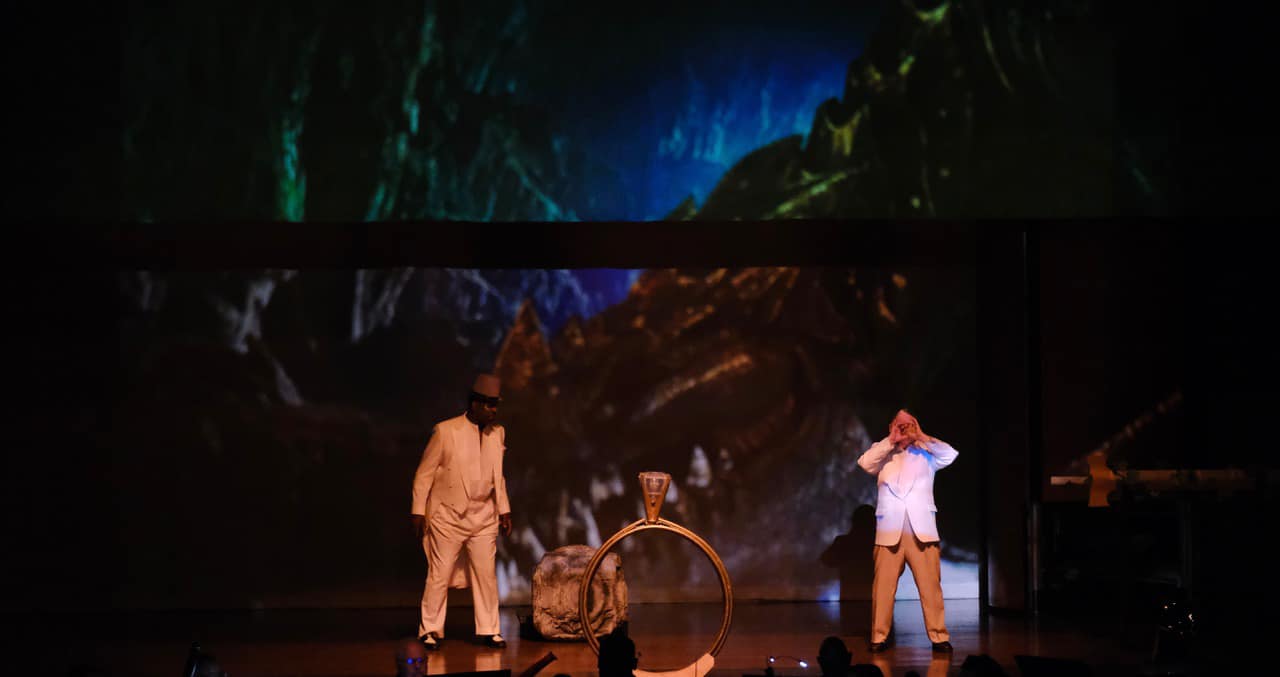
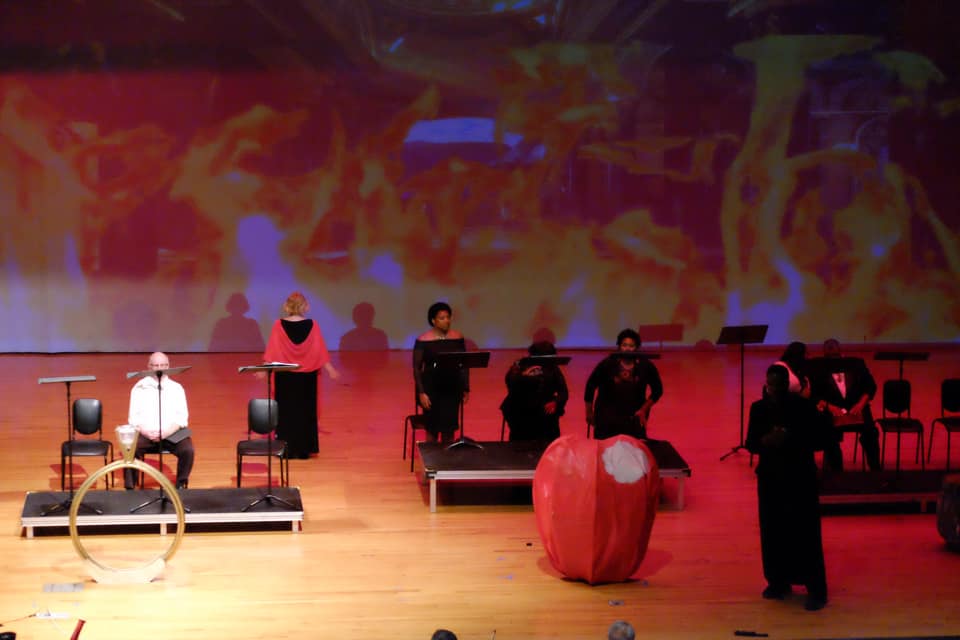
With this production, Trilogy has introduced Wagner's Ring not only to the Newark audiences, but to the rest of issues of African American community which they usually stage in their repertoire. Of course, they did it in the only possibility available: the reduced version of Graham Vick and Jonathan Dove for small venues. Staged by Maynor himself, each journey of this Ring has been presented in semi-staged version in different theatres, with a green screen set in which fantastic landscapes are projected. The fundamental symbols are reprised for the stage, which according to Maynor, "the Ring represents the struggle, the big red apple represents the source of power behind the once powerful Gods of which the Rhinemaidens cling. The Gold is stage left that caused the fall of so many because of the greed and fight for it".

The musical accompaniment came by the company's orchestra, TAOCarkeste in Rheingold under the Latoya A. Webb, who gave an energic rendition of the score with the limited orchestra, Joseph Jones conducted Walküre, and Leslie B. Dunner conducted Siegfried and Götterdämmerung. 

As the Ring has always an inmense cast, with different levels of singing. In Rheingold, we had the privilege to listen Chantelle Grant again as a wonderful Erda, with her dark, velvet-like voice, which made her scene the most magical moment in the show. Fredrick Redd was a good Wotan, as well as both giants, Kevin Maynor as Fafner and Matthew Curran as Fasolt. Maria Marbet reprised her amazing Flosshilde, as well as Pam Jones was a beautifully sung, dramatic-toned Freia. Kevin Courtemanche was  a good acted Loge, and sung it well, despite having to confront the orchestra in sound.


In Walküre, it was a big surprise to hear Alison Gish's amazing, well sung and beautifully, velvet.-toned Fricka, one of the best singers in this edition, who also performs amazingly the anger and frustration of this goddess. Daniela Davis was also a big-volumed and well sung Sieglinde, despite some troubles in high register. Kevin Courtemanche (who has sung Loge and Siegfried in this Ring) seems to be better in Siegmund but somewhat limited in high register, despite some good moments with his youthful voice. Kevin Maynor as Hunding performs and conveys the violence, and gives the role a touch of irony. Maria Russo as Brünnhilde sings passionately, but not always at the same volume. However, in Act 3 she sang somewhat inspired. Raemond Martin as Wotan has authority on stage, and gave a nice version of the Magical Fire. It is a pity that Dove's version has only three walkyries.

For Siegfried, Kevin Courtemanche appeared a bit tired in the title role. On the other hand, Raemond Martin was a superb Wanderer, both acted and sung. Karmesha Peake as Erda was at the same excellent level, with her dark and extremely impressive low notes, being the Erda-Wanderer scene the best in all the show. Again, Pam Jones stole the scene with her charming voice, now as the Forest Bird. Amber Smoke was a Brünnhilde with a big voice, surpassing Siegfried and the orchestra, and also able to enlarge her high notes, like in the awakening scene.

The Götterdämmerung performance, however, was of a great level, maybe the best in all the Wagner performances held by this company. For sure, it is by far the best conducted, with a better balanced orchestra. Leslie Dunner here extracts from the orchestra a wagnerian sound, in which the sense of tragedy, solemnity of this work are noticed in this small orchestra, with the brass and winds having a surprising relevance during the Inmolation, despite some cracks. Here, Kevin Courtemanche is more inspired than in Siegfried, as well as Kevin Maynor whose Hagen is clearly better than his 2020 one, performing an evil but also rude, hick character, with good singing. Again, one of the stars is Chantelle Grant with her beautifully sung, dark-toned, dramatic Waltraute. This mezzo-soprano could make a promising career, as her singing gives her roles all the dramatic intensity and  imposing authority they need. Elizabeth Kataria is a Brünnhilde which somewhat reminds me Anne Evans in Barenboim's Bayreuth Ring in the 90s, with an also somewhat youthful tone, despite being light for the tessitura, something noticeable in the high notes. Nevertheless, her big effort and devotion in the Inmolation have closed the Ring with a theatrical sense of Drama. Greg Rahming reprises the role of Gunther, as well as Jonathan Green does with Alberich after last July's Siegfried. There was no chorus, sadly, but at least we could have a great quartet for the remaining cast: Kimberly Lloyd as a sweet Gutrune, and again the accomplished and great singers Geraldine McMillian, Karmesha Peake and Pam Jones as the Rhinemaidens.


Trilogy has done again, specially with this Götterdämmerung, called Goetterdaemerrung in this production, in order to Americanise the spelling. For Newark, so distant from Bayreuth, the main Wagner opera house in the world, and so near to the Met, the main Wagner opera house in the Americas; this chance is definitely part of their cultural history, considering, at a first sight, the unlikely scenario considering the usual themes and the size of this opera troupe. 

But Kevin Maynor's will, which proves he is a great Wagnerian, the universality of the Ring's psychological plot , in which he relies, have made it possible, just an hour by transport from the luxury of the Metropolitan Opera House. 

Link to watch Das Rheingold.

Link to watch Siegfried

Link to watch Die Walküre.

Facebook link to listen Act 1 from Götterdämmerung.

Facebook link to watch Act 2 from Götterdämmerung.

Facebook link to watch Act 3 from Götterdämmerung.

ESPAÑOL

El regreso del "Anillo oscuro"*: un Anillo alternativo, a miles de kilómetros de Bayreuth.

*He usado esta expresión, para darle un título a esta crítica, considerando que la propia compañía se ha promocionado así (Dark Ring, en inglés), considerando su reparto de mayoría afroamericana, y contando con el visto bueno del director de la misma. No es mi intención levantar controversia alguna sobre la etnia de la compañía, por un mero tema publicitario que ellos mismos han elegido.


A 6405,36 kilómetros del Festspielhaus de Bayreuth, en Alemania, la patria del maestro Richard Wagner, otro ciclo del Anillo ha tenido lugar en la ciudad de Newark, en el estado de Nueva Jersey, durante el año pasado. Casi a la par que el controversial y perturbador Anillo dirigido por Valentin Schwarz en la colina verde, y el Anillo de Berlín dirigido por Christian Thielemann, los dos más importantes de este año, la compañía Trilogy:aoc, dirigida por el bajo-barítono Kevin Maynor, ha retomado su producción del Anillo wagneriano a cargo de cantantes afroamericanos. Ya entre 2017 y 2020, esta producción captó la atención de los wagnerianos por su singularidad. Este año han pretendido hacer el ciclo entero en una sola temporada, aunque la producción de La Valquiria, inicialmente prevista para mayo, se tuvo que posponer para noviembre. 

Con esta producción, Trilogy no lleva solamente el Anillo a la ciudad de Newark, sino a la comunidad afroamericana y a sus vivencias, temáticas del repertorio de esta compañía. Por supuesto, lo hacen en la reducción de Jonathan Dove y Graham Vick, que encaja la obra en pequeños teatros, aunque reduzca su duración a la mitad, lo que no está exento de controversia. En este montaje, una versión de concierto semiescenificada, se usan proyecciones de paisajes, además de los cuatro símbolos fundamentales que siempre están presentes, y  que de acuerdo a Maynor, " (...) el anillo representa la lucha, la gran manzana roja representa la fuente de poder detrás de los otrora todopoderosos dioses, y a los que se adhieren las hijas del Rin. El oro está a la izquierda del escenario, causando la caída de muchos por avaricia y por las luchas por obtenerlo".


El acompañamiento musical viene dado por el conjunto TAOCarkeste, dirigido en El Oro del Rin por Latoya A. Webb, y en Sigfrido y el Ocaso por Leslie Dunner. En el Oro, la maestra Webb, posiblemente la primera mujer afroamericana en dirigir el Anillo, por momentos pudo sacar de la pequeña orquesta algo de energía, muy especialmente en la escena cuarta. En La Valquiria, ha sido Joseph Jones quien tomó la batuta. El maestro Leslie B. Dunner ha obtenido el mejor rendimiento de esta orquesta en ambos ciclos. Con una orquesta aquí muy bien sincronizada, Dunner ha conseguido extraer de la misma un sonido wagneriano apreciable, donde se sienten el drama y la solemnidad, muy especialmente en el final, pese a algunos fallos. Con sus limitaciones, este Ocaso ha sido lo mejor de este y de todas las interpretaciones wagnerianas de esta compañía.

Incluso reducido a la mitad, el Anillo tiene que contar con un vasto reparto, y como siempre, los niveles de canto varían, pero se aprecia la devoción y el compromiso del elenco para con la empresa.

Kevin Maynor asume de nuevo varios roles, ahora como Fafner, en Valquiria como un Hunding brutal y un excelente Hagen, cuya voz saca el lado más perverso y bruto del hijo de Alberich. Fredrick Redd fue un solvente Wotan en el Oro, pero ha sido superado de lejos por Raemond Martin, un excelente actor y cantante, como Wotan en Valquiria, y el Viandante en Sigfrido. Otro que asume varios roles es Kevin Courtemanche, un tenor de voz ya madura, pero entregado a la causa pese a sus limitaciones. En el Oro es un intrigante, pragmático Loge. Como Siegmund en Valquiria aparece, sin embargo, un poco agotado pese a que su timbre de voz es agradable y juvenil. Como Sigfrido parece desigual, mucho mejor en el Ocaso, donde interpreta seguro, estable de voz al héroe, dejando una aseada interpretación de su muerte. Maria Russo, entregada en su ultima escena en Valquiria,  Amber Smoke, de potentísima voz en Sigfrido, y Elizabeth Kataria interpretan a Brunilda, esta última en el Ocaso, recordandome a veces a Anne Evans en el Anillo de Barenboim. Voz en apariencia ligera, de sonido juvenil aunque nasal. No obstante, Kataria se entrega en la Inmolación. Daniela Davis fue una Sieglinde de voz dulce y generosa de volumen, aunque con algún problema en el agudo

Un placer es contar de nuevo con la espléndida mezzosoprano Chantelle Grant, quizá la mejor del elenco, con su voz de oscuro timbre, bien proyectada y con sentido del drama, además de graves apreciables, como en su gran Waltraute, o siendo su breve intervención como Erda lo mejor del Oro. En Sigfrido fue Karmesha Peake quien interpretó a la sabia diosa de la tierra, estando a la altura de Grant, con su carnosa voz, y sus potentes graves, siendo el dúo como el viandante de Martin, lo mejor de ese Sigfrido. Alison Gish ha sido una de las sorpresas de esta compañía al interpretar una Fricka de voz aterciopelada, bello timbre y muy bien cantada. Pam Jones es una soprano de voz deliciosa, interpretando los roles de Freia, muy bien cantada, el Pajarillo del bosque y una de las hijas del Rin. 

Trilogy lo ha vuelto a hacer. El llevar a Newark este ciclo, a miles de kilómetros de distancia de Bayreuth, y a una hora del Met, ambos los teatros wagnerianos más importantes del mundo, supone un acontecimiento histórico para la vida cultural del Estado de Nueva Jersey. En un escenario improbable, la voluntad y la determinación de Kevin Maynor, lo que le confirma como un gran wagneriano, y la universalidad del Anillo, en la que él confía, lo han hecho posible.

Enlace para ver El Oro del Rin

Enlace para ver La Valquiria

Enlace para ver Sigfrido

Enlace al Facebook de la Compañía para escuchar el primer acto del Ocaso.

Enlace al Facebook de la compañía para ver el Acto segundo de El ocaso.

Enlace al Facebook de la compañía para ver el tercer acto del Ocaso.

Las fotografías no son de mi autoría, si alguien se muestra disconforme con la publicación  de cualquiera de ellas en este blog le pido que me lo haga saber inmediatamente. Cualquier reproducción de este texto necesita mi permiso.

My reviews are not professional and express only my opinions. As a non English native speaker I apologise for any mistake.
Most of the photographs are from the internet and belong to its authors. My use of them is only cultural. If someone is uncomfortable with their use, just notify it to me.
Any reproduction of my text requires my permission.

domingo, 1 de enero de 2023

ESP/ENG: Franz Welser-Möst vuelve al concierto de año nuevo, con muchas novedades.


ESPAÑOL

El año 2022 acaba de terminar, marcado por la trágica y sangrienta invasión rusa de Ucrania, con una guerra que deja refugiados y ha afectado a la vida en Occidente. Por otro lado, si hay una cosa positiva, es que la normalización del Covid-19, que sigue afectando nuestras vidas, poco a poco ha ido devolviendo la antigua normalidad a las ciudades, y en consecuencia, los teatros están llenos otra vez y ya sin mascarillas. Y así es como ha sucedido en esta nueva edición del Concierto de Año Nuevo de Viena 2023, el más televisado del mundo, que parece ser ya el inaugurador oficial del año. Esta edición cuenta de nuevo con el maestro veterano Franz Welser-Möst, uno de los directores de orquesta austríacos con más actividad de Europa, y que ya había dirigido el concierto en otras dos ocasiones. 

Welser-Möst ha dirigido a la Orquesta Filarmónica de Viena en un programa lleno de novedades, pues muchas de las piezas escogidas se escuchaban por primera vez en el concierto. En esta ocasión, el director austríaco ha dirigido las piezas de forma más bien tranquila, con tempi lentos, y una primera mitad en la que la orquesta no brilló tanto como en la segunda, donde mejoró con cada pieza. Es algo curioso que la primera mitad empezara y terminara con una polka rápida, la primera de Eduard Strauss y la segunda de Johann Strauss hijo. Incluso alguna de los valses llegó a sonar con una inadecuada interpretación bruckneriana. Tras la primera parte, el intermedio, presentado por el propio maestro, nos trasladaba imágenes y recreaciones musicales de la Exposición Universal de Viena de 1890.

Como ya se dijo, la segunda parte fue sin duda mejor: empezando por la Obertura de Isabella, opereta de Franz von Suppé, de inspiración española, tanto por el uso de castañuelas como por sus ritmos en la segunda mitad de la pieza. Fue aquí donde empezamos a escuchar la brillantez de las cuerdas de la orquesta, la espectacularidad de sus metales,  aún desde la lentitud y los tempi más pausados. Así sonó el vals "Perlas del Amor", el primero en contar con ballet,  y la deliciosa polka "Angelica". La interpretación se tornó más apasionada, y desde ahí hasta el resto de la velada, a partir de la pieza "Arriba y Lejos", donde finalmente el ímpetu se apoderó de la orquesta. En la polka Heiterer Mut se contó con el coro de los Pequeños Cantores de Viena, el cual por primera vez integraba a la sección de niñas en el concierto.

En los bises, sonó una espectacular interpretación de la "Polca de los Bandidos", que sonó ágil y poderosa. Después, vendría el famoso Vals del Danubio Azul, antes del cual el maestro se dirigió al público en inglés, citando a Nietzsche, diciendo que "Un mundo sin música sería un error", antes de hacer el consabido saludo en alemán. El Danubio Azul sonó quizá un poco anodino en las cuerdas, pero se vio compensado con la habitual y electrizante interpretación de la Marcha Radetzky, en la que el público acompaña a la orquesta con las palmas y con el que triunfalmente termina cada edición del concierto. La Orquesta ya ha anunciado que Christian Thielemann, dirigirá la edición de 2024, ante las peticiones de que por fin una mujer dirija la orquesta, a la que ésta respondió que aún no es el momento. No importa cuando llegue, pero esperamos que la maestra elegida lo sea por razón de su virtuosismo y no de su sexo.

Y así, como diría el presentador de TVE Martín Ilade, da comienzo el año 2023. Esperamos que este año nos traiga la paz en Ucrania, y nos llene de mucha felicidad y mucha música.


ENGLISH

Franz Welser-Möst returns to the New Year's Eve Concert, with several new pieces.

2022 has finished with the bitter taste of the Russian invasion of Ukraine, in a bloody war which has resulted in waves of refugees and which affected the life in the West. On the other hand, the normalisation of the Covid-19 has resulted in the return of the old normality, with theatres full-seated and no mask wearing. This happened in the 2023 New Year's Concert, the most popular worldwide, which seems to start officially the year. This year, the maestro Franz Welser-Möst returns for the third time to conduct this concert.

Welser-Möst has conducted the Vienna Philharmonic Orchestra in a program full of new pieces, as many of them were listened in the concert for the first time. In this occasion, the maestro conducted in slow tempi, in a calm mood, resulting in a first part which wasn't as brilliant as the second, even some pieces reminding the calm of a Bruckner adagio than the vividness of a Strauss waltz. It started and ended with quick polkas, both of Eduard and Johann Strauss II respectively. After the first part , the intermission showed images and recreations of the 1873 Vienna Exposition.

The second part really improved with each piece, and here the orchestra reprised its usual spectacularity. It began with the Overture to the operetta Isabella, by Franz von Suppé, of Spanish ambiance, recognisable from the castanets and the rythms from the second half. Here, the strings usual brilliant sound, and the imposing metals sounded in a majestic way, and since then maintainted it until the end. That is how the "Pearls of Love" waltz, the first one with ballet, and the "Angelica polca" sounded. In the "Up and away" waltz, the orchestra finally reached its peak. In the Heiterer Mut, the Wiener Sängerknaben (Vienna Boys' choir) accompaigned the orchestra, now showing a ethnical diversity (as now Austria is more multirracial than in the past), and for the first time including the girls' section. 

In the encores, the "Bandit's polka" sounded as spectacular as the final part of the concert. It ended with the two traditional pieces: the Blue Danube Waltz and the Radetzky March. Before the Blue Danube Waltz, Welser-Möst adressed to the audience in English, quoting Nietzsche, by saying: "A world without music would be an error", and then he and the orchestra gave the usual greeting in German. The piece sounded a bit rutinary in the strings, but at the end it was compensated by the usual intensity of the Radetzky March, with the audience being involved by clapping following the conductor's instructions. The orchestra has announced that Christian Thielemann will conduct the 2024 edition, in the middle of a recent demand for a female maestro to conduct. I am are sure that day will arrive, but because of the genius and virtuosity of the female conductor, and not because of her gender.

As the TVE (as I tuned from Madrid, Spain) broadcaster Martín Ilade said, now 2023 has begun. We hope it will bring the peace to Ukraine, and it will bring us lots of musical emotions on stage. 

Las fotografías no son de mi autoría, si alguien se muestra disconforme con la publicación  de cualquiera de ellas en este blog le pido que me lo haga saber inmediatamente. Cualquier reproducción de este texto necesita mi permiso.
My reviews are not professional and express only my opinions. As a non English native speaker I apologise for any mistake.
The photographs are from the internet and copyright belongs to its authors. My use of them is only cultural. If someone is uncomfortable with their use, just notify it to me.
Any reproduction of my text requires my permission.


miércoles, 28 de diciembre de 2022

An austere, feminist new lecture of the belcanto classic: La Sonnambula at the Teatro Real.


Madrid, December 27, 2022.

For the madrileño music lover, Christmas cannot be imagined without the classic operatic title at the Teatro Real. It is part of the whirlwind in which Madrid is absorbed in these dates: purchases, dinner with the family, illuminated streets and a great opera night. It is perceived on entering and leaving the theatre: to see the little Christmas market in the Isabel II square with the big christmas tree, with its powerful pink light, to realise we're not in an ordinary time. The current opera is a classic, as well as a long-absent work from the Teatro Real: Vincenzo Bellini's La Sonnambula, which returns to the Teatro Real after 22 years.

One could wonder about the reasons of this absence, and among them, one could think of the supreme difficulty of the main role, which needs a great soprano to make it justice. Despite the long time after these 2000 performances with Annick Massis and María José Moreno, this used to be a recurrent title in the past at the Teatro Real old history. It was premiered in Madrid in 1852 by the contralto Marietta Alboni, but it is still remembered when in 1863 the legendary Adelina Patti performed it to an audience featuring the famous writer Benito Pérez-Galdós, then a young journalist, or the queen Isabella II. It is said that in the last performance, around 200 canaries were brought to celebrate her as the new "queen" of music. As a gift from Destiny, we can make a vague idea by listening Patti's 1906 rendition of the aria. Other sopranos like María Barrientos, Regina Pacini, Graziella Pareto or Amelita Galli-Curci performed the opera at the Teatro Real stage. Now, La Sonnambula returns to Madrid with two A-level casts, both having a great critical acclaim as well as an enthusiastic reception from the audience. This review will talk about the second cast.


Bárbara Lluch is the director of this new production. Lluch is known after her successful, colourful, production of the Zarzuela El Rey que Rabió last year. Granddaughter of the actress and director Nuria Espert (well known in this opera house, since here she directed a famous Tosca, filmed to DVD in 2004, and also acted in Golijov's Ainadamar in 2012), she makes her debut at the Teatro Real. Unlike her zarzuela production, this one is dark, gothic-like, somber, taking distance from the bucolic ambiance of the original story, despite being conservative in the costumes, desgined by Clara Peluffo. The sets by Christof Hetzer are austere, following Lluch's vision, with a tree presiding the scene in Act 1, a steam machine-like device in act 2, and a big house in Act 3, all of them darkened, with a dense athmosphere suggested by Urs Schönenbaum's lighting. Amina is in several moments accompaigned by a corps-de-ballet coreographed by Iratxe Ansa, which seems to convey that the dancers are the spirits of destiny moving Amina in their dance. 

The curtain rises to show those spirit dancers moving Amina in their dance, in total silence. In Act one, we attend to the betrothal ceremony between Amina and Elvino, both wearing showy wedding crowns. In act 2, the count is more lustful than in the original story, at he is almost about to take Amina while slept, as if he was unable to repress his instinct. One of the most commented, and also criticized aspects of this stage is the new "feminist" vision of this opera: Amina is an empowered, more confident woman who at the end she leaves Elvino and his stupid jealousy, deconstructing the original fable moral of the triumph of love. If this action would have happened nowadays, we could only celebrate that Amina would leave the distrustful Elvino, but Lluch's vision doesn't match with what Amina is singing.

As well as in Norma and Puritani, this work has Bellini's signature style of beautiful melodies,virtuous, inspired, very convenient to the bucolic background of this opera, as well as they have a dramatic effect in scenes such as the sonnambulism ones, or the pathos in Amina's famous aria in Act 3. Despite the romantic comedy air, the psychological portrait of the roles is present in the arias. The Teatro Real Orchestra is conducted by the veteran Maurizio Benini, well known in this repertoire and in this opera house. Benini accompaigned the singers, but also gave strength to the orchestra, sometimes too much, like in the first scene of Act 2 during Elvino's aria. This bucolic work (like other ones) has a remarkable participation of the horns, which were accomplished, as well as the cello in Ah, non credea, which sounded as tender as the soprano. The Teatro Real Chorus sang in their usual good acting and singing level.


Jessica Pratt is one of the most celebrated coloratura sopranos today. And Amina is one of her signature roles. Well known in Spanish opera houses because of her regular presence in their schedules, she makes at last her debut at the Teatro Real despite she has previously sung with the company in Finland with a tour in Puritani some years ago. Her Amina is in the tradition of more light coloratura sopranos than dramatic ones. Her voice has a remarkable technique, but above all splendid, resounding high notes, raising over singers, chorus and orchestra. Despite being a bit reserved and shy during her opening scene with Come per me sereno, her singing improved more and more during the show, and in the scenes with Elvino she sounded tender, with a beautiful piano singing. In her final big scene, she gave a melancholic, introspective, dramatic version of the Ah non credea. She concluded her performance with an agile, pyrotechnic version of the Ah, non giunge aria.

Francesco Demuro surprised the audience with his devoted and powerful Elvino, in a singing well projected and with a nice youthful tone, yet not completely refined. He shone in the duets and in the Prendi l'anel ti dono, but in Act 2 he really got his peak, despite some ups and downs in volume during the Perché non posso odiarti, which at the end he close with a long, well done final high note.

Serena Sáenz in the role of Lisa also improved as the performance transcurred, with a nicely sung rendition of her Act 2 aria  De' lieti auguri a voi son grata, which she closed with a big final high note. In the role of Rodolfo, Fernando Radó has good low register, and his aria in act 1 was well sung. Gemma Coma-Alabert in the role of Teresa was a big surprise with her good singing, well projected and her dark, seductive tone. Isaac Galán in the role of Alessio and Gerardo López as the notar were at a good level.


This performance, despite some ups and downs, has been really enjoyable. The audience, despite not applauding at the end of every aria, awarded the cast effort at the end, specially Pratt which was welcomed, so we can conclude everyone had a good time. 


My reviews are not professional and express only my opinions. As a non English native speaker I apologise for any mistake.
Most of the photographs are from the internet and belong to its authors. My use of them is only cultural. If someone is uncomfortable with their use, just notify it to me.
Any reproduction of my text requires my permission


Una austera y empoderada nueva versión belcantista: La Sonnambula en el Teatro Real, segundo reparto.


Madrid, 27 de diciembre de 2022.

Para el melómano madrileño, no se concibe ya la navidad sin el título del repertorio tradicional en el Teatro Real. Forma ya parte de esa vorágine que todos vivimos en estas fechas: compras, reuniones con la familia, enormes cenas, calles iluminadas y una velada única en el Real con algún título emblemático del género. Y eso se siente nada más entrar y salir del teatro: encontrarse con el mercadillo y el reluciente árbol de la Plaza de Isabel II nos indica que no estamos en una época cualquiera. Este año, el gran título en cartel durante las fiestas es ni más ni menos que un título tan clásico como largamente ausente del Teatro Real: la Sonnambula de Vincenzo Bellini, que vuelve al regio coliseo, así como a la ciudad de Madrid, tras veintidós años desde la última vez que se representó, allá por el 2000.

Uno entiende que una posible razón, si pudiera haber alguna -yo lo dudo-, de tal ausencia, pudiera deberse esta obra requiere de una soprano de enjundia para afrontar el complicado rol. Pese al tiempo transcurrido desde aquellas funciones en el año 2000 con Annick Massis y María José Moreno, no es esta una obra ajena a la larga y accidentada historia del Real. Desde que Marietta Alboni la estrenase en este escenario allá por 1851, muchas de las grandes sopranos han estrenado esta obra. En los anales de nuestra historia lírica, queda inscrito en noviembre de 1863, cuando una veinteañera Adelina Patti, la más célebre soprano de la segunda mitad del siglo XIX, interpretó esta ópera con la que deleitó al público, tras el cual no solo se encontraba la Reina Isabel II, sino también el gran escritor Benito Pérez-Galdós, por aquel entonces un joven periodista. Y como un regalo del destino, nos podemos hacer una ligera idea de esa efeméride oyendo una grabación de la Patti, eso sí, ya veterana. Otras grandes sopranos como Amelita Galli-Curci, María Barrientos, Graziella Pareto o Regina Pacini interpretaron el rol en este mismo escenario.

Ahora La Sonnambula vuelve a Madrid con dos grandes elencos, ambos con un éxito enorme de crítica y público. Esta crítica hablará del segundo reparto. 


La puesta en escena de Bárbara Lluch, quien ya deslumbró al público del Teatro de la Zarzuela con su genial y colorido montaje de El Rey que Rabió, y nieta de la gran Nuria Espert, quien también dirigió (Tosca) y actuó (Ainadamar) en este teatro, es un contraste absoluto con su montaje para el teatro de la Calle Jovellanos. Si su montaje de El Rey que Rabió era colorido, y presentaba un mundo de fantasía, en La Sonnambula apuesta por el minimalismo, la austeridad y lo gótico, aunque eso último no es tan discordante con la obra. Además presenta varias danzas, en las que el cuerpo de baile representan a los espíritus, al destino que afecta a la vida de Amina.  El bucólico ambiente helvético se transforma en austero, más cercano a los amish o menonitas que un pueblecito suizo de romántica postal, en parte debido al vestuario de Clara Peluffo.

La iluminación oscura, en tonos anaranjados y  verdes oscuros, con un árbol omnipresente en la primera mitad refuerzan este ambiente gótico. La acción se inicia con una danza en total silencio, en la que los bailarines-espíritus mueven a Amina en una danza siniestra. La acción da lugar a los esponsales de los protagonistas, que llevan unas aparatosas coronas nupciales. En el segundo acto, el montaje presenta al conde Rodolfo más lascivo de lo que lo retrata el libreto original. El conde en la historia de Romani respeta a Amina, mientras que aquí está a punto de tomarla por la fuerza mientras duerme, hasta que el pueblo entra y la descubre durmiendo. En la segunda parte, unas máquinas de vapor presiden la escena, para luego dejar el escenario vacío y una enorme casa, con una iluminación naranja de fondo, de cuya buhardilla sale Amina en su famosa escena final de sonambulismo, suspendida en la altura. Mientras canta su famosa aria, cae la nieve. 


Una cosa de la que se ha hablado es el enfoque feminista que le da s la directora de escena, ya que al final Amina no se queda con Elvino, sino que le rechaza, después de haber dudado tanto de ella, algo que no casa con la felicidad que está cantando. ¿Se trata de un nuevo enfoque moral, acorde con los tiempos que corren, el mostrar a una Amina empoderada y con autoestima? Si esto pasara hoy en día, es comprensible que dejara al tonto y cerril Elvino, pero en época de Bellini primaba el triunfo del amor sobre todo lo demás, lo que puede resultar chocante, sobre todo en una propuesta más bien "clásica" de la obra. 

Como ocurre con Norma y Puritani, esta ópera lleva el sello de Bellini: melodías bellas, inspiradas, virtuosas, que tanto convienen al bucolismo, el costumbrismo de la Suiza rural donde transcurre la obra; y al mismo tiempo tienen un efectismo dramático, en escenas como la del sonambulismo, o el dramatismo de la famosa aria de Amina del tercer acto. Aunque se note el aire de comedia romántica, Bellini no olvida la psicología, la profundidad de los personajes, y esto lo manifiesta en su música, en arias como Vi ravviso, Perché non posso odiarti, donde la partitura se vuelve lírica, exponiendo el alma del personaje, con toda su fragilidad. La Orquesta Titular del Teatro Real está dirigida por el maestro Maurizio Benini, veterano en esta casa y en este repertorio. En esta ocasión, el maestro Benini le dio mucha fuerza a la parte orquestal, haciendo que esta subiera el volumen en varias ocasiones, lo que en el segundo acto tapó un poco al tenor. La trompa, tan presente en obras tan pastorales, tuvo un momento de esplendor en dicho acto. También el chelo al acompañar a la soprano en el aria. El Coro Titular del Teatro Real estuvo a su habitual excelente nivel tanto musical como actoral.


Jessica Pratt, una de las sopranos de coloratura más celebradas en la actualidad, debuta por fin en el Teatro Real, después de haber cantado en giras con la compañía, pero nunca en su escenario. La Amina de Pratt, uno de sus roles fetiche, se enmarca en la tradición de las sopranos de coloratura que se acercan al rol, con su fuerte técnica y sus impactantes agudos, que sobrepasan a los demás voces y orquesta. No obstante, ha alternado momentos de excelente nivel con otros más bien aceptables  y dignos. Tras una entrada tímida con el Care Compagne y el Come per me sereno, donde estuvo un poco discreta, a medida que avanzaba el acto empezaba a relucir su trabajada coloratura, además de sus potentísimos agudos y sobreagudos. El canto en piano lo domina, ya que le sale bellísimo en el segundo acto. En la famosa escena final, empezó con una versión más bien dramática, introspectiva, melancólica del Ah non credea, para terminar con la cabaletta Ah non giunge, que cierra la obra, con una exhibición de su pirotecnia vocal, en una impresionante interpretación.

Francesco Demuro sorprendió con su entregado Elvino, en el cual supo proyectar su voz de timbre juvenil y agradable, pero a la que le falta cierto refinamiento. Si bien destacó en los dúos e hizo una prometedora versión del Prendi l'Anel ti Dono, donde realmente tuvo su mejor momento fue en el segundo acto, donde estuvo espléndido de voz. Luego en el Perché non posso odiarti cantó igualmente bien, pero no tenía el mismo volumen, posiblemente debido en parte a la orquesta, si bien cerró su escena con excelentes agudos. 

Serena Sáenz interpretó una Lisa que mejoró según iba la función, tras una entrada aceptable, cerró la función con una interpretación excelente del De' lieti auguri a voi son grata, la cual concluyó con un espectacular sobragudo final, que le valió unos aplausos entusiastas, en una función en la que estos no se prodigaron mucho. Como actriz supo interpretar a esta joven envidiosa.

Fernando Radó estuvo aceptable como Rodolfo, con una interpretación de su aria Vi ravviso, o luoghi ameni que cantó bien, aunque pudo faltarle autoridad. No obstante, sí tiene un grave apreciable.

Gemma Coma-Alabert como Teresa fue una de las sorpresas del elenco, ya que cantó el rol bellísimamente, con su bien proyectada voz y su timbre oscuro y al mismo tiempo aterciopelado.

Isaac Galán como Alessio y Gerardo López como el notario cumplieron con sus roles notablemente.


Sin duda esta función, pese a los pequeños altibajos, ha terminado con un nivel notable y disfrutable, sin llegar del todo a lo, algo muy difícil, por otra parte, excelso. Pero al final el público ha sabido apreciar el esfuerzo del elenco, sobre todo el de Pratt, a la que aplaudieron con entusiasmo, señal de que los asistentes lo han pasado bien. Algo que confirma a esta producción como un éxito indiscutible de esta temporada. 


Las fotografías no son de mi autoría, si alguien se muestra disconforme con la publicación  de cualquiera de ellas en este blog le pido que me lo haga saber inmediatamente. Cualquier reproducción de este texto necesita mi permiso.