
For English, please scroll down.
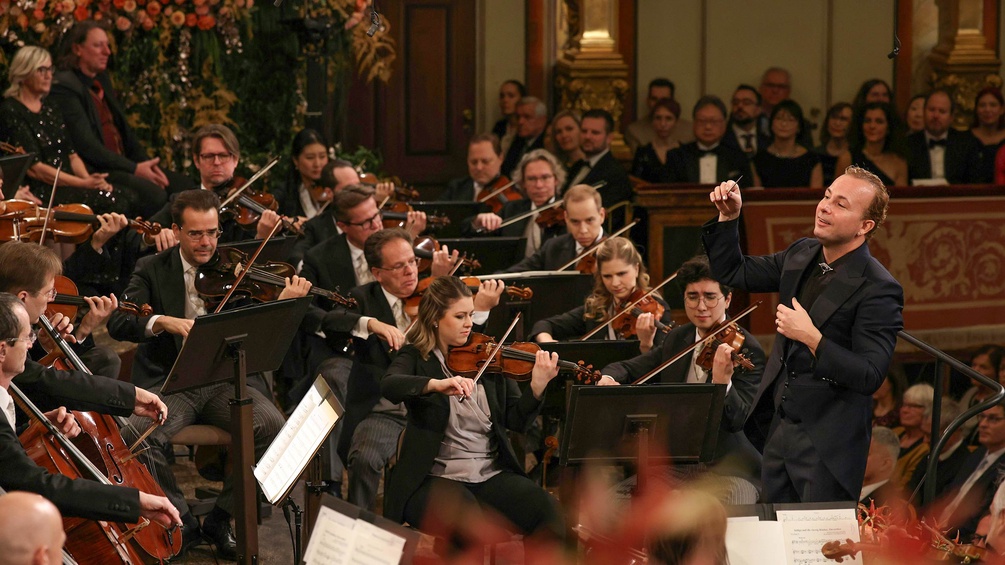
Ya el año pasado, hubo sorpresa y expectación cuando se anunció que el director del Concierto de Año Nuevo de Viena de 2026 sería el canadiense Yannick Nézet-Séguin, director musical del Metropolitan Opera House de Nueva York, y asiduo de la Orquesta Filarmónica de Viena desde 2010. Pero lo que nadie pudo imaginarse es que este concierto haría historia. Lo que siempre ha caracterizado al encorsetadísimo concierto vienés anual es su apego a las tradiciones y en muchas ocasiones, a la tranquilidad de lo bello. En esta línea, han ido los maestros en las últimas ediciones, todos ellos leyendas vivientes como Barenboim, Thielemann, Muti o veteranos como Welzer-Möst. El joven (para la orquesta y el concierto) maestro canadiense, de cuarenta y nueve años, ha resultado traer un soplo de aire fresco a esta tradición. Y eso que el aún más joven Gustavo Dudamel ya dirigió en la edición de 2017.
No se recuerda una jovialidad, una energía, una chispa tan grande en estos conciertos desde hacía largo tiempo, probablemente desde el japonés Seiji Ozawa en 2002, quien ya era por entonces un sexagenario, y de eso hace veinticuatro años. Nézet-Séguin disfruta, sonríe, desprende un entusiasmo alejado de la distante tranquilidad de los viejos maestros, apostando además por un repertorio bastante renovado. Y la respuesta ha llegado en forma de una tremenda ovación. Ya el año pasado se incluyó por primera vez una obra de una mujer, pero este año no solo se han incluido las de otras dos, sino que por primera vez, la obra de una persona de color se escucha en el concierto: el Vals del Arcoíris, de 1939, de la afroamericana Florence Price; de quien Nézet-Seguin es uno de sus valedores.
La primera parte comenzó con la obertura "Indigo y los cuarenta ladrones", de Johann Strauss hijo, una obra que comienza con tempi lentos, de gran belleza, seguida del vals Donausagen de Carl Michael Ziehrer, donde la orquesta estuvo apoteósica, y así como en el breve pero intenso galope Malapou de Joseph Lanner, la primera en la que los músicos además cantaban. Otra de las curiosidades del concierto era la inclusión de varias piezas con diferentes tipos de percusión. De gran lucimiento para la orquesta, enérgica interpretación la obertura de La Bella Galatea de Franz von Suppé ya en la segunda parte. Una delicia para los oídos, con una bella entrada de la sección de viento, el precioso y majestuoso vals "La dignidad de las mujeres" de Josef Strauss. La pieza de Florence Price empieza con una preciosa introducción de arpa, seguida por cuerdas y maderas, bastante moderna, hasta que se arranca con un vals, pero se nota lo contemporánea que es... una pieza que vale la pena. El ballet de la ópera de Viena hace su tradicional intervención en dos piezas, coreografiadas por el mítico John Neumeier, ambas de Johann Strauss hijo: la Polka del Diplomático, op. 448, y la popular Rosas del Sur. De Hans Christian Lumbye se interpretó el Københavns Jernbane-Damp-Galop (Galop del Ferrocarril de Vapor de Copenhague), una pieza ágil que además incluye silbatos que recrean el ambiente en una estación de ferrocarril, fabulosamente interpretada por la orquesta.
Las propinas incluyeron la Polka Circo, de Philipp Fahrbach hijo, una preciosa pieza con otros tipos de percusiones, que hizo de nuevo cantar (y muy bien) a los músicos. Después vendría una deliciosa, lenta, exquisita interpretación del famoso Vals del Danubio Azul, y el consabido final con la Marcha Radetzky de Strauss padre, que es sin duda la más divertida que se recuerda, pues Nézet-Seguin aprovechó para dirigirla mientras recorría todo el patio de butacas, sonriendo y al mismo tiempo dirigiendo al público. Sin dejar de interpretarla, aprovechó para dar un beso en la nuca a su esposo, el violinista Pierre Tourville.
En su discurso, que dio en francés e inglés, aludió a la paz, y resaltando que nuestras diferencias son para celebrarlas, y unirnos en la música, pues todos vivimos en un mismo planeta. El año que viene, no lo dirigirá una mujer como muchos llevan años pidiendo, sino el también joven maestro ruso Tugan Sokhiev, ex director musical del Teatro Bolshoi de Moscú. Empieza así con música el año 2026, un año que nos traerá sorpresas como el debut de dos geniales óperas en dos famosos festivales: el Rienzi de Wagner en su Bayreuth, y la gigantesca San Francisco de Asís de Messiaen en Salzburgo. Ganas tenemos de que lleguen, y yo de reseñarlos. Mientras tanto, se puede afirmar que este concierto será uno de los más recordados de su historia. Nézet-Séguin se ha apuntado un ascenso más en su brillante carrera gracias a él.

ENGLISH: Yannick Nézet-Seguin makes history in his debut at the Vienna's New Year's Concert.
Last year, there was surprise and expectation when it was announced that the director of the 2026 New Year's Concert in Vienna would be the Canadian Yannick Nézet-Séguin, music director of the Metropolitan Opera House in New York, and a regular conductor of the Vienna Philharmonic Orchestra since 2010. But what no one could imagine is that this concert would make history. What has always characterized the highly rigid annual Viennese concert is its attachment to traditions and, on many occasions, just to the tranquility of beauty. The maestros have followed this line in recent editions, all of them living legends like Barenboim, Thielemann, Muti or veterans like Welzer-Möst. The young (for the orchestra and the concert) Canadian maestro, aged fifty, has turned out to bring a breath of fresh air to this tradition, despite the even younger Gustavo Dudamel alreadyconducted in the 2017 edition.
Such great joviality, energy, and spark have not been remembered in these concerts for a long time, probably since when the Japanese Seiji Ozawa, who was already in his sixties at that time, conducted the 2002 edition, now twenty-four years ago. Nézet-Séguin enjoys, smiles, exudes an enthusiasm so different from the distant tranquility of the old maestros, and also by renewing the repertoire. The response has come in the form of an outstanding ovation. Last year, a work by a female composer was included for the first time. What's more, this year's edition has not only included works by another two, but for the first time, the work of a Black composer is heard in this concert: the 1939 Rainbow Waltz by the African-American Florence Price; of whom Nézet-Seguin is one of his supporters.
The first part began with the overture "Indigo and the Forty Thieves", by Johann Strauss Jr., a work that begins with slow tempi, of great beauty, followed by the Donausagen waltz by Carl Michael Ziehrer, where the orchestra was majestic, as well as in the brief but intense Malapou gallop by Joseph Lanner, the first in which the musicians also sang. Another curiosity of the concert was the inclusion of several pieces with different types of percussion. A great displaying show for the orchestra's sections, an energetic performance of the overture to Die Schöne Galathée operetta by Franz von Suppé, now in the second part. A delight for the ears, with a beautiful entry from the woodwind section, the beautiful and majestic waltz "The Dignity of Women" by Josef Strauss. Florence Price's piece begins with a beautiful harp introduction, followed by strings and woodwinds, quite modern, until it starts with a waltz, but you can see how contemporary it is... actually a worthwhile piece. The Vienna State Ballet makes its traditional intervention in two pieces, choreographed by the legendary John Neumeier, both by Johann Strauss Jr.: the Diplomat's Polka, op. 448, and the popular Roses from the South.
By Hans Christian Lumbye, the Københavns Jernbane-Damp-Galop (Copenhagen Steam Railway Galop) was performed, an agile piece that also includes whistles that recreate the atmosphere in a railway station, fabulously performed by the orchestra. The tips included the Circus Polka, by Philipp Fahrbach Jr., a beautiful piece with other types of percussion, which made the musicians sing again (and very well). Then would come a delicious, slow, exquisite rendition of the famous Blue Danube Waltz, and the well-known finale with the Radetzky March by Strauss Sr., which became without a doubt the funniest ever in this concert's history, since Nézet-Seguin conducted while walking around the entire stalls, smiling and at the same time conducting the clapping audience. Without stopping conducting, he took the opportunity to kiss his husband, the violinist Pierre Tourville, on the back of the neck.
In his speech, which he gave in French and English, he alluded to peace, highlighting that our differences are to be celebrated, united in music, since we all live on the same planet. Next year, it will not be directed by a woman as many have been asking for years, but by the young Russian maestro Tugan Sokhiev, former musical director of the Bolshoi Theater in Moscow. Thus begins the year 2026 with music, a year that will bring us surprises such as the debut of two great operas at two famous festivals: Wagner's Rienzi in Bayreuth, and the gigantic Messiaen's Saint François d'Assise in Salzburg. We are looking forward to them arriving, and I am looking forward to reviewing them. Meanwhile, it can be said that this concert will be one of the most remembered in its history. Nézet-Séguin has went up another step in his brilliant career because of it.
Any reproduction of my text requires my permission.

No hay comentarios:
Publicar un comentario