lunes, 18 de mayo de 2026

Wagner with a superb Hunding and a charming Sieglinde: Die Walküre's Act One in concert in Madrid.


Madrid, May 17, 2026.

The end of the current Spanish National Orchestra and Choir season is approaching, the last under David Afkham's baton. He has led the orchestra to a glorious era, making it the finest available in the Spanish capital for major symphonic works. The living legend Kent Nagano will succeed him from next season onwards, and it is hoped he can guide the orchestra into a new successful era. In its final stretch, one of the most anticipated events for local opera lovers, and of course for Wagnerians, has been scheduled: the first act of Die Walküre, the first journey of Richard Wagner's Ring, and its most popular opera, will be performed in three concert performances. With no complete Wagnerian operas staged in the capital since 2024, and awaiting the new Tannhäuser in 2027, this is the highlight of the year for Madrid's Wagner enthusiasts. 

As noted above, Die Walküre is the most popular opera of the entire Ring cycle. Its lyricism, overflowing in the first act, the portrayal of the emotions and inner conflicts of its heroic and divine characters, alongside its beautiful music; with celebrated moments such as the entire first act, the famous Ride of the Valkyries, and the grand finale, are enough reasons to explain why this opera has often been performed independently of the complete cycle. Within this independent context, the first act is regularly performed separately in concert, given its immense popularity. Numerous outstanding recordings and radio broadcasts of this act have been available for decades, both studio and live, always performed by the greatest singers of each generation. 

The music of this first act is passionate, theatrical, wild, and at the same time lyrical and beautiful; thanks to Wagner's genius for creating atmosphere and emotion, in a work overflowing with theatricality and musicality. Its harrowing prelude stirs the strings, revealing the tension of Siegmund's escape on a stormy night. The strings gradually lower their intensity, but not their harshness, until, just before Siegmund opens his mouth, they are silenced not sweetly, but with sharp, staccato blows. Wagner conveys his weariness to us. After the encounter with Sieglinde, empathy takes over; it is here that the strings convey tenderness and sensitivity, with a beautiful cello solo, an instrument that shines in this act. Hunding's brutality is reinforced by the brass. The third part of the act is the most famous and the most lyrical, moving from Siegmund's whirlwind of emotions upon finding the sword and calling out to his father, Wälse, followed by the solemnity of Sieglinde recounting her story, and then to the delight of the arias "Winterstürme" and "Du bist der lenz," followed by the lovers' duet that closes the opera. In this duet, the music reveals Wagner's genius for conveying to the audience the overflowing passion, the exquisite spring night that contrasts sharply with the  heavy storm that opened the act, and the joy of two young siblings and lovers reuniting after so many years apart.

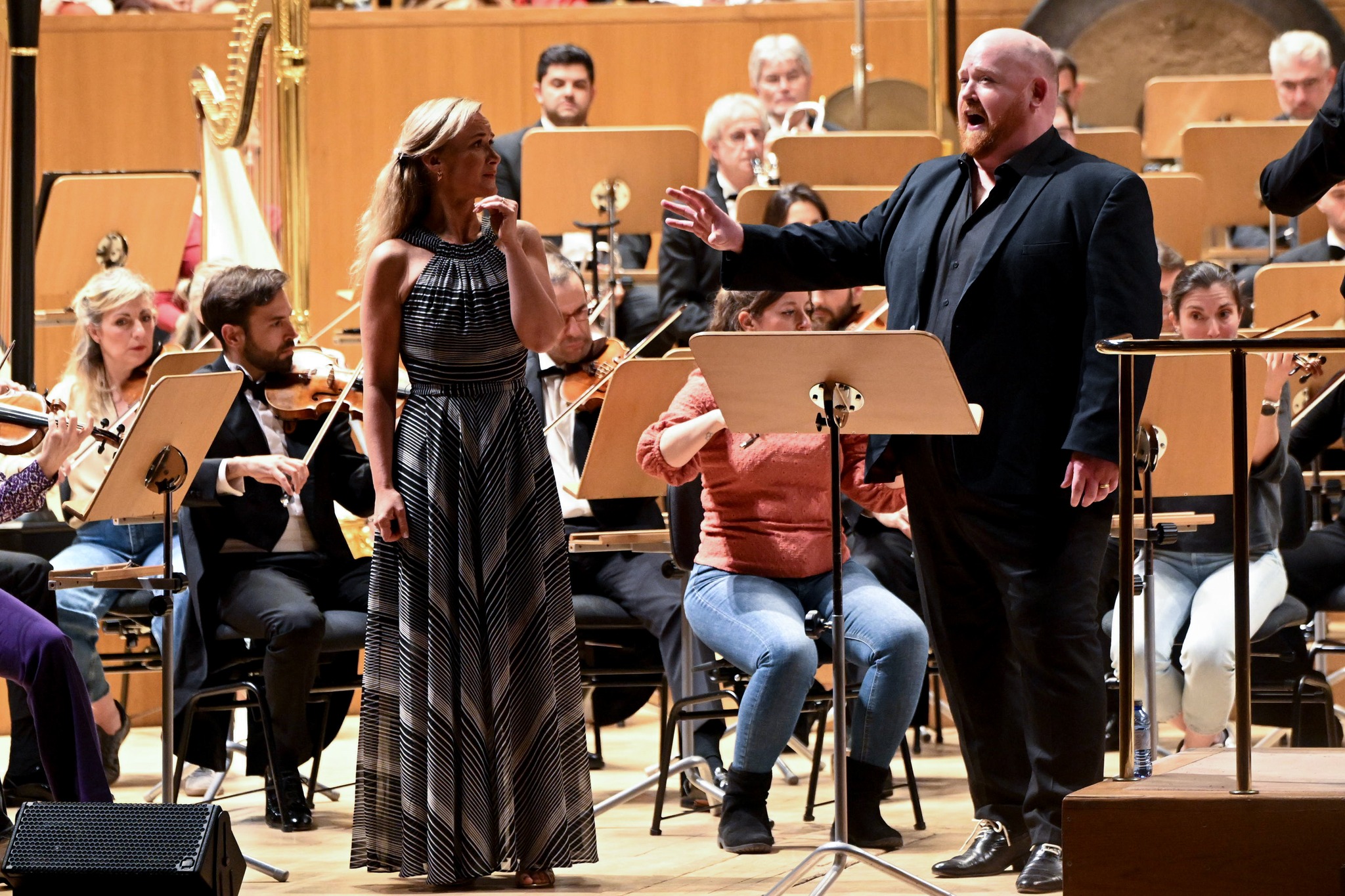
Siegmund is a vigorous, courageous man, tormented by the misfortune that haunts him. On this occasion, the Scottish tenor Nicky Spence portrayed him. However, the performance was lackluster, dragging the orchestra down with it. At the beginning of the act, his voice didn't sound particularly grand or heroic, but it suited the scene of a weary Siegmund. Even when he recounted his story to Hunding, even when he was already showing signs of weakness, he remained at a decent level. However, the real test came from the grand finale onwards. In the powerful "Ein Schwert verhiess mir der vater," his voice struggled to be heard, and in fact, in the two "Wälse" he was supposed to sing, there was no impact whatsoever; even his timbre didn't sound too much heroic. It seemed a Siegmund who was mainly muttering. In the celebrated "Winterstürme," the first half suited his rather lyrical voice, but in the second half he again struggled to be heard at several points. Lines that should have been sung with vigor, or at least conveying it, sounded like delicate whispers. It is no wonder that Sieglinde and Hunding overwhelmed him on stage.

Vida Miknevičiūte is one of the most acclaimed Wagnerian interpreters today, especially in the role of Sieglinde. This Lithuanian soprano has a delightful voice, more lyrical than dramatic, which lends a freshness to the character, but when she has to tackle dramatic moments, she does her best to convey them to the audience with her lyrical voice. Thus, her high notes, while not overwhelming, have sufficient volume and sound perfectly appropriate in the most intense moments. She was remarkably successful in the beautiful "Der Männer Sippe," where she conveyed the solemnity and melancholy of that moment, and in the final duet, her singing was youthful and committed, complemented by her captivating stage presence.

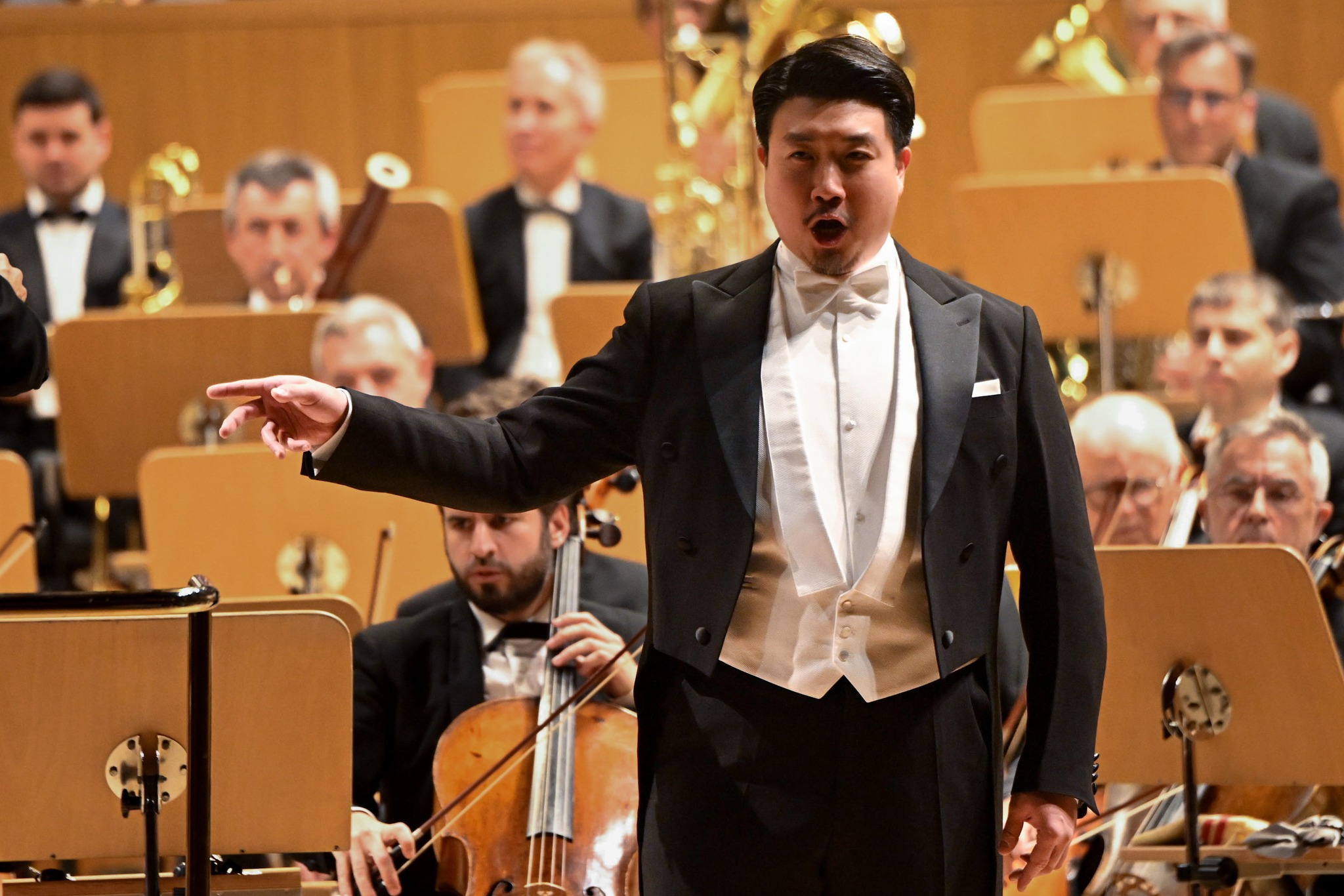
The best performer was undoubtedly Jongmin Park as Hunding. This South Korean singer is one of the world's leading dark basses. His performances in Wagnerian operas have taken him to top opera houses such as Milan, Berlin, Bayreuth, and soon, New York. In Madrid, he sings regularly in the Teatro Real seasons, where he has given unforgettable performances in roles such as Fafner, Ramfis, and Pogner. Here, he displayed his powerful resources: a powerful voice that resonated throughout the auditorium, and a dark timbre ideal for this brutal character. Any lethargy that some audience members might have been experiencing was shattered when he vigorously sang the line, "Heilig ist mein Herd: heilig sei dir mein Haus!" (Holy is my House: holy be your house!). Throughout his entire performance, he maintained his powerful voice. Although I didn't particularly like that when he tells Siegmund to beware because they will face each other the next day, the last word of the threatening phrase was "hüte dich wohl!" (Hold yourself safe!) It couldn't be heard because the brass covered it. Even so, nothing detracts from an outstanding performance.

The Spanish National Orchestra, under the baton of David Afkham, has an amazing level for this repertoire. However, as I mentioned before, it was somewhat marred by the timbre and volume of the tenor. After a prelude that, despite the vigor of the strings, hadn't quite warmed up, the orchestra began to show its true potential, and the cello sounded wonderful. The brass provided a fitting complement to Hunding's powerful vocals. However, it gives the impression that the orchestra lowered its volume so as not to overpower the tenor. Even so, it managed to shine in moments such as when, after the "Wälse" that Siegmund exclaims to summon his father, the trumpet shone when the hero sees the sword in the tree. During the final duet, there were moments of beauty, such as in the "Winterstürme," but also some quieter moments, also to avoid drowning out the tenor. However, the orchestra ignored this when Siegmund proclaimed "so blühe denn, Wälsungen-Blut (may the blood of the Wälsungs flourish)", as the orchestra closed the concert with a spectacular tutti at the height of the work's ecstasy. 

It should be added that before this first act, "Inferno," a part of the symphonic poem The Divine Comedy by Conrado del Campo, a talented Spanish musician whose Straussian inspiration is evident—some have even called him the Spanish Strauss—was performed. The piece of beautiful music was very well played.

Despite the popularity of Wagner's work, there were plenty of tickets available for the three concerts this past weekend, although some people assured me that quite a few were sold on Friday and Saturday. Those who attended the concert, enthusiastically applauded the performers, especially Miknevičiūte, Park, and Afkham. The artists even had to take an extra bow because of the audience's enthusiastic applause. Outside, there was quite a crowd at the artists' entrance, and Spence signed many autographs. I waited for the great Park, who took photos with all the music lovers who were there. This concert series has seen the female members of the orchestra dressed in street clothes, in protest against the formal attire provided by the orchestra, which they apparently found uncomfortable and even hindered their work.

The 2026-2027 season of the Spanish National Orchestra has been announced, the first with Nagano as leading conductor, and no operas will be performed. A real shame, so we must thank Mr. Afkham not only for his great labour but also for including great operas and lyrical excerpts in these seasons, because this orchestra has proven its worth in the genre. 


My reviews are not professional and express only my opinions. As a non English native speaker I apologise for any mistake.

Most of the photographs are from the internet and belong to its authors. My use of them is only cultural. If someone is uncomfortable with their use, just notify it to me.

Any reproduction of my text requires my permission. 

La ONE se despide de la ópera por una temporada: Primer Acto de la Valquiria con Park y Miknevičiūte.


Madrid, 17 de mayo de 2026.

Se acerca el final de esta temporada de la Orquesta y Coro Nacionales de España, la última de David Afkham al frente de esta orquesta a la que ha llevado a una época gloriosa, hasta convertirla en la mejor disponible en la capital para grandes obras sinfónicas. El mito viviente Kent Nagano, le sustituirá a partir la siguiente temporada, esperando que pueda llevarla hacia una nueva y exitosa época. En su recta final, se ha programado una de las citas más esperadas por los operófilos locales, y por supuesto para los wagnerianos: el primer acto de La Valquiria, primera jornada de El Anillo del Nibelungo, de Richard Wagner, y su ópera más popular, se interpreta en tres funciones en concierto. Sin óperas wagnerianas completas representadas en la capital desde 2024, y esperando el nuevo Tannhäuser en 2027, esta es la gran cita del año para los wagnerianos madrileños. 

La Valquiria es la ópera más popular de todo el Anillo. Su lirismo, desbordante en el primer acto, la presencia de las emociones y conflictos internos de sus heroicos y divinos personajes, y su bella música, con momentos célebres como el primer acto al completo y especialmente su dúo final, la famosa cabalgata de las valquirias o el gran final del tercer acto, son razones por las que esta ópera muchas veces se ha llegado a representar independientemente del ciclo completo. Dentro de esta independencia, el primer acto regularmente se interpreta suelto en concierto, dada su gran popularidad. Múltiples grandes interpretaciones discográficas y transmisiones de radio de este acto se han nos han llegado desde hace décadas, tanto en estudio como en vivo, siempre por los más grandes cantantes. 

La música de este primer acto es pasional, teatral, salvaje y al mismo tiempo lírica y hermosa; gracias al genio de Wagner para crear ambientes y emociones, en una obra que desborda teatralidad y musicalidad. Su estremecedor preludio agita las cuerdas, mostrando la tensión de la huida de Siegmund en una noche de tormenta, las cuerdas van bajando la intensidad, pero no la tosquedad, hasta que antes de que Siegmund abra la boca, se apagan no dulcemente, sino a golpes secos. Wagner nos transmite su cansancio. Tras el encuentro con Sieglinde, se da paso a la empatía, es aquí cuando las cuerdas transmiten ternura, sensibilidad, con un precioso solo de violonchelo, instrumento que se luce en este acto. La brutalidad de Hunding viene reforzada por el metal. La tercera parte del acto es la más conocida y la más lírica, pasando del torbellino de emociones de Siegmund cuando encuentra la espada y clama a su padre Wälse, seguido de la solemnidad cuando Sieglinde cuenta su historia, pasando a la delicia tras las arias "Winterstürme" y "Du bist der lenz", seguidas del dúo de los amantes que cierra la obra. En ese dúo la música da cuenta del genio de Wagner para transmitir al público la pasión desbordante, la deliciosa noche primaveral que contrasta con el frenesí de la tormenta que abría el acto,  y el entusiasmo de dos jovenes hermanos y amantes al conocerse después de tantos años separados.

Siegmund es un hombre vigoroso, valiente, atormentado por la desgracia que le acecha. En esta ocasión, el tenor escocés Nicky Spence ha sido el encargado de interpretarlo. Sin embargo, la interpretación ha sido descafeinada, arrastrando a la orquesta con ella. Al inicio del acto, la voz no es que sonara ni muy grande ni muy heróica, pero se adecuaba a la escena de un Siegmund cansado. Incluso cuando contaba su historia ante Hunding, ante la que ya daba señales de debilidad, se mantuvo en un nivel correcto. Sin embargo la prueba de fuego vino a partir de la gran escena final. En la poderosa "Ein Schwert verhiess mir der vater", la voz luchaba por hacerse oír, y de hecho en los dos "Wälse" que debía cantar no hubo impacto alguno, ni volumen, incluso el timbre se reveló poco heroico. Era un Siegmund que musitaba. En la célebre "Winterstürme", la primera mitad se ajustó a su voz más bien lírica, pero en la otra mitad volvió a mostrar con problemas para hacerse oír en varios momentos. Frases que deberían ser cantadas con vigor, o al menos transmitirlo, parecían delicados susurros. No es de sorprender que Sieglinde y Hunding lo aniquilaran en escena.

Vida Miknevičiūte es una de las intérpretes wagnerianas más aclamadas en la actualidad, y especialmente en el rol de Sieglinde. La soprano lituana tiene una voz deliciosa, más lírica que dramática, lo que le da frescura al personaje, pero cuando tiene que afrontar momentos dramáticos hace lo posible por transmitirlos al público con su lírica voz. Así, los agudos sin sonar impactantes, tienen el volumen suficiente y suenan lo suficientemente correctos en los momentos más intensos. Cumplió notablemente en la bella "Der Männer Sippe", donde transmitió la solemnidad y melancolía de ese momento, y en el dúo final su canto fue juvenil, entregado, además de completarlo con su presencia escénica.

El mejor intérprete fue sin duda Jongmin Park como Hunding. Este bajo surcoreano es uno de los más importantes exponentes de la cuerda de bajo profundo en el mundo. Además sus interpretaciones en óperas wagnerianas le han llevado a los más grandes teatros líricos: Milán, Berlín, Bayreuth y próximamente Nueva York. En Madrid es habitual en las temporadas del Teatro Real, donde ha dejado inolvidables interpretaciones de roles como Fafner, Ramfis y Pogner. Aquí mostró sus poderosos medios: una potente voz que corría por todo el auditorio, y un timbre oscurísimo ideal para este brutal personaje. Cualquier letargo en el que pudiera estar algún espectador, se rompió cuando pronunció "Heilig ist mein Herd: heilig sei dir mein Haus!", frase vigorosamente emitida. Durante toda su intervención mantuvo su poderosa línea vocal. Aunque no me gustó mucho que cuando le dice a Siegmund que se guarde porque se enfrentan al día siguiente, la última palabra de la amenazante frase "hüte dich wohl!" no se pudiera oír porque el metal le tapó. Aun así, nada empaña una interpretación sobresaliente.

La Orquesta Nacional de España bajo la batuta de David Afkham tiene un excelente nivel. Sin embargo, y como he dicho antes, se vio empañado por el volumen del tenor. Tras un preludio en el que aún no se entraba del todo en calor pese al vigor de las cuerdas, la orquesta empezó a mostrar su verdadero nivel, y el violonchelo sonó maravilloso. Los metales fueron un complemento que acompañó bien a la brutalidad de Hunding. Sin embargo, da la impresión de que la orquesta ha bajado su volumen para no tapar al tenor. Aun así pudo brillar en momentos como cuando tras los Wälse que Siegmund exclama para invocar a su padre, la trompeta brilló cuando el héroe ve la espada en el árbol. Durante el dúo final hubo momentos de belleza como en el "Winterstürme", pero también otros momentos más bajos para no tapar al tenor. Sin embargo, la orquesta pareció mandar al traste todo cuando Siegmund proclama "so blühe denn, Wälsungen-Blut (florezca así la sangre de los welsungos)", pues la orquesta cerró el concierto con un tutti espectacular y a la altura del éxtasis de la obra. 

Hay que añadir que antes de este primer acto, se interpretó, "Infierno", una parte del poema sinfónico La Divina Comedia, de Conrado del Campo, un talentoso músico español cuya inspiración straussiana es evidente, incluso algunos le han llamado el Strauss español. La pieza de bellísima música estuvo muy bien interpretada.

Pese a lo popular de la obra wagneriana,  para los tres conciertos de este fin de semana que ha pasado, había muchas entradas disponibles, pese a que algunos me han asegurado que se vendieron bastantes durante el viernes y el sábado. Los que estaban ahí, aplaudieron con entusiasmo a los intérpretes, especialmente a Miknevičiūte, Park y Afkham. Incluso los artistas tuvieron que hacer una salida más debido a que el público aplaudió bastante. A la salida, hubo bastante gente en la puerta de artistas, y Spence firmó bastantes autógrafos. Yo esperé al gran Park, quien se hizo fotos con todos los melómanos que allí estábamos. Esta serie de conciertos ha visto a los miembros femeninos de la orquesta vestir de calle, en protesta por el vestuario de gala proporcionado por la orquesta, que al parecer les resulta incómodo e incluso obstaculizaba su trabajo.


Se ha anunciado la nueva temporada de la Orquesta Nacional de España, la primera con Nagano al frente, y no habrá ninguna ópera programada. Una pena, así que hay que agradecerle al señor Afkham no solo su gran labor sino también el haber incluido grandes óperas y fragmentos líricos en estas temporadas, porque esta orquesta ha demostrado su valía para el género. 


Las fotografías escénicas y vídeos no son de mi autoría, si alguien se muestra disconforme con la publicación de cualquiera de ellas en este blog le pido que me lo haga saber inmediatamente. 

Cualquier reproducción de este texto necesita mi permiso.