
Madrid, January 31, 2026.
Paul Dukas is known today primarily for his work The Sorcerer's Apprentice, an orchestral scherzo from 1897, popularized worldwide by Mickey Mouse, wearing his iconic red sorcerer's suit in the classi 1940 cartoon film Fantasia. Beyond that, Dukas is known for being one of the most important French Impresionist composers, and for being such a perfectionist that he would destroy every composition he disliked. As a result, his surviving work catalogue is small. Among these surviving works, stands his only opera (although there were projects for another ones that never came to fruition), Ariane et Barbe-bleue (Ariadne and Bluebeard in French), from 1907, with a libretto by Maurice Maeterlinck, who also wrote the text for Claude Debussy's great Impressionist opera, Pelléas et Mélisande. This magical, evocative, and beautiful score tells the Bluebeard tale in an odd way. Bluebeard marries Ariane, an independent and charismatic young woman whose curiosity leads her to discover her husband's infamous harem of captive, subdued wives. Unlike Judith in Béla Bartók's opera about the same male character, who ultimately accepts her fate, Ariane becomes a beacon of hope for these long-suffering women and confronts the tyrant. Unfortunately, they remain trapped in their comfort zones, their psychological dependence, and their fear of emancipation, with Ariane being the only one who breaks Bluebeard's chains for freedom.
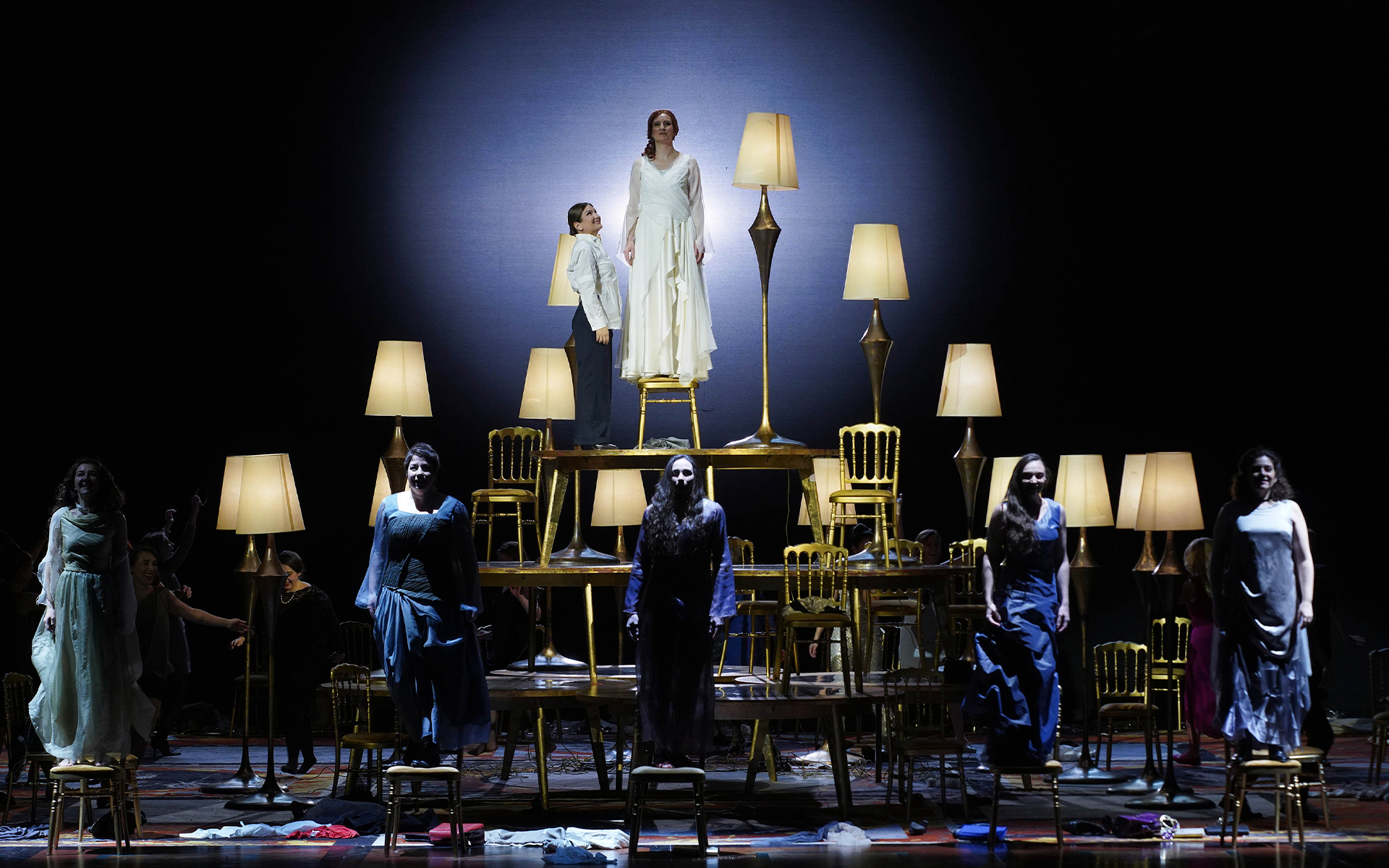
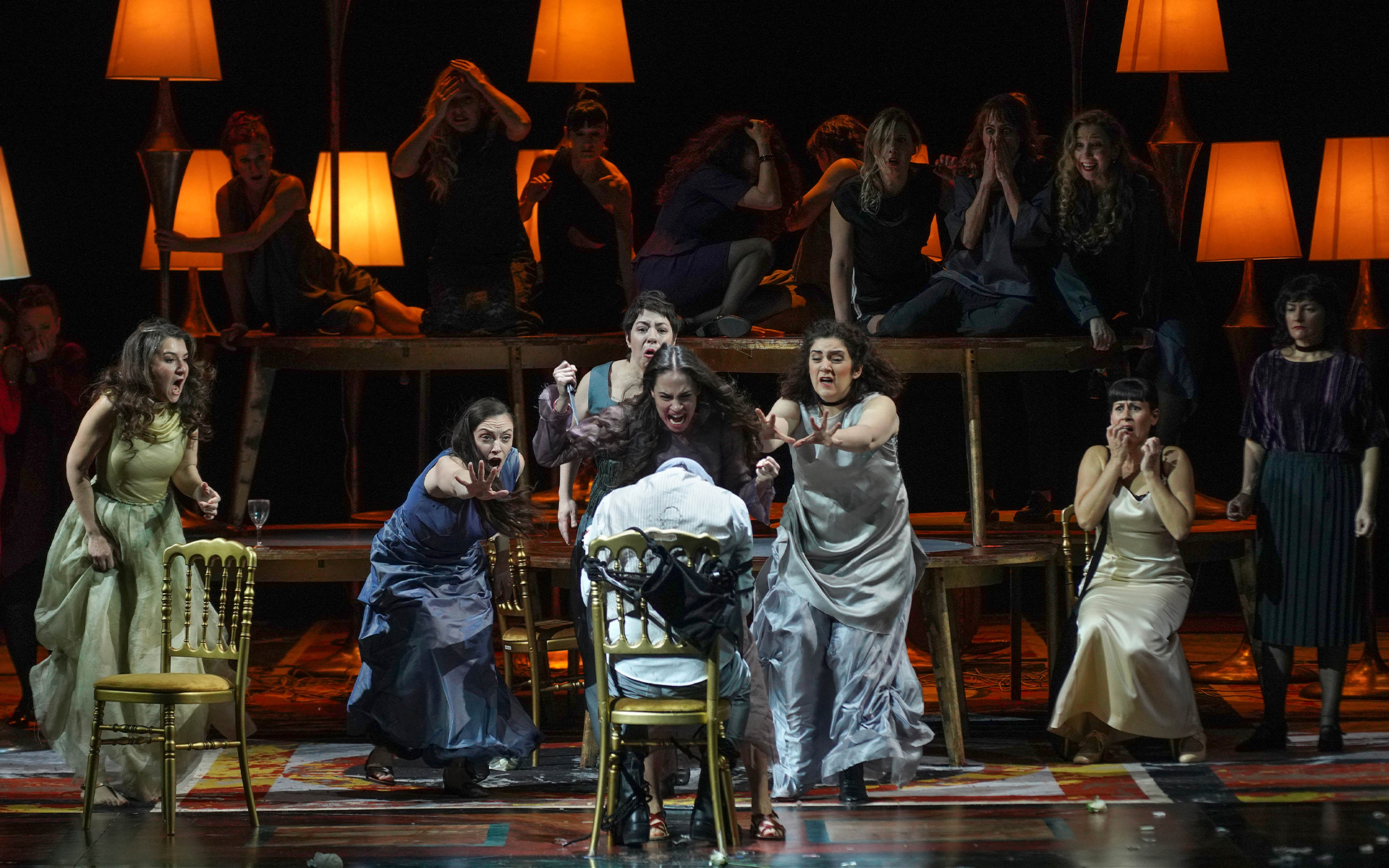
The Teatro Real has included in its current season the celebrated operas by Bartok, last November , and now Dukas, about the infamous wife-collector. This opera premiered at the Teatro Real in 1913, one hundred and three years ago. Now it returns to its stage with a production from the Lyon Opera, directed by Alex Ollé from La Fura dels Baus. Needless to say, this production has been set in modern times, but beyond a fewcontradictory details, the staging is not intrusive and allows the audience to follow the work without significantly altering the plot. During the opening chorus, a film is projected showing the protagonists, newlyweds, traveling by car, leaving behind the city of Madrid with its iconic four towers in the background, heading towards their new home... because Bluebeards exist in every era and every nation. During the first act, part of the stage is darkened, and in a small section, Ariane and her nurse visit all the rooms. In each room, Bluebeard appears with a woman, and different lighting represents each chamber. When Ariane finishes listening to the singing from a distant and unseen female chorus—her husband's other wives—the entire stage is illuminated, revealing tables occupied by guests and surrounded by enormous lamps. These are the wedding guests, among whom are the other five wives. Other women appear throughout the work, as if the harem were larger. This room will be the main set for the rest of the opera. In the second act, when Ariane finds the exit and shows her companions the outside world, this is reflected in a new arrangement of the tables: they form a tower with Ariane on the top as the emancipatory leader, and this tower is surrounded by lamps. In the final act, the chorus fights Bluebeard, whom they defeat after a long battle. He is tied to a chair, head bowed, facing his wives and with his back to the audience. Bluebeard is not freed. At first, his wives, especially Aldadine, attack him, but ultimately they do not kill him. Finally, Ariane leaves with her nurse, but the remaining ones they leave him tied to the chair and turn him around, displaying him before the audience, to whom they stare directly.
The return to the Teatro Real, after sixteen years, of the great Israeli maestro Pinchas Steinberg, one of the finest opera conductors working today, is a major event. Since his debut in 1974 with the Berlin Radio Symphony Orchestra, the accomplished maestro has enjoyed a long and successful career. In the Wagnerian world, he is also known for his 1992 recording of The Flying Dutchman for Naxos and his masterful 2012 DVD performance of Rienzi in Toulouse. Steinberg is a regular guest at Madrid's symphony seasons, but he has not conducted at the Teatro Real for many years. In 2005, he conducted and led a spectacular run of performances of Richard Strauss's Die Frau ohne Schatten, which remains etched in the memory of those who saw it. In 2010, at the end of Antonio Moral's final season as director of the Teatro Real, he returned to conduct an equally impressive and beautiful version of Erich Wolfgang Korngold's Die Tote Stadt, which moved many of us who attended the performances. Aged 80, the maestro once again conducted the Teatro Real Orchestra, taking its sound at the highest level, conveying the beauty, intimacy, and evocative power of the score from the very first orchestral introduction. The woodwinds had a particularly memorable moment in the prelude to the third act. The Teatro Real Choir, under the direction of José Luis Basso, gave an excellent performance of its opening scene, showcasing its powerful male section throughout the opera, without overshadowing the women in the first act's finale.
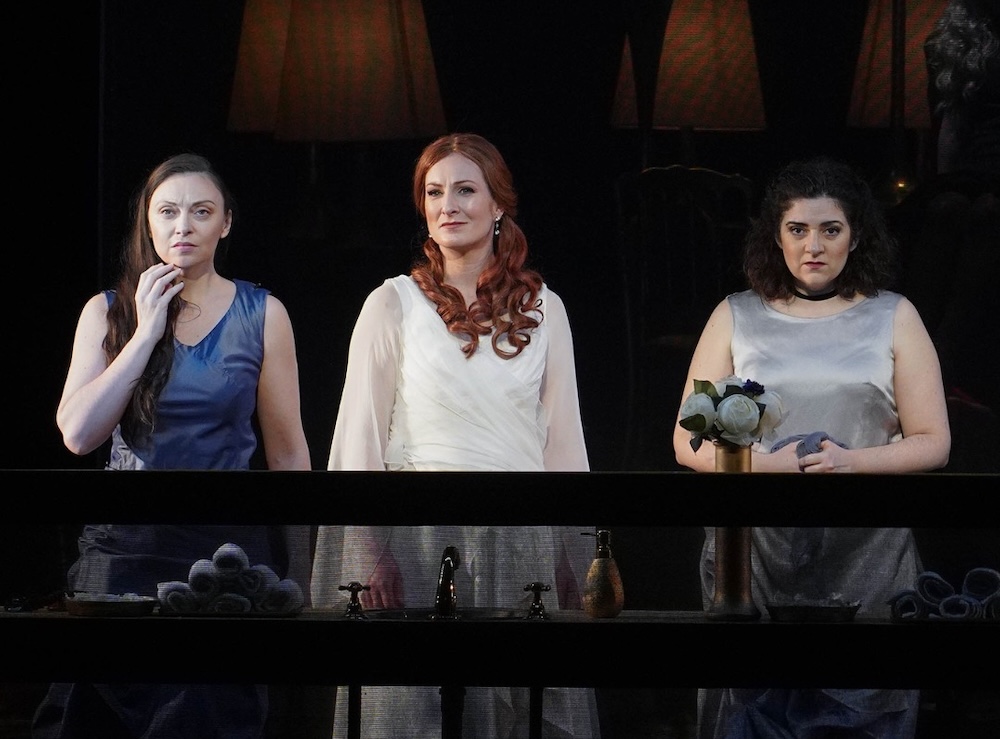
The undisputed protagonist is Ariane. Irish mezzo-soprano Paula Murrihy possesses the stage presence to portray the charismatic character, apart from being a very beautiful woman. Vocally, her performance improves throughout the show, her rather high timbre enhancing the beauty of her portrayal of the role. Bluebeard sings very little, though his presence serves as a dramatic and musical counterpoint to the free-spirited Ariane, so that his absence is felt even when he is not around. In this case, Italian bass Gianluca Buratto is as impressive as the role demands, with his dark and powerful voice, as well as his commanding stage presence.
However, the most outstanding performers were the mezzo-sopranos Silvia Tro Santafé, with a beautiful voice as the nurse, and Aude Extrémo, with an imposing dark voice as Sélysette. The sopranos Jaquelina Livieri and especially María Miró were remarkable as Ygraine and Mélisande. The cast is rounded out by the competent Renée Rapier as Bellangére, with her commanding stage presence, and the bass Luis López Navarro (whom I remember as an excellent jailer in the 2021 Tosca, opposite Jonas Kaufmann ) as the old peasant. The actress Raquel Villarejo played the silent and suffering Alladine.

Surprisingly, for a not so popular opera, the theater was highly occupied, with Murrihy and Steinberg as the most ovationed. When such a beautiful opera is well-produced, it's doubly enjoyable. I can confidently say that this is the most well-rounded performance we've had so far this season at the Teatro Real.

My reviews are not professional and express only my opinions. As a non English native speaker I apologise for any mistake.
Most of the photographs are from the internet and belong to its authors. My use of them is only cultural. If someone is uncomfortable with their use, just notify it to me.
Any reproduction of my text requires my permission.

No hay comentarios:
Publicar un comentario