viernes, 6 de septiembre de 2024

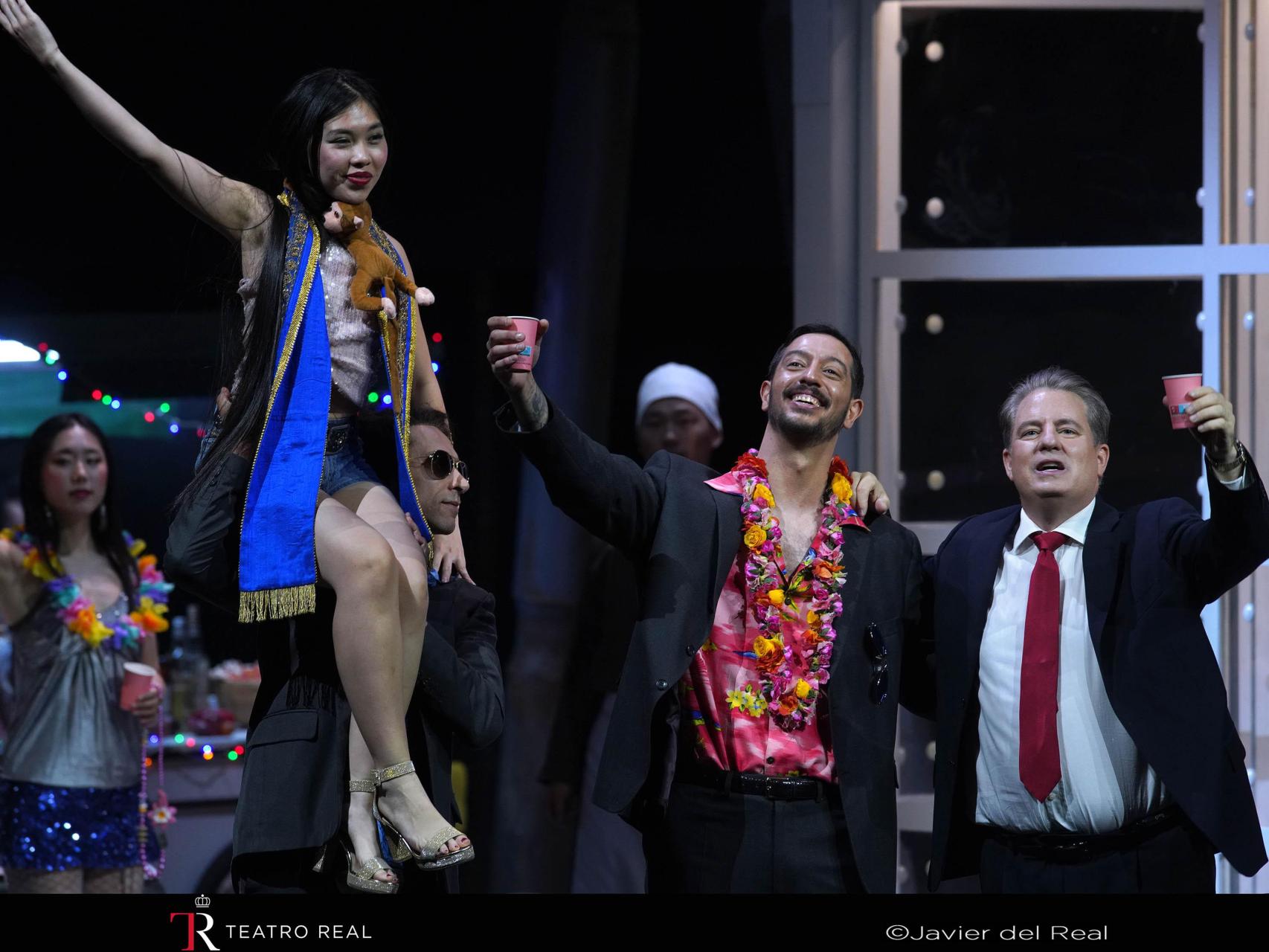
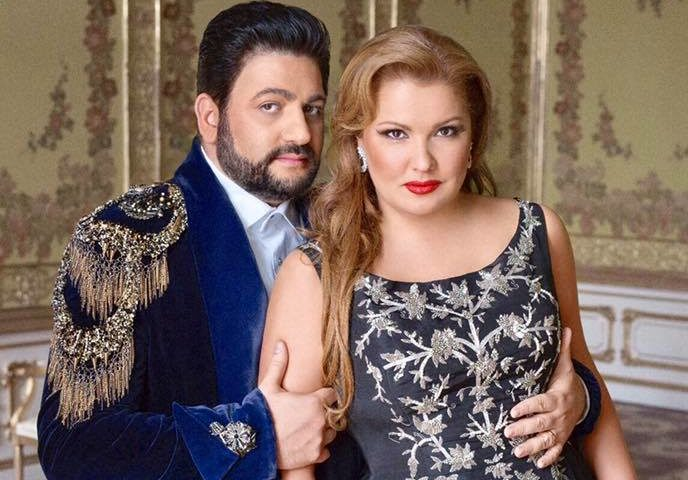
The diva and the best Puccini: Anna Netrebko and Yusif Eyvazov in a Puccini gala at the Teatro Real.

Madrid, September 5, 2024.

Regular guests in recent years in the Teatro Real's last seasons, the artistic couple formed by the Russian soprano Anna Netrebko and the Azerbaijani tenor Yusif Eyvazov, is back to Madrid, in an all-Puccini recital. We have still fresh in our memory her brilliant Tosca in the first post-pandemic season in Madrid, as well as her great  Aida in 2022, during her gradual comeback to international stagings after the Russian invation of Ukraine.

Netrebko, despite her vocal maturity, and the boycott that haunted her in the 2022 Madrid Aida performances with pro-Ukrainian protesters outside the theatre (luckily, this time there was no protest) in relation to her unfortunate good relationship with Vladimir Putin's regime, which she finally disowned (but is still banned in the United States), continues to be the primadonna par excellence in today's opera. Puccini is a composer who is not only unknown to her, but also she is an outstanding performer of his operas, since in recent years she has sung very frequently Tosca and Turandot, and in the past she was an outstanding Mimì, even filming it with Rolando Villazón, with whom she shared a lot of chemistry on stage, when both were at the height of their careers and fame. She has also performed Manon Lescaut in Vienna, New York and Moscow. In addition, she has recorded several Puccinian arias on various albums, including one entirely dedicated to the composer. For all these reasons, this concert was one of the most awaited of the new season.

The other star is the tenor  Eyvazov, who in addition to being her partner on stage, has also been her husband in real life, until they announced their separation last June. Eyvazov is usually his partner in many productions and recitals, but he is also pursuing an important solo career. 

Alongsie them, the soprano Daria Rybak and the baritone Jérôme Boutillier, accompanied by the Teatro Real Orchestra and Chorus, conducted by Denis Vlasenko and  the reinforcement of the RTVE Choir, have offered us the following program:

The program began with highlights from Turandot. After the brief choral introduction, Anna Netrebko entered in a sparkling dress, to sing "In Questa Reggia". Netrebko proves to have a spectacular voice, with considerable volume and a beautiful timbre, although Turandot is not a fitting role for her voice, and in fact it seemed fragile at the beginning of the aria. As the aria was transcurring, Netrebko shined with her brilliant high notes. During the following scenes of Turandot, Netrebko stuck to her line, although in the final chorus, she sang a delightful pianissimo on "padre augusto, conosco il nome dello straniero." Then she gave an excellent version of Manon Lescaut's scenes, with a heartbreaking interpretation of "Sola, perduta, abbandonata", as heartbreaking were her high notes too. She maintained this level in the duet "Tu, tu amore", with which the first part of the concert closed.

The second half was memorable. It began with a wide selection, much from of the third act of La Bohème. The days when Netrebko sang Mimì on stage are long gone, but here she showed that she knows the role, and that she can still sing it well in a concert, using her staging experience and her still generous voie, scoring a delicious version of the moving aria "Donde lieta uscì". Then came the "Vissi d'arte", which she already sang on this same stage two years ago, now in a majestic rendition in which she allowed herseelf to lengthen a note in pianissimo before the final phrase "perchè me ne rimuneri così", after which the theater collapsed in thunderous applause. The concert officially ended with the final duet of the first act of Madama Butterfly, the "Vogliatemi Bene", which began with exquisite singing, in which it went from pianissimo, to a display of voice throughout the duet. Her Butterfly may be rather dramatic, but there were moments of tenderness. The concert had two encores, one of which was the O mio babbino caro sung by her. A nice version of a popular aria, which she sang beautifully, in which she again gave a very prolonged high note in "Babbo, pietà, pietà", which impressed everyone with her ability to maintain it for so long, after which she received a strong ovation.

Yusif Eyvazov  improved during the concert. His singing was not very inspiring in the scenes from Turandot, where the high notes tend not to sound beautiful but rather too nasal, even umpleasant. It would be unfair to deny his dedication and effort, something that allowed him to reach a more correct level from Manon Lescaut's numbers onwards, especially in "Donna non vidi mai" and Tosca's "Recondita Armonia". After the end of the concert, he dared to sing the Nessun Dorma, which he performed better than expected. If there is something that cannot be denied, it is the torrential voice that he has, although at some moments the orchestra covered him up.

A surprise was Daria Rybak, who with a beautiful lyrical voice, with a dark touch, allowed her to sing a wonderful version of "Tu che di gel sei cinta" from Turandot, and whose treble could resist the massive volume of the orchestra and the Eyvazov's voice in the final scene of the first act of the same play. If she continues to sing this well, hers is a voice to follow.

More discreet was the baritone Jerôme Boutiller, with a light voice, and without much charisma, except in the Bohème scene, where Marcello was notable. In his solo performance, Edgar's baritone aria was correct. He also played the Mandarin in Turandot.

Alongide all them, the bass Cristian Díaz, and the tenors Pablo García-López and Mikeldi Atxalandabaso  sang in the Turandot scenes. The great spieltenor Atxalandabaso had sung Pong in the 2023 Turandot. In fact, at the end of the final scene of the first act, he made a smile-grimace that was reminiscent of those in the staging of that Turandot last year.

The Russian maestro Denis Vlasenko conducted the Teatro Real Orchestra too loud, and at times the conducting was harsh, as in the fragment at the end of the first act of Turandot, or in the end of the selection from La Bohème, going so far as to cover to the soloists. However, it is not entirely inconvenient for Turandot, although at times it sounded like it was Shostakovich. In the rest of the concert he maintained a good level, especially paying attention to Netrebko. I want to remark that this has been one of the best nights I could remember of the cellos and violas, being supreme. The string made a beautiful entrance before the phrase "Mai nessun m'avrà" in Turandot. The Teatro Real Choir, this time combined with the RTVE one, performed remarkably in their interventions. It has been moving to hear them again in the closed-mouth chorus of Madama Butterfly, after having heard them last summer.

The audience, which did not fill the hall, perhaps due to the high ticket prices, went to see the diva, and remained ecstatic after her interventions, especially in the intense second part. Netrebko has given us a good time with a repertoire in which she has been acclaimed worldwide, and which she clearly commands. Hopefully we will see her again soon in another concert or in a staged opera. The diva of the 21st century has once again conquered the Teatro Real.

My reviews are not professional and express only my opinions. As a non English native speaker I apologise for any mistake.
Most of the photographs are from the internet and belong to its authors. My use of them is only cultural. If someone is uncomfortable with their use, just notify it to me.

Any reproduction of my text requires my permission. 

La diva nos regala el mejor Puccini: Anna Netrebko y Yusif Eyvazov en el Teatro Real.


Madrid, 5 de septiembre de 2024.

Habitual en los últimos años en las programaciones del Teatro Real, la pareja artística formada por la soprano rusa Anna Netrebko y el tenor azerí Yusif Eyvazov, regresa a Madrid, y a su regio escenario, con una gala íntegramente dedicada a Giacomo Puccini. En nuestra memoria quedan la inolvidable Tosca que cantó en 2021, en la histórica temporada post-covid en el Teatro Real, así como la estupenda Aida que cantó al año siguiente en el mismo escenario. 

Netrebko, pese a su madurez vocal, y al boicot que hace dos años la acechó en sus funciones en Madrid (por suerte, esta vez no hubo ninguna protesta por este motivo) en relación a su desafortunada buena relación con el régimen de Vladimir Putin , de la que finalmente renegó (pero aun así sigue vetada en Estados Unidos), sigue siendo la primadonna por antonomasia en la actualidad operística. Puccini es un compositor que no solo no le es desconocido, sino que es una intérprete destacada de su música, pues en los últimos años ha cantado Tosca y Turandot, y en el pasado fue una destacada intérprete de Mimí de la Bohème, de la que hizo una película con Rolando Villazón, con quien compartía mucha química en escena, cuando ambos estaban en el apogeo de sus carreras y de su fama. También ha interpretado Manon Lescaut en Viena, Nueva York y Moscú. Por no hablar de las diversas arias puccinianas que ha grabado en varios discos, incluído uno íntegramente dedicado al genio de Lucca. Por todo ello, este concierto es uno de los más esperados de la temporada. 


La otra estrella del cartel es el tenor Yusif Eyvazov, quien además de ser su pareja en los escenarios, también ha sido su esposo en la vida real, hasta que anunciaron su separación el pasado junio. Eyvazov es habitualmente su compañero en muchas producciones y recitales, pero también está haciendo una importante carrera en solitario. 

Junto a ellos, la soprano Daria Rybak y Jérôme Boutillier, acompañados por la Orquesta y Coro Titulares del Teatro Real, con la dirección musical de Denis Vlasenko y con el refuerzo del Coro de RTVE, nos han ofrecido el siguiente programa:

PARTE I

- "Popolo di Pekino...Dal deserto al mar..." de Turandot

- "In questa reggia" de Turandot

- "Non piangere, Liú…Turandot!" de Turandot

- "Sei pallido, straniero!..." de Turandot

- "Tu che di gel sei cinta" de Turandot

- "Diecimila anni al nostro Imperatore!..." de Turandot

- Intermezzo de Manon Lescaut

- "Sola perduta, abbandonata" de Manon Lescaut

- "Donna non vidi mai" de Manon Lescaut

- "Tu, tu, amore? Tu?" de Manon Lescaut

PARTE II

- "Sa dirmi, scusi, qual’è l’osteria ...Mimi!...Speravo di trovarti qui... " de La bohème

- "Questo amor, vergogna mia" de Edgar

- "Vissi d’arte" de Tosca

- "Recondita armonia" de Tosca

- "Coro a bocca chiusa" de Madama Butterfly

- "Vogliatemi bene..." de Madama Butterfly

BISES

- O mio babbino caro, de Gianni Schicchi

- Nessun Dorma, de Turandot

El programa empezó con una amplia selección de Turandot, aunque no muy ordenada. Tras la breve introdución coral, Anna Netrebko entró con un vestido brillante, para interpretar "In Questa Reggia". Netrebko demuestra tener una voz espectacular, con un volumen considerable y un bello timbre, aunque no sea el de Turandot un rol para su voz, y de hecho ésta parecía fragil al principio del aria. A medida que avanzaba, Netrebko relucía sus agudos brillantes. Durante las siguientes escenas de Turandot, Netrebko se mantuvo en su línea, aunque en el coro final, cantó un delicioso pianissimo en "padre augusto, conosco il nome dello straniero". Después dio una excelente versión de las escenas de Manon Lescaut, con una desgarradora interpretación del "Sola, perduta, abbandonata", con unos agudos desgarradores. Dicho nivel lo mantuvo en el dúo "Tu, tu amore", con el que se cerraba el concierto. 

La segunda parte fue memorable. Empezó con una amplia selección, esta vez de gran parte del acto tercero de La Bohème. Los días en que Netrebko cantaba Mimì en escena ya quedaron atrás, pero aquí demostró que conoce el rol, y que aún puede cantarlo bien en un concierto, echando mano de sus tablas y de sus aún generosos medios, marcándose una deliciosa versión de la conmovedora aria "Donde lieta uscì". Después vino el "Vissi d'arte", que ya cantó en este mismo escenario hace dos años, ahora en una interpretación redonda, en la que se permitió alargar una nota en pianissimo antes de la frase final "perchè me ne rimuneri così", tras el cual el teatro se vino abajo en una atronadora ovación. El concierto terminó oficialmente con el dúo final del primer acto de Madama Butterfly, el "Vogliatemi Bene", el cual comenzó cantando exquisitamente, en el cual pasaba del pianissimo, a un despliegue de voz a lo largo del número. Su Butterfly puede ser más bien dramática, pero había momentos de ternura. El concierto tuvo dos propinas, una de las cuales fue el O mio babbino caro cantado por ella. Una versión de un aria popular, que cantó bellamente, en la que volvió a dar un prolongadísimo agudo en "Babbo, pietà, pietà", que impresionó por su capacidad de mantenerlo tanto tiempo, tras lo cual recibió una fuerte ovación.

Yusif Eyvazov tuvo una noche que fue de menos a más. No estuvo demasiado inspirado en las escenas de Turandot, donde los agudos,  no suelen salirle bellos sino más bien demasiado nasales. Sería injusto negarle entrega y esfuerzo, algo que le permitió llegar a un nivel más correcto a partir de los números de Manon Lescaut en adelante, especialmente en el Donna non vidi mai y en el Recondita Armonia de Tosca. Tras el final del concierto, se atrevió con el Nessun Dorma, el cual acometió mejor de lo esperado. Si hay algo que no puede negársele es la torrencial voz que tiene, aunque en algunos momentos le tapó la orquesta.

Una sorpresa fue Daria Rybak, quien con una bella voz lírica, con un toque oscuro, le permitió cantar una estupenda versión del "Tu che di gel sei cinta" de Turandot, y cuyos agudos podían resistir el volumen masivo de la orquesta y de la voz de Eyvazov en la escena final del primer acto de la misma obra. Si sigue cantando así de bien, es una voz a seguir.

Más discreto fue el barítono Jerôme Boutiller, con una voz ligera, y sin demasiado carisma, salvo en la escena de la Bohème, donde fue un notable Marcello. En su intervencion en solitario, el aria de barítono de Edgar, estuvo correcto. También interpretó al Mandarín en Turandot.

Junto a ellos, se contó con la intervención del bajo Cristian Díaz, y de los tenores Pablo García-López y Mikeldi Atxalandabaso en las escenas de Turandot. El gran Atxalandabaso había interpretado a Pong en la Turandot de 2023. De hecho, al concluir la escena final del primer acto, hizo una sonrisa-mueca que recordaba a las del montaje de esa Turandot del año pasado.

El maestro ruso Denis Vlasenko dirigió a la Orquesta del Teatro Real con muchos decibelios, y por momentos la dirección fue áspera, como en el fragmento del final del primer acto de Turandot, o en el final de la selección de La Bohème, llegando a tapar a los solistas. Sin embargo, no es del todo inconveniente para esta ópera, aunque a veces sonara como si fuera Shostakóvich. En el resto del concierto se mantuvo a un buen nivel, especialmente atento a Netrebko. Quería añadir que esta ha sido una de las noches en las que mejor recuerdo haber escuchado al violonchelo y la viola, excelentes. La cuerda hizo una bellísima entrada antes la frase "Mai nessun m'avrà" en Turandot. El Coro del Real, esta vez combinado con el de RTVE, cumplió notablemente en sus intervenciones. Ha sido emocionante volver a oírles en el coro a boca cerrada de Madama Butterfly, tras habérselo oído el pasado verano.

El público, que no llenaba la sala, quizá por los altos precios de las entradas, fue a ver a la diva, y quedó en éxtasis tras sus intervenciones, especialmente en la intensa segunda parte. Entre los famosos se pudo ver al periodista Iñaki Gabilondo y al exalcalde Gallardón. Aunque no todo era purpurina: tenía a mi lado a dos rubias peliteñidas eslavas que hacían un cuchicheo molesto cuando no cantaba la diva, algo que fue intenso cuando cantó el barítono, y peor aún, una de ellas se puso a tararear el Vissi d'arte, lo que me obligó a mirarla fijamente para que dejara de hacerlo. 

Netrebko nos ha hecho pasar un buen rato con un repertorio en el que ha sido aclamada mundialmente, y que se ve que domina. Ojalá volvamos a verla pronto en otro concierto o en una ópera escenificada. La diva del siglo XXI ha  vuelto a conquistar el Teatro Real.

Las fotografías y vídeos no son de mi autoría, si alguien se muestra disconforme con la publicación  de cualquiera de ellas en este blog le pido que me lo haga saber inmediatamente. Cualquier reproducción de este texto necesita mi permiso.

jueves, 15 de agosto de 2024

Third time is a charm: my first trip to the Bayreuth Festival, attending its successful Tannhäuser.


Bayreuth, August 12, 2024.

Every Wagnerian has the Bayreuth Festival as a reference, a sort of divine place to go to at least once in their life. Wagnerism, lived as a faith or just a musical passion, has its core in the opera house that Richard Wagner had built in this quiet Bavarian city. I also had Bayreuth as a reference in my life, specially in my teenage years, so since I applied for tickets for the first time, in 2005, this is the first time I have visited the Festspielhaus, after two occasions in which I was not able to attend because of personal circumstances. It took me 19 years to get a ticket! So, the third time's the charm. The performance I got was Tannhäuser, an opera that I had not seen live since 2009.

Wagner always had in mind the idea of ​​creating a theatre to lead exemplary performances of his operas, preparing its structure for this purpose. Thus, Wagner revolutionized opera, and even advanced filmmaking, twenty years before his invention. Attending an opera performance wouldn't be an occasion just to acquaint with VIP people anymore, but would mean to witness a mesmerising show of the highest operatic level.

For a Wagnerian, attending Bayreuth is like doing pilgrimage to a holy site. The fact that the theatre is at the top of a hill, dominating the landscape, reinforces that idea. The first thingone can see is the majestuous Festspielhaus, with the Wagner white flag, at whose feet lies the well-known floral arrangement, and the pile of Wagner statuettes, designed by the artist Ottmar Hörl, this year coloured in gold. The excitement intensifies as the brass musicians from the orchestra come out to the main balcony, shortly before the show begins, to perform the fanfare of the first act of the opera that will be performed that day. In addition to the fanfares, a little bell warns the audience that performance is to begin in few minutes. 

Wagner wanted people to only go to see the opera and not indulge in too many luxuries, so the theater is very simple. The main hall is elegant, but not overly decorated. The Bayreuth Festspielhaus is rooted in tradition in all its aspects, even in a negative way.

In order to avoid affecting the acoustics, there is no air conditioning, so there is very, very warm in the main hall, specially in the upper zones, the so-called Galerie. The seats are endless rows of wood without aisles, so to enter one has to get the entire row up. Since all tickets tend to be sold, specially the cheaper ones, there are too many people in the room and the heat is even more intense, and consequently, one sweats a lot there, even feeling a raising heat in arms and armpits, so the possibility of dizziness, even fainting, cannot be ruled out. All this suggests that the Festspielhaus is possibly be the most uncomfortable place to attend an opera performance. 

Still, during the third act, there was a gust of fresh air. During the intermissions, it is imperative to leave the room, you cannot visit the stalls or see the  "shell" which covers the orchestra pit. The kind ushers, called "blauen mädchen", firmly prevent this. As a novelty this year, water canisters and disposable cups have been provided so that the public can drink, refresh, or hydrate themselves a little after the end of each act.


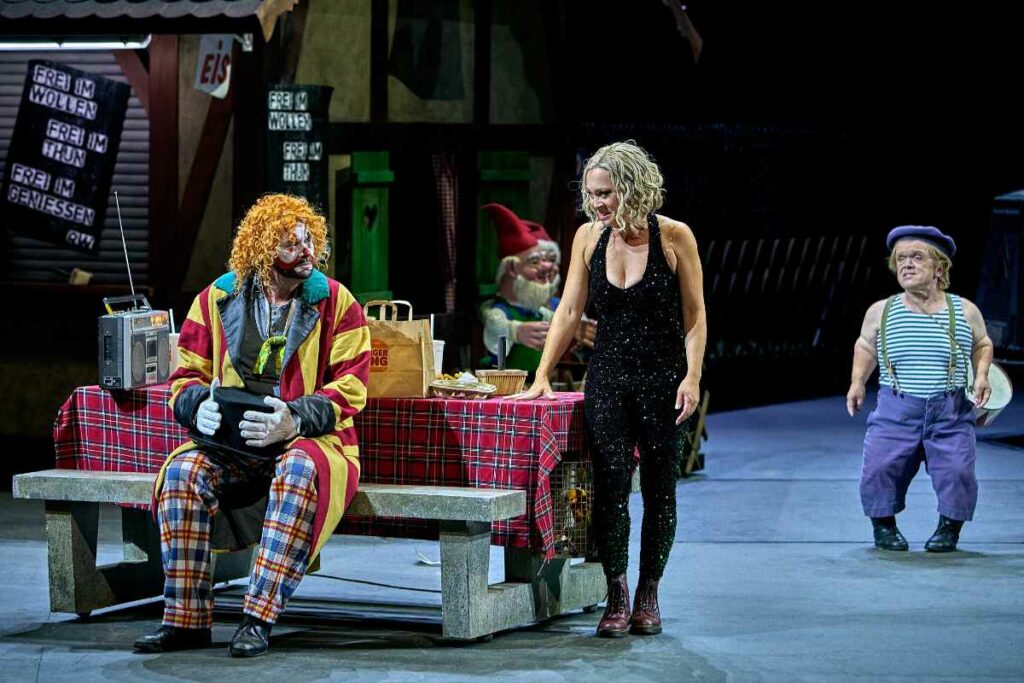
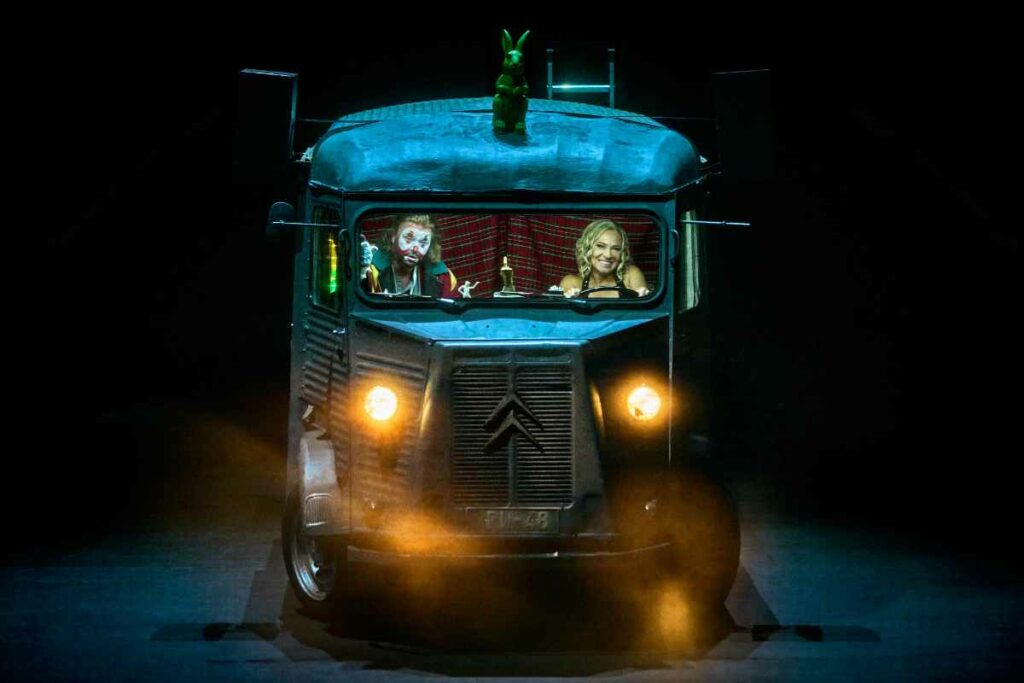
The Tannhäuser current production in Bayreuth is the successful one by Tobias Kratzer, premiered in 2019, and considered the top production of the last editions. Indeed, despite it was supposed to be retired this year,  it has been extended for another edition, for the 2026 festival. Kratzer proposes a radical update of the work, in which Tannhäuser, an outsider to his society, is here an anarchist who forms a gang with Venus, Oskar, the dwarf from the novel The Tin Drum, by Günter Grass, and the black drag queen Le Gateau Chocolat, with whom he tours Germany in a caravan. Tannhäuser is an artist who has fled the musical establishment, and this time his colleagues, the medieval troubadours of the 12th century Wartburg, are the artists of the Bayreuth festival themselves. In this way, Kratzer ironizes Bayreuth and its establishment with "this theater within the theater" stagings. Thus, the second act is a canonical representation of the work, with a traditional staging. However, Tannhäuser will drag his friends, and Elisabeth, to their perdition in a tragic, raw and dark third act. Regarding further details of this staging, I already talked about them on my 2019 review of the premiere of this production.

However, some changes have been set during these years, and furthermore, it looks different when seen live. In the overture, the film projection of Tannhäuser's adventures is most impressive when viewed on the extremely big screen that occupies the entire stage, with images from the air of the Thuringian landscapes, some downwards and in such high resolution that gives the sensation of falling down inmediately.

During the overture, Oskar is seen, in a close up, having a toast in memory of Stephen Gould, the tenor who premiered this production and who died last year of cancer. When a photo of him is seen with his date of birth and death, the theater burst into loud applause. At the end of the first act, Venus, Oskar and Gateau perform a show in the pond on the hill, which spectators and visitors can access, interacting with the artists, who also sing popular pop songs, like Spice Girls' Wannabe, and even Gateau sings with a powerful dark bass a voice the Dich Teure Halle aria. 


In the second act, half of the stage is occupied by a screen that shows everything that happens behind the scenes, which is part of the performance, something which becomes quite distracting. During the Entrance of the Guests scene, the Tannhäuser gang is seen entering the theatre, and Gateau and Oskar pass through the corridor where the photos of all the conductors in Bayreuth History hang, which now includes Pablo Heras-Casado, Oksana Lyniv and Simone Young, as well as Nathalie Stutzmann, who conducts this performance. Since this year, for the first time in the history of the festival, there are more women conductors than men, at the maestro's exit, called "dirigent-gang", Gateau adds with a marker the feminine suffix "-innen" to the word "dirigent", which caused laughter in the hall.

There are few magical moments in Bayreuth like when the lights gradually go out, first being the stalls and finally the gallery: the play begins, with the room in total darkness except for the light coming from the orchestra pit, invisible to the audience. In the middle of that atmosphere, the clarinet begins to sound as the Overture begins, enveloping everyone in that magic aura. One sees that despite the location of the orchestra, and the fact that there are tiers within the orchestra pit, all the instruments sound as if the orchestra were at the level of the stage, even the powerful percussion, which is on the last tier of the pit.

After her debut last year at the festival with this same work, the French conductor (and former contralto) Nathalie Stutzmann reprises her work as conductor of the fabulous Bayreuth Festival Orchestra for this Tannhäuser. Her rendition is accomplished. The tempi are a little slow at times, which allows the listener to enjoy better the beautiful orchestration of the work, specially in its most intimate moments, such as the beautiful music for the woodwind between Elisabeth's aria and Wolfram's in the third act. The strings sound shining from the start. The only thing that could lag a little, and only a little behind, is the brass, but even its level is high. In the long and beautiful prelude to the third act, the strings go a little fast in the passage before the powerful intervention of brass and percussion in the central moment of the piece. But in the end the work ends with an enormous orchestral level, which shows the strength of this orchestra. The Bayreuth Festival Choir is one of the best in the world. Since this work has many choral interventions, its full power is displayed in this work. The male voices make themselves felt very strongly in their interventions, both in the pilgrims' choirs, which begin as a whisper and end up enveloping the entire room. But it is even more overwhelming when they sing offstage, especially the young pilgrims who are performed by the female choir, in an experience that gives goosebumps, like in the final chorus. 

Wagner considered the human voice to be the most precious instrument. That is why the structure of the theater not only prevents the powerful orchestra from covering up the singers' voices, but also allows them to flow and be heard throughout the room. Thus, singers whose level is not so well appreciated in recordings or in other theaters, here sound like referential performers. 


Klaus Florian Vogt is Bayreuth's leading tenor. He is able to sing and alternate several roles at each festival, which is why he has become essential for the theater and very loved by the audience. Vogt has always displayed a very youthful and bright tone in his voice, although that does not always fit with the Wagnerian roles he plays. That sound may be ideal for Lohengrin or Stolzing, but Tannhäuser, who is a man who has lived, and sinned for a long time, requires a more heroic voice. This makes Vogt's one to sound completely weak at several moments (for example when he says Elisabeth's name for the first time), especially in the first act, whose tessitura was complicated for him. However, his singing improved during acts two and three, where the voice sounded more committed and the singing sounded more convincing, especially in the second half of the second act. 

Elisabeth Teige, on the other hand, was an excellent Elisabeth, with a wonderful dramatic voice, which was also combined with an excellent performance. During her emotional defense of Tannhäuser in the second act (Ich flieh 'für ihn) and during the prayer in the third act her singing was superb.

Markus Eiche is a Wolfram who sings and phrases well. Although he has intention and dominates the character, his voice lacks more low voice. He  managed to hold his own in his third act aria, the famous song to the star.

Iréne Roberts made her triumphant debut this year in Bayreuth, in the role of Venus. This American mezzo-soprano has a delicious voice with a velvety tonee and firm vocal projection. She is also a good actress and is physically very attractive. 

Günther Groissböck was a wonderful Landgrave. It is surprising how the acoustics allow him to project so well, that this voice sounds as a formidable bass in the theater, an imposing presence and exquisite diction, as well as a powerful voice. I couldn't recognise the well sung but weak-volumed King Marke in the Tristan und Isolde streaming three weaks ago.

Likewise, the acoustics seem to benefit the Icelandic bass-baritone Olafur Sigurdarson , who despite his light tone, his brief intervention as the knight Biterolf sounds interesting, well sung and with an accomplished diction, while in recordings he does not always sound so imposing.

The excellent South African tenor Siyabonga Maqungo was a lyrical Walther von der Vogelweide, in his brief intervention. Flurina Stucki was a good shepherd boy, although her voice seems a little more robust than the light ones that usually sing this role. Tenor Martin Koch (replacing the Spaniard Jorge Rodríguez-Norton) and bass Jens-Erik Aasbø were notable in their very small roles as Heinrich and Reinmar.

Once again, the funny Manni Laudenbach as the dwarf Oskar and the black British drag queen Le Gateau Chocolat provoked laughter from the audience, although their roles were not planned by Wagner, but by the stage director.


As expected in Bayreuth, all tickets were sold. The reception of the show varied with each act. At the end of the first act loud boos were heard in the room, but the second and third acts were received with increasing enthusiasm. Standing ovations for Vogt, Teige, Groissböck, Eiche, the choir and especially for maestro Stutzmann. When leaving the theater, night has fallen and people leave the green hill both on foot and in the special buses that take them to the various hotels in the city.

Despite the discomfort and the atrocious heat, I cannot deny that I have witnessed an enjoyable performance with magical moments. And I can add that the level of the orchestra, choir, and scene, together with the devotion displayed by the cast, have made this the best Tannhäuser I have ever seen in a theater. And although I am now back to Spain, I am already thinking about returning in a few years.


Wagner's works cannot be seen and heard anywhere else as they do in Bayreuth. That is why, although the conditions are not the most ideal and the cast may not be the most suitable, George Bernard Shaw was right when he stated in "The Perfect Wagnerite": that those who go to Bayreuth never repent it.


Stage pictures by Enrico Nawrath, copyright belonging to him and to Bayreuth Festival.
My reviews are not professional and express only my opinions. As a non English native speaker I apologise for any mistake.
Most of the photographs are from the internet and belong to its authors. My use of them is only cultural. If someone is uncomfortable with their use, just notify it to me.
Any reproduction of my text requires my permission.

martes, 13 de agosto de 2024

A la tercera va la vencida: mi primer viaje a Bayreuth, con el exitoso Tannhäuser dirigido por Tobias Kratzer.


Bayreuth, 12 de agosto de 2024.

Todo wagneriano tiene como referencia el Festival de Bayreuth para ir, al menos, una vez en la vida. El wagnerismo, tanto si se vive como una fe como una pasión musical, tiene su centro espiritual en el teatro que Richard Wagner hizo construir en esta tranquila ciudad bávara, desde entonces ligada al maestro. En lo personal, para mí supone el fin de 19 años de espera: desde que solicité entradas por primera vez, en 2005, esta es la primera vez que visito el Festspielhaus, tras dos ocasiones en las que no me fue posible ir a una representación. Como decimos en España, a la tercera va la vencida. Y ha sido con Tannhäuser, ópera que no veía en vivo desde 2009.

Wagner siempre tuvo en mente la idea de crear un teatro en el que se pudieran hacer representaciones modélicas de sus obras, acondicionando su estructura para ello. De este modo, Wagner revoluciona la ópera, y adelanta la realización cinematográfica, veinte años antes de su invención. Ya no se va a la ópera para lucirse socialmente, se va a ver un espectáculo total.

Para un wagneriano, asistir a Bayreuth es como un peregrinaje. El hecho de que el teatro esté en lo alto de una colina, para la que hay que subir una cuesta, refuerza esa idea. Lo primero que se ve nada más subir es el consabido arreglo floral, y el montón de muñequitos de Wagner, por el artista Ottmar Hörl, este año de color dorado. La emoción inicial se intensifica cuando los músicos de la orquesta salen, poco antes de que empiece el espectáculo, a interpretar la primera fanfarria del primer acto de la ópera que se interpretará ese día. 

Además de las fanfarrias, una campanilla avisa al público de que queda poco para que empiece la función. Wagner quería que la gente fuese solamente a ver la obra y no se entretuviera en demasiados lujos, por lo que el teatro es muy sencillo. La sala principal es elegante, pero no excesivamente decorada.El Festspielhaus de Bayreuth está arraigado en la tradición en todos sus aspectos, lo que no siempre es conveniente. A fin de evitar perjudicar la acústica, no hay aire acondicionado, por lo que el calor que se pasa en la sala es bastante considerable. Muy especialmente si uno se sienta en las zonas más altas, en la llamada Galería. Allí, los asientos son filas interminables de madera sin pasillos, por lo que para entrar hay que hacer levantar a toda la fila. Y como se suelen vender todas las entradas más económicas, se concentra demasiada gente en la sala y el calor es aún más intenso  y en consecuencia, allí se suda bastante, incluso sintiéndose calor bajo el brazo, (llama la atención el número elevado de camisas blancas sudadas que se ven al acabar cada acto) y la posibilidad de mareo no puede descartarse. Ello hace pensar en que posiblemente sea el sitio más incómodo para ver ópera. Aún así, durante el tercer acto, corría alguna ráfaga de aire fresco.  Durante los descansos, es imperativo abandonar la sala, no se pueden visitar el patio de butacas ni el foso de la orquesta. Los amables acomodadores lo impiden con firmeza. Como novedad este año, se han dispuesto bidones de agua y vasitos descartables para que el público pueda hidratarse un poco al final de cada acto. 

La producción de Tannhäuser de estos años es la exitosa de Tobias Kratzer, estrenada en 2019, y considerada hoy en día la producción estrella. Tanto así, que se ha prorrogado un año más, para el festival de 2026. Kratzer propone una actualización radical de la obra, en la que Tannhäuser, el inadaptado al sistema, es aquí un anarquista que forma una pandilla junto a Venus, Oskar, el enano de la novela El Tambor se Hojalata, de Grass, y la drag queen negra Le Gateau Chocolat, con los que recorre Alemania en una caravana. Tannhäuser es un artista que ha huido del establishment musical, y en esta ocasión ya no son los trovadores medievales del Wartburg, sino los propios artistas del festival de Bayreuth, entre los que se cuentan sus antiguos compañeros cantantes y su amada Elisabeth. De este modo, Kratzer ironiza sobre Bayreuth y su sociedad con este montaje de teatro dentro del teatro. Así, el segundo acto es una representación canónica de la obra, con una puesta en escena tradicional. Sin embargo, Tannhäuser arrastrará a la perdición a sus amigos, y a Elisabeth, en un crudísimo y oscuro tercer acto. Sobre los detalles de la puesta en escena ya hablé en en mi crítica de 2019, cuando se emitió en streaming.

Sin embargo, a lo largo de los años ha habido cambios, y en directo se ve diferente. En la obertura, la proyección de la película de las aventuras de Tannhäuser es más impresionante cuando se ve en la enorme pantalla que ocupa todo el escenario, con imágenes desde el aire de los paisajes de Turingia, algunos en sentido descendente y en tan alta resolución que da la sensación de despeñarse inmediatamente. Durante la obertura se ve a Oskar, en primer plano, tomándose una copa a la salud de Stephen Gould, el tenor que estrenó esta produccion y que murió el año pasado de cáncer. Cuando se ve una foto suya con su fecha de nacimiento y defunción, el teatro estalló en un fuerte aplauso. Como ya es sabido, Venus, Oskar y Gateau realizan una performance en el estanque de la colina, a la que pueden acceder espectadores y visitantes, interactuando con los artistas, que ademas cantan populares canciones de pop e incluso Gateau canta con potente voz grave el Dich Teure Halle. 

En el segundo acto la mitad del escenario es ocupada por una pantalla que muestra todo lo que ocurre detrás de escena, que es parte de la representación, lo que distraía bastante. Durante la escena de la entrada de los invitados, se ve a la pandilla de Tannhäuser entrar en el teatro, y Gateau y Oskar pasan por el pasillo donde están las fotos de todos los directores de orquesta, que ahora incluye a Pablo Heras-Casado, Oksana Lyniv y a Simone Young, entre otros. Como este año, por primera vez en la historia del festival, hay más mujeres directoras de orquesta que hombres, en la salida de los maestros, llamada "dirigent-gang" , Gateau añade con un rotulador el sufijo femenino "-innen" a la palabra "dirigent", lo que provocó risas en el teatro. 

Pocos momentos mágicos hay en Bayreuth como cuando se apagan gradualmente las luces, siendo primero el patio de butacas y finalmente la galería: empieza la obra, con la sala en total oscuridad salvo la luz proveniente del foso de la orquesta, invisible para el público. En medio de ese ambiente, comienza a sonar el clarinete que da inicio a la obertura, envolviendo a todos en esa magia. Uno comprueba que pese a la situación de la orquesta, y que dentro de esta en el foso hay gradas, todos los instrumentos suenan como si la orquesta estuviera al nivel del escenario, incluso la potente percusión, que está en la última grada del foso.

Tras su debut el año pasado en el festival con esta misma obra, la maestra francesa (y antigua contralto) Nathalie Stutzmann repite su labor al frente de la fabulosa Orquesta del Festival de Bayreuth. Algunos han definido la interpretación de Stutzmann como "historicista". La verdad es que es bastante competente. Los tempi son un poco lentos a veces, lo que permite recrearse en la bella orquestación de la obra, en sus momentos más intimistas, como el bello paisaje para el viento madera entre el aria de Elisabeth y la de Wolfram en el tercer acto. Las cuerdas suenan brillantes desde el inicio. Lo único que podría quedarse un poco, y solo un poco atrás es el metal, pero incluso su nivel es alto.  En el largo y bello preludio del tercer acto, las cuerdas van un poco rápidas en el pasaje antes de la potente intervención del metal y la percusión en el momento central de la pieza. Pero al final termina la obra con un enorme nivel orquestal, que demuestra la fuerza de esta orquesta.  El Coro del Festival de Bayreuth es uno de los mejores del mundo. Dado que esta obra tiene muchas intervenciones corales, en esta obra sale a relucir su todo su poder. Las voces masculinas se hacen sentir con muchísima fuerza en sus intervenciones, tanto en los coros de los peregrinos, que empiezan como un susurro y terminan envolviendo toda la sala. Pero aún más sobrecogedor resulta cuando cantan fuera de escena, especialmente los jóvenes peregrinos que son interpretados por el coro femenino, en una experiencia que pone los pelos de punta, como en el coro final. 

Wagner consideraba a la voz humana como el instrumento más preciado. Por eso la estructura del teatro no solo impide a la potente orquesta tapar a las voces, sino que permite que estas fluyan y se dejen oir en toda la sala. Así, cantantes cuyo nivel no es tan apreciado en grabaciones o en otros teatros, aquí suenan como intérpretes de referencia. 

Klaus Florian Vogt es el tenor principal de Bayreuth. Es capaz de cantar varios roles en cada festival, por lo que se ha convertido en imprescindible para el teatro y en muy querido para el público. Vogt siempre ha hecho gala de una voz de timbre muy juvenil y brillante, aunque eso no siempre encaje con los roles wagnerianos que interpreta. Ese sonido puede ser idóneo para Lohengrin o Stolzing, pero Tannhäuser, que es un hombre que ha vivido mucho, requiere una voz de un tenor de timbre más heroico. Eso hace que en varios momentos la voz de Vogt suene totalmente inane (por ejemplo cuando dice por primera vez el nombre de Elisabeth), especialmente en el primer acto, cuya tesitura le resultaba complicada y en pocas veces durante la primera escena, a la voz le costaba arrancar. Sin embargo, remontó durante los actos segundo y tercero, donde la voz sonó más entregada y el canto fue un poco más convincente, especialmente en la segunda mitad del segundo acto. En la narración y posterior escena final salió airoso. 

Elisabeth Teige, por el contrario fue una excelente Elisabeth, con una estupenda voz dramática, que además se unía a una excelente actuación. Durante su emotiva defensa de Tannhäuser en el segundo acto (Ich flieh' für ihn) y durante la plegaria del tercer acto estuvo estupenda. 

Markus Eiche es un Wolfram que canta y frasea bien. Aunque tiene intención y domina el personaje, a la voz le falta más grave. Aún así pudo defenderse bien en su aria del tercer acto, la famosa canción de la estrella.

Iréne Roberts ha debutado triunfalmente este año en Bayreuth, en el rol de Venus. Esta mezzosoprano americana tiene una deliciosa voz de timbre aterciopelado, y firme proyección. Además es buena actriz y es físicamente muy atractiva. 

Günther Groissböck fue un estupendo Landgrave. Es sorprendente cómo la acústica le permite proyectar tan bien, que está voz que suena con un grave formidable en el teatro, una imponente presencia y una dicción exquisita, sea la misma voz que cantó un Rey Marke inane en el streaming del Tristán e Isolda que abrió este festival hace tres semanas. 

Del mismo modo, la acústica parece beneficiar al islandés Olafur Sigurdarson, el cual pese a su ligero timbre, su breve intervención como el caballero Biterolf suena digna en este teatro, mientras que en grabaciones no siempre suena bien. 

El excelente tenor sudafricano Siyabonga Maqungo fue un lírico Walther von der Vogelweide, en su breve intervención. Flurina Stucki fue un buen pastorcillo, aunque su voz parece un poco más robusta que las ligeras que lo suelen interpretar.  El tenor Martin Koch (que sustituye al español Jorge Rodríguez-Norton) y el bajo Jens-Erik Aasbø estuvieron notables en sus pequeñísimos roles como Heinrich y Reinmar.

Una vez más, los divertidos Manni Laudenbach como el enano Oskar y la drag queen negra británica Le Gateau Chocolat provocaron las risas del público, aunque sus roles no están previstos por Wagner, sino por el director de escena.


Como es esperable en Bayreuth, el aforo estaba lleno. La recepción del espectáculo fue, curiosamente, variando con cada acto. Al final del primer acto se escuchó un sonoro abucheo en la sala, pero los actos segundo y tercero fueron recibidos con un creciente entusiasmo. Ovaciones cerradas para Vogt, Teige, Groissböck, Eiche, el coro y sobre todo para la maestra Stutzmann.  Al salir del teatro, ha caído la noche y la gente abandona la verde colina tanto a pie como en los autobuses especiales que los llevan a los diversos hoteles de la ciudad.

Pese a la incomodidad y el calor atroz, no puedo negar que he presenciado una función disfrutable con momentos mágicos.  Y puedo añadir que el nivel de la orquesta, coro, escena, unidos a la entrega del reparto, han hecho de este el mejor Tannhäuser que he visto en un teatro. Y aunque pronto volveré a España, ya pienso en volver dentro de unos pocos años.


Wagner no se puede ver en ningún otro lugar como se ve en Bayreuth. Por eso aunque las condiciones no sean las más idóneas y que el reparto puede no ser el más idóneo, tenía razón George Bernard Shaw cuando dijo en su obra "El perfecto wagneriano": que todos los que van a Bayreuth nunca se arrepienten de haberlo hecho.


Las fotografías y vídeos no son de mi autoría, si alguien se muestra disconforme con la publicación de cualquiera de ellas en este blog le pido que me lo haga saber inmediatamente. Cualquier reproducción de este texto necesita mi permiso.

Fotografías de la representación son propiedad de Enrico Nawrath y del Festival de Bayreuth.


sábado, 27 de julio de 2024

A repressed love, and souvenirs from a wrecked ship: Tristan und Isolde at the 2024 Bayreuth Festival.


Live stream from Bayreuth Festival, July 25, 2024.

Once again, I celebrate the anniversary of this blog, the seventh this year, by commenting on the must- event par excellence for every Wagnerite: the Bayreuth Festival. Thanks to streaming and German television, the world can witness the premieres of the Festival's new productions, making them available to all Wagner fans or music lovers who cannot go to the green hill. This year, is the turn for a new production of "Tristan and Isolde", which alongside the Ring is probably Wagner's magnum opus, and one of those works without which, the course of the history of music would have been completely different. In 2022, a new production of this opera was premiered, directed by Roland Schwab, which was so successful that it convinced even Wagnerian orthodoxy, but only a few performances were given. The idea was to have it as a backup in case Covid-19 prevented the performance of the mediocre Ring production that was planned to be released, but in the end nothing happened and the three Ring cycles were done. In 2023, there were only two performances that did not even have a radio broadcast, much less a streaming broadcast. As a result, that successful production only exists in photos and audio for the unfortunate ones who did not see live it at the Festspielhaus.

This new production is directed by the Icelandic playwright Thorleifur Örn Arnarsson, and the orchestra is conducted by the famous Russian maestro Semyon Bychkov, a renowned interpreter of this opera. 

This is an opera in which the inside matters more than the outside: here what counts are the feelings of Tristan and Isolde, as if the music and their monologues were the window to their internal conflicts, no matter the space, only this love story and its consequences, as the chorus is scarce and brief, and few characters are seen on stage. For this reason, it lends itself reasons not only to being performed many times in concert, but also to be staged with simpler and simpler productions, given the intimate nature of the work. Already in Cosima Wagner's times there was an attempt to reduce the props, in order to focus on the action. And Arnarsson's staging seems to follow this idea, as the staging looks minimalistic in at least half of the performance, and totally dark, gloomy, as if the events took place at night, from the deepest levels of the soul, telling the story as a repressed and condemned passion, destined to fail. There is no beauty, only discretion and emotions, with a feeling of not doing the right thing.


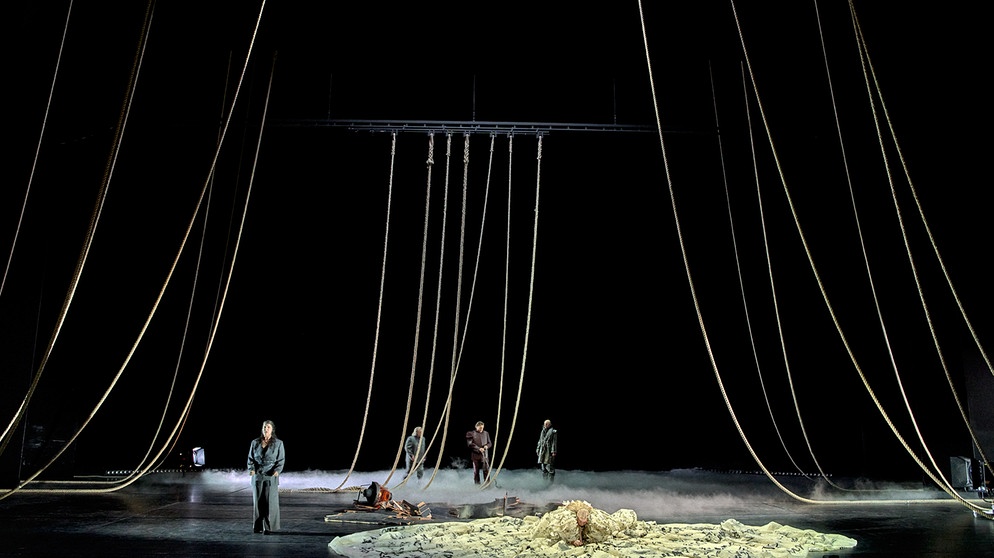
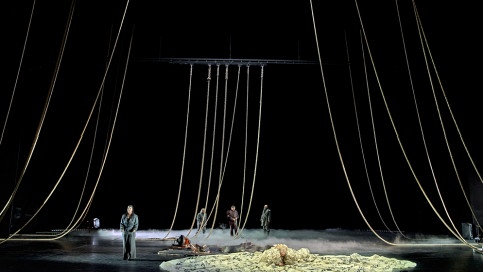
The first act takes place on a darkened, empty stage, there are only some strings, and Isolde appears in an enormous white dress, a nod to Jean-Pierre Ponnelle's staging in 1983, completely full of words from the libretto or other works by Wagner. Isolde can slip out of this dress, leaving her crinoline exposed, and in the background, in the first scene, are Kurwenal, Brangäne and Tristan, as if they were plotting Isolde's destiny (a nod to Götterdämmerung?). Tristan's entrance into his confrontation with Isolde makes the stage get illuminated. Tristan does not drink the elixir of  love, but before he can do so Isolde throws it away. In fact, that elixir is none other than their falling in love, the kiss they give each other and with which they begin to love each other passionately.


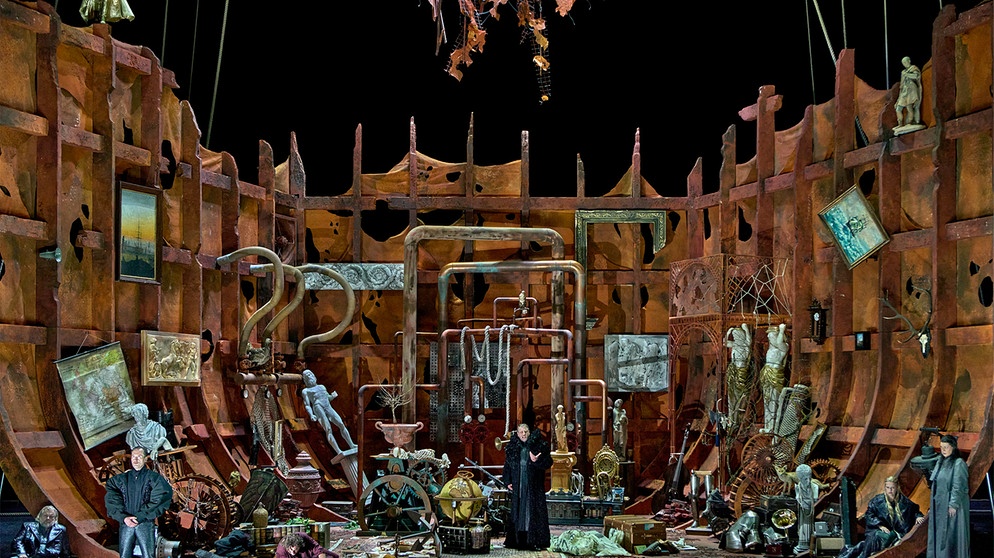
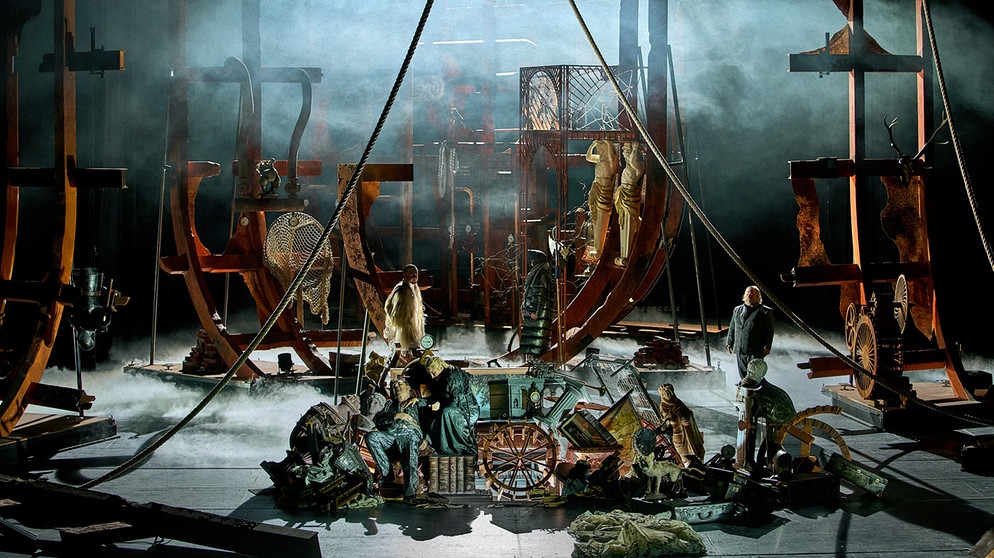
The second act is the most impressive, although the first scene still takes place in darkness. It is from Tristan's entrance, and the beginning of the great love scene, when the scene is illuminated, to show the enormous bow of a dilapidated ship, inside which are a lot of old odds and ends, such as watches, suitcases , documents, a huge globe, but also some items reminiscent of elements from Wagner's operas: a sword with which Tristan wounds his hand, a nod to the Ring, a statuette of a wolf, a nod to Walküre, another statuette, this time of a medieval woman with a veil, a possible nod to Tannhäuser, among others. Tristan is not hurt by Melot, but drinks an elixir that poisons him.


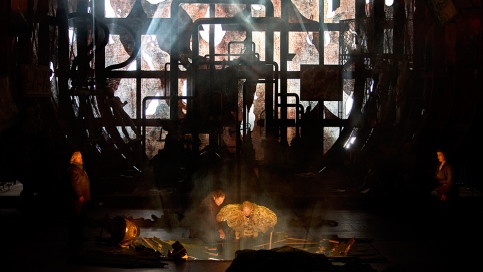
The Third Act is now that same ship, but torn apart, with all the old junk piled up in a corner, now Tristan is wearing a gray, worn jumpsuit with letters written on it. The spaciousness left by the remains of that ship brings minimalism back to the scene. Tristan dies, after his long and agonizing scene, in which an orange light attenuates the darkness. Isolde appears, and after her the other characters, but Melot does not die, and it is not known, although it is presumed, if Kurwenal does. At the end, Isolde sings her famous Liebestod, snuggling in her long dress, after which the curtain slowly falls on a stage bathed in a red light.

Semyon Bychkov returns to conduct the Bayreuth Festival Orchestra after conducting Parsifal a few years ago. Just as he did in Madrid last year, Bychkov gives slow, majestic, lyrical rendition, recreating the rich range of sounds and the possibilities available to work with the orchestra, to create a magical, and at the same time profound and melancholic world, like this impossible love. The prelude was played in a majesic, beautiful rendition, while the orchestral introduction to the third act with the English horn sounds more introspective. The orchestra has no comment other than its excellence, because of its strings, its percussions and its powerful brass. The male choir is excellent in its brief interventions in the first act.


Andreas Schager, like in the same Tristan who sang with Bychkov in Madrid, confirms himself as the first nowadays option to sing Tristan. His heroic tone, with youthful sounds, his ability to ressist the throat-killer tessitura from the powerful third act, which he sang in a captivating way despite some notes that he already had to shorten. At an acting level he creates a solemn hero in the first, a sensitive one in the second act and in the third he reaches the climax by recreating the agony and hallucinations of the character. 

Camilla Nylund, on the other hand, is not an Isolde to pair his level. The Finnish soprano has a sweet voice, exquisite tone and sensitive singing, but this is not enough for Isolde. Although the voice has moments where it improves, such as in the second half of the first act, the brief aria "Als für in fremdes land" in the second act, beautifully sung, when the voice requires more pitch, which cannot last long, is where the volume fails and notes are a in a little trouble. In this way, in the Liebestod she could not impose herself on the orchestra. And it's a pity, because in roles like Eva or Elisabeth she is remarkable.

Christa Mayer is a well sung Brangäne, with a firmer voice than Nylund's, excellent in her famous warning song "Einsam wachend in der nacht" in the second act.  

Olafur Sigurdarson is a  light Kurwenal, although in the third act he does well, due to the intimate nature of the scenes with Tristan, but he lacks volume and vocal presence. 

Günther Groissböck suffers from the same lightness, he is an exquisitely sung Marke and has a beautiful voice that also has excellent diction, proof of his knowledge of the work. However, he lacks more volume and bass in his long monologue in the second act.

Birger Radde's Melot is simply outstanding, with a dark, imposing, well-projected voice, so much so that he could have made an excellent Kurwenal. The rest of the supporting roles, were also at a good level, a trademark of the house: the lyrical voice of Matthew Newlin as the sailor and Daniel Jenz as the shepherd stand out.


Once again, the cast was received with warm applause, especially Schager, Groissböck and Nylund, although the most applauded, for deserved and obvious reasons, was Bychkov. Boos, like every year, for the stage team, although it is already known in Bayreuth that  every new production is booed the first year, and its last one is strongly ovationed. After this premiere performance, the 2024 Bayreuth Festival is inaugurated: a festival in which there are more women than men on the podium, and which has opened with a beautiful Tristan, which we trust will improve, especially the cast, in the seasons to come.

My reviews are not professional and express only my opinions. As a non English native speaker I apologise for any mistake.
Most of the photographs are from the internet and belong to its authors. My use of them is only cultural. If someone is uncomfortable with their use, just notify it to me.
Any reproduction of my text requires my permission.

El barco de los recuerdos reprimidos: Tristán e Isolda en el Festival de Bayreuth 2024.


Streaming en directo desde el Festival de Bayreuth, 25 de julio de 2024.

Una vez más, celebro el aniversario de este blog, el séptimo ya, comentando la cita estival ineludible para cada wagneriano: el Festival de Bayreuth. Aunque será una celebración a medias, por motivos que pronto se revelarán. Mientras tanto, gracias al streaming, y a la televisión alemana, el mundo puede presenciar los estrenos de las nuevas producciones del Festival, haciéndolas disponibles para todo aquel wagneriano o melómano que no puede ir hasta la colina verde. Este año, la nueva producción es de "Tristán e Isolda", que junto al Anillo es la obra magna del maestro, y una de esas obras sin las cuales el rumbo de la historia de la música habría sido completamente diferente. Ya en 2022 se estrenó una producción de esta ópera, a cargo de Roland Schwab, que tuvo tanto éxito que convenció hasta a la ortodoxia wagneriana, pero de ella solo se dieron unas pocas funciones. La idea era tenerla como reserva en caso de que el Covid-19 impidiera representar la mediocre producción del Anillo que se tenía previsto estrenar, pero finalmente no pasó nada. En 2023 se dieron solo dos funciones de las que ni siquiera hubo emisión por radio, y mucho menos una emisión en streaming. Y así, aquella producción exitosa solo existe en fotos y audios para los desafortunados que no la vieron en el Festspielhaus.

Esta nueva producción corre a cargo del dramaturgo islandés Thorleifur Örn Arnarsson en la dirección de escena, y la orquesta está dirigida por el célebre maestro ruso Semyon Bychkov, reputado intérprete de esta ópera. 

Es esta una ópera en lo que importa más lo interior que lo exterior: aquí lo que cuenta son los sentimientos de Tristán e Isolda, como si la música y sus monólogos fuesen la ventana a su mundo interno. De ahí la escasa presencia del coro y la escasez de personajes la mayor parte del tiempo. Por ello se presta no solo a ser muchas veces interpretada en concierto, sino a puestas en escena minimalistas, dado el carácter intimista de la obra. Ya en época de Cosima Wagner se intentaba reducir el atrezzo, para centrarse en la acción. Y en esta línea parece ir la puesta en escena de Arnarsson, minimalista la mayor parte del tiempo, y totalmente oscura, tenebrosa, como si los acontecimientos transcurrieran de noche, desde lo más recóndito del alma, contando la historia como una pasión reprimida y condenada al fracaso. No hay belleza, solo discreción y emociones, pero con un sentimiento de no hacer lo correcto.

El primer acto transcurre en un escenario vacío, solo hay unas cuerdas , e Isolda aparece con un enorme vestido blanco, un guiño al montaje de Jean-Pierre Ponnelle en 1983, totalmente lleno de palabras procedentes del libreto o de otras obras de Wagner. Isolda puede salirse de este vestido, dejando el miriñaque al descubierto, y al fondo, en la primera escena están Kurwenal, Brangäne y Tristán, como si estuvieran hilando el destino de Isolda (¿un guiño al Ocaso de los Dioses?). La entrada de Tristán en su confrontación con Isolda hace que se iluminen las luces. Tristán no bebe el elixir de amor, sino que antes de que pueda hacerlo Isolda lo tira. De hecho, aquí ese elixir no es otro que su enamoramiento, que el beso que se dan y con el que pasan a amarse apasionadamente.

El segundo acto es el más impactante, aunque  la primera escena aún transcurre a oscuras. Es a partir de la entrada de Tristán, y el inicio de la gran escena de amor, cuando se ilumina la escena, para mostrar la enorme proa de un buque ruinoso, dentro del cual se encuentran un montón de cachivaches viejos, como relojes, maletas, documentos, un enorme globo terráqueo, y además algunos de esos trastos recuerdan a elementos de óperas de Wagner: una espada con la que Tristán se hiere la mano, un guiño al Anillo del Nibelungo, una estatuilla de un lobo, un guiño a La Valquiria, otra estatuilla, esta vez de una mujer medieval con un velo, un posible guiño a Tannhäuser, entre otros. Tristán no es herido por Melot, sino que bebe un elixir que lo envenena.  

El Tercer acto es ahora ese mismo barco, pero despedazado, con todos los trastos viejos apiñados en un rincón, ahora Tristán lleva un mono gris con letras escritas. La amplitud que dejan los restos de ese barco vuelve a traer el minimalismo a la escena. Tristán muere, tras su larga y agónica escena, en la que una luz anaranjada atenúa la oscuridad. Isolda aparece, y tras ella los demás personajes, pero Melot no muere, y no se sabe, aunque se presume, que Kurwenal lo haga. Al final, Isolda canta su célebre muerte de amor, acurrucándose con su largo vestido, tras lo cual cae el lentamente el telón sobre un escenario bañado por una luz rojiza.

Semyon Bychkov regresa al frente de la Orquesta del Festival de Bayreuth tras dirigir Parsifal hace unos años. Tal y como ya lo hizo en Madrid el año pasado, Bychkov realiza una versión lenta, majestuosa, lírica, recreándose en la rica gama de sonidos y las posibilidades que puede hacer con la orquesta, para crear un mundo mágico, y al mismo tiempo profundo y melancólico, como este amor imposible. Majestuoso y bello fue el preludio, mientras que la introducción orquestal del tercer acto con el corno inglés es más introspectiva. La orquesta no tiene más comentario que su excelencia, con sus cuerdas, sus percusiones y sus potentes metales. Del mismo modo el coro masculino excelente en sus breves intervenciones del primer acto.

Andreas Schager, al igual que en el mismo Tristan que cantó con Bychkov en Madrid, se confirma como el Tristan del momento. Su timbre heroico, con toques juveniles, su resistencia al potente tercer acto, que cantó de forma arrebatadora pese a algunas notas que ya tiene que acortar, confirman lo anterior. Y a nivel actoral crea a un héroe solemne  en el primero, como sensible en el segundo acto y en el tercero llega al culmen al recrear la agonía y alucinaciones del personaje. 

Camilla Nylund, en cambio, no es una Isolda a su altura. La soprano finlandesa tiene una voz dulce, un timbre exquisito y un canto sensible, pero no es suficiente para Isolda. Si bien tiene momentos donde mejora, como en la segunda mitad del primer acto, la breve aria "Als für in fremdes land" en el segundo, cuando la voz requiere más agudo, el cual no puede durarle mucho, es donde le falla el volumen. De este modo, en el Liebestod no lograba imponerse a la orquesta. Y es una pena, porque en roles como Eva o Elisabeth ha sido notable.

Christa Mayer es una notable Brangäne, con una voz más firme que la de Nylund, excelente en su famosa canción de aviso "Einsam wachend in der nacht" en el segundo acto.  

Olafur Sigurdarson es un Kurwenal bastante ligero, aunque en el tercer acto consigue salir adelante, debido a lo intimista de las escenas con Tristan pero falta más voz. 

Günther Groissböck sufre de lo mismo, es un Marke exquisitamente cantado y tiene una preciosa voz que además tiene una dicción excelente, prueba del conocimiento que tiene de la obra. Sin embargo le falta más volumen y más grave en su largo monólogo del segundo acto.

Impresionante el Melot de Birger Radde, con una voz oscura, imponente, bien proyectada, tanto que él podría haber hecho un excelente Kurwenal. El resto de comprimarios, también, estuvieron a un buen nivel, marca de la casa: a destacar la voz lírica de Matthew Newlin como el marinero y Daniel Jenz como el pastor.

Una vez más, el elenco musical fue recibido con calurosos aplausos, sobre todo Schager, Groissböck y Nylund, aunque el más ovacionado, con razón, fue Bychkov. Abucheos, como todos los años, para el equipo escénico, aunque ya se sabe en Bayreuth: lo que se abuchea el primer año se ovaciona en el último. Tras esta función de estreno, queda inagurado el Festival de Bayreuth de 2024: un festival en el que hay más mujeres que hombres en el podio, y que se ha inaugurado con un bello Tristán, el cual confiamos mejore, sobre todo el elenco, en los próximos años. 

Las fotografías y vídeos no son de mi autoría, si alguien se muestra disconforme con la publicación de cualquiera de ellas en este blog le pido que me lo haga saber inmediatamente. Cualquier reproducción de este texto necesita mi permiso.

domingo, 21 de julio de 2024

A pleasant, intense, beautiful return: Saioa Hernández sings Butterfly at the Teatro Real, first cast.


Madrid, July 19, 2024.

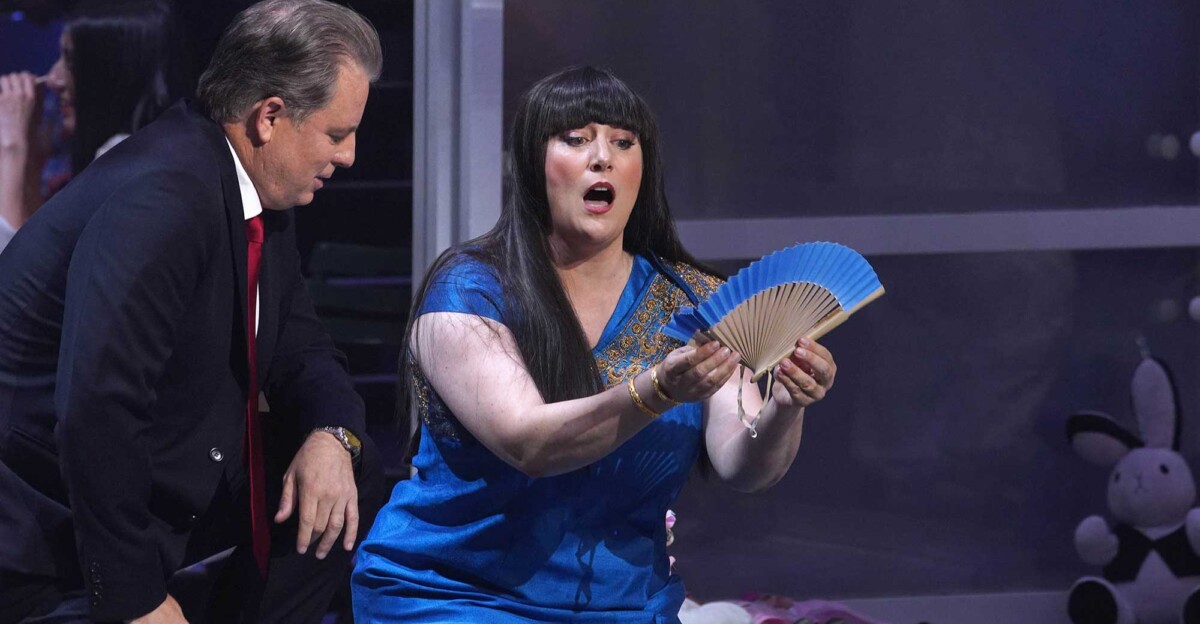
Saioa Hernández finally has the constant presence she deserves at the Teatro Real. In recent years, this soprano has sung there operas such as Un Ballo in Maschera, Nabucco, Turandot, and this year, Madama Butterfly. Montserrat Caballé, one of her singing teachers once stated that "she should sing in every opera house". Prediction fulfilled, since Hernández has sung on multiple European stages, mainly singing operas by Verdi and Puccini, being the most important Spanish soprano for this repertoire. At the Teatro de la Zarzuela, she sings every year, since our lyric genre is one of her great specialties. Aged only 45, she still has many glorious nights to offer us. As mentioned before, this year she sings Madama Butterfly at the Teatro Real, and she will do so in Barcelona by the end of this year. However, due to health problems, she had to cancel two of her seven scheduled performances, in order to recover and, with the professionalism that characterizes her, sing the last two, including last Friday's one.

Considering this health issue has been so recent, and despite this, Hernández has sung a beautiful and tragic Butterfly, in a shining portrait, despite the fact that her dramatic tone is now more suitable for roles such as Tosca, Turandot or Verdi roles than Cio-Cio-San. However, her portrait of this role is so convincing, so exquisitely sung, that she wins over the audience. Her smiles, Her gestures, their despair and her way of crying in the final scenes convey the moods, emotions of Cio-Cio-San, who despite all her suffering and her quick transition to adulthood, she is still much of a teenager.

From her entrance in "Ancora un passo or via" she surprised with a warm voice, a dramatic voice, but transmitting the candor of the character. Possibly they are still affected, but the high notes have som impact, as in "Amore mio" when Cio-Cio-San reveals she has changed his religion, and hugs Pinkerton. In the love duet, the warm, dramatic tone that we recognize in Verdi's operas makes it suitable for this piece. In the second act, the famous Un bel di vedremo aria was performed beautifully, in a sensitive, mature, dramatic rendition. In the scene with Yamadori, when she tells her what divorces are like in America, she is hilarious at imitating the judge and the husband who wants a divorce.  And equally beautiful was the interpretation of "Che tua madre dovrà".  Caballé's influence is noticeable in his way of intoning the bass, both in the phrase "sua grazia se ne va" and in "morta, morta",  It is in this act and especially in the third one in which Hernández's voice feels more comfortable. Without a doubt, the best moment was the end, in the famous final aria "Tu, tu, piccolo iddio", where her voice sounded powerful, the volume surpassing the orchestra (when up to that moment there were some moments in which her voice was the surpassed one), showing her vocal power and her dramatic tone, which becomes so heartbreaking.

Matthew Polenzani has sung the brainless, despicable B.F. Pinkerton. This American tenor has a powerful voice, which can be heard, but the tone, which is intended to be lyrical, the higher the tone goes, the less pleasant it sounds. Even so, in the first act he was more inspired than in the third, although in the Addio Fiorito Asil, he began singing on the piano, something interesting considering Pinkerton's state of fear and remorse in that scene.

Lucas Meachem played Sharpless. The voice is good, it has an appreciable sound and a beautiful tone, showing experience, but he lacks some volume. 

Silvia Beltrami was a wonderful Suzuki, with a beautiful voice and a beautiful velvety timbre. Her best moment was in the third act, with a resounding low voice in the heartbreaking words "Che giova? Che giova?" and a pianissimo in "Oh, me trista!", when she discovers Pinkerton's plans.

The rest of the cast, like the performance discussed on Sunday 15th, was at the same level, highlighting once again Mikeldi Atxalandabaso's Goro, with a stronger voice and a more confident projection than Polenzani's, the leading tenor. 

Nicola Luisotti, conducting the Teatro Real Orchestra, was at the same level than on last Sunday, alternating powerfully conducted moments with ones more focused on just accompaniment. Again, the brass sounded like Wagner, in "Dite al babbo scrivendogli che il giorno del suo ritorno...", and then the brief concluding orchestral music sounded a little fast, depriving a bit from the power of the scene. The chorus is equally excellent, now highlighting the female chorus in the first act. 

Little more to add about Damiano Michieletto's staging, I have already told everything in my last Sunday review.


The theater was not full, although it was more occupied than last Sunday. Tickets were even given to the Under-35 Friends of the Teatro Real, for free. However, despite this magnificent idea, the empty seats seen are not very comprehensible for such a popular opera like this. There were outstanding ovations for Meachem, and especially for Hernández, to whom the public showed their gratitude and affection. The last performance will take place tomorrow (July 22nd), to conclude a season in which we have enjoyed a triumphant spring dedicated to 20th century opera, with critical and sometimes even public success, to end it with a well-served Wagner's Meistersinger and now, a Butterfly with four casts of the highest international level. Now it is time to rest, from September on, the 2024-2025 season is waiting for us, with new emotions, with recitals by Flórez, Netrebko and Adriana Lecouvreur featuring Ermonela Jaho and Elina Garanča. Cannot wait!

My reviews are not professional and express only my opinions. As a non English native speaker I apologise for any mistake.

Most of the photographs are from the internet and belong to its authors. My use of them is only cultural. If someone is uncomfortable with their use, just notify it to me.

Any reproduction of my text requires my permission.