lunes, 10 de agosto de 2026

Die KI in der Musik: Thielemann conducts successfully the booed IA-Ring at Bayreuth.


I would have loved to be there, but I can't afford going every year. Besides, despite Thielemann's presence in the pit, my reservations about the production, or rather the lack thereof, made it less interesting to me than the fabulous Rienzi we've seen and heard via streaming. Therefore, I've limited myself to listening to this Ring cycle on the radio.

When Wagner wrote "children, create something new" in a letter to his father-in-law Liszt, he could hardly have imagined how future members of his family would end up interpreting his words. More recently, his great-granddaughter Katharina Wagner, the Festival's artistic director, has taken this idea to its extreme: in 2023, there was a production of Parsifal that could be viewed through virtual reality glasses. For this 150th anniversary Festival, in addition to the new major production of Rienzi, they have decided to experiment with something even more innovative: a new production of The Ring, exclusively for this edition (since the one replacing Valentin Schwarz's now-retired one will premiere in 2028), with set design by Artificial Intelligence, curated by Marcus Lobbes

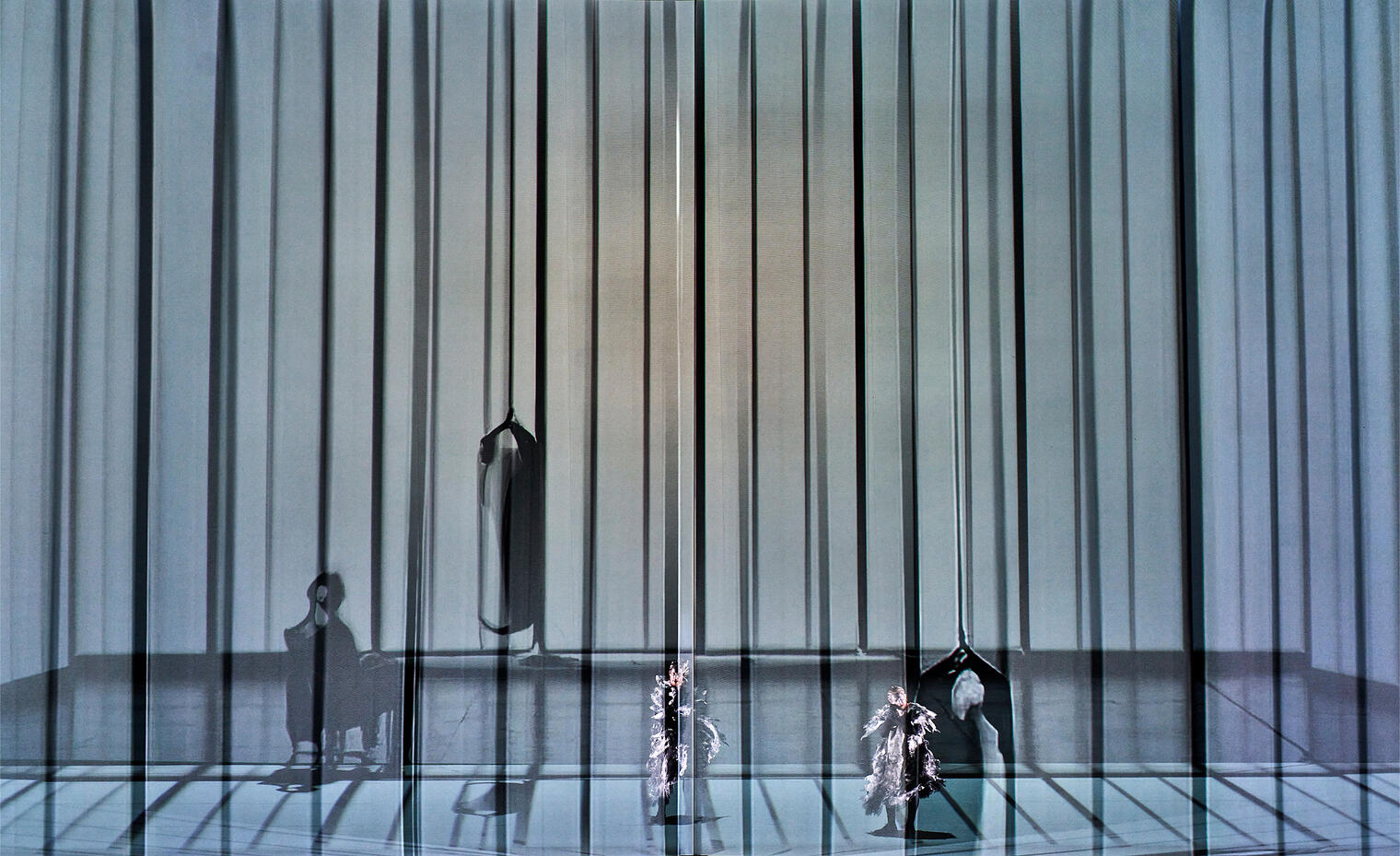
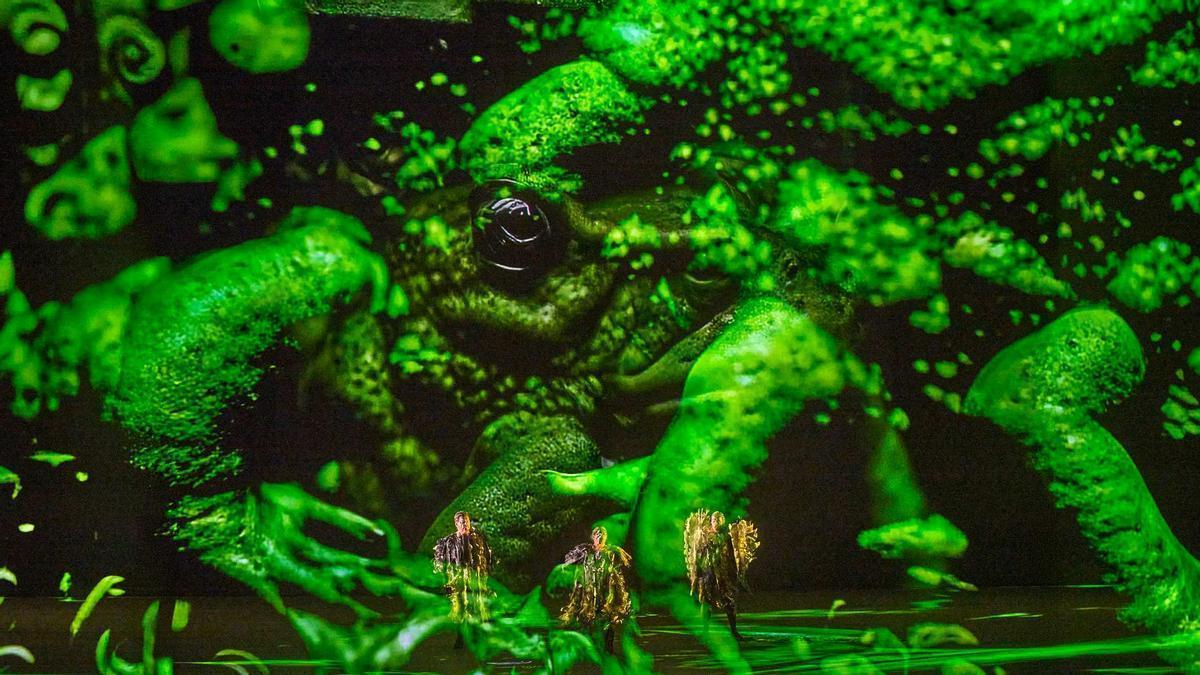
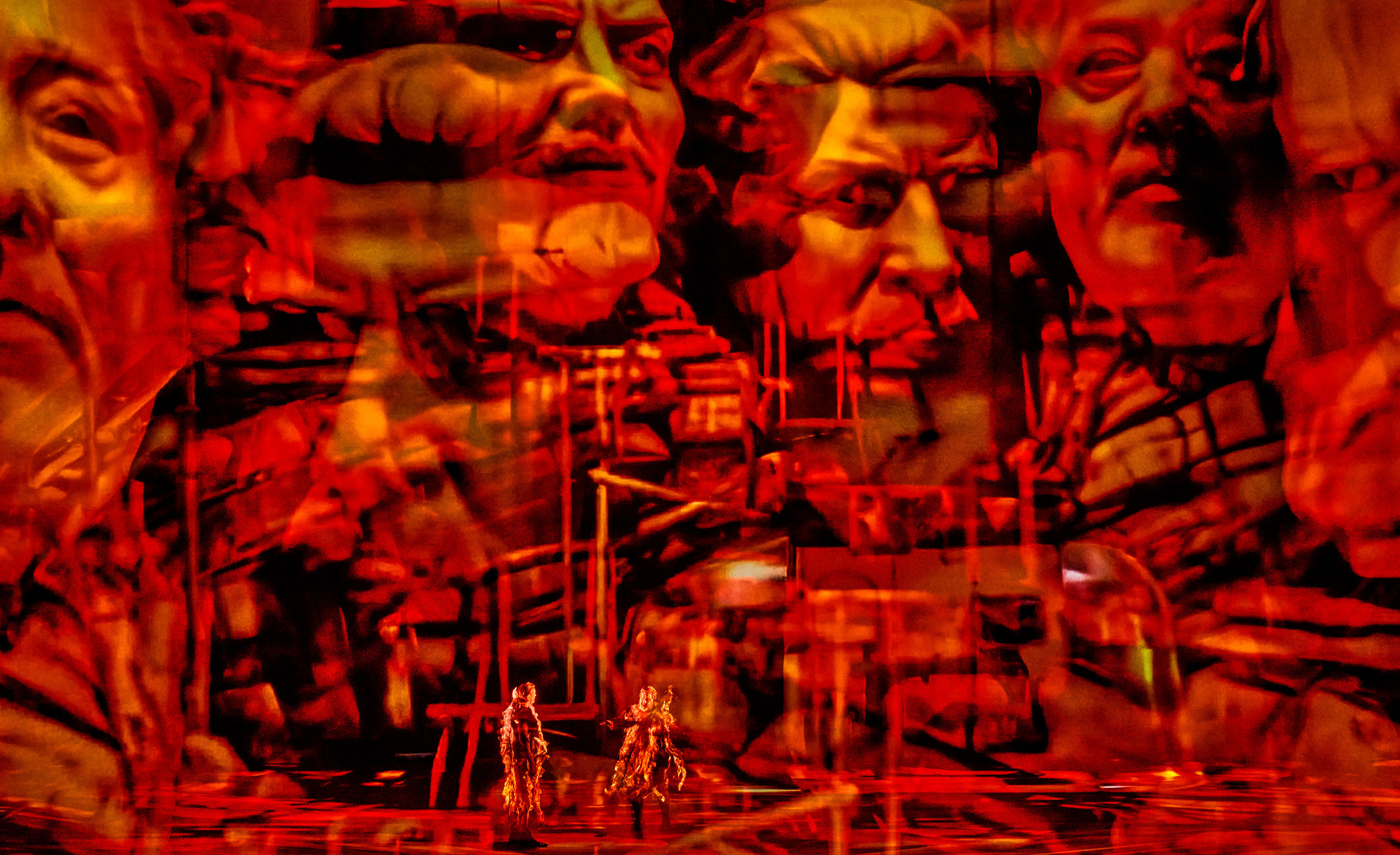
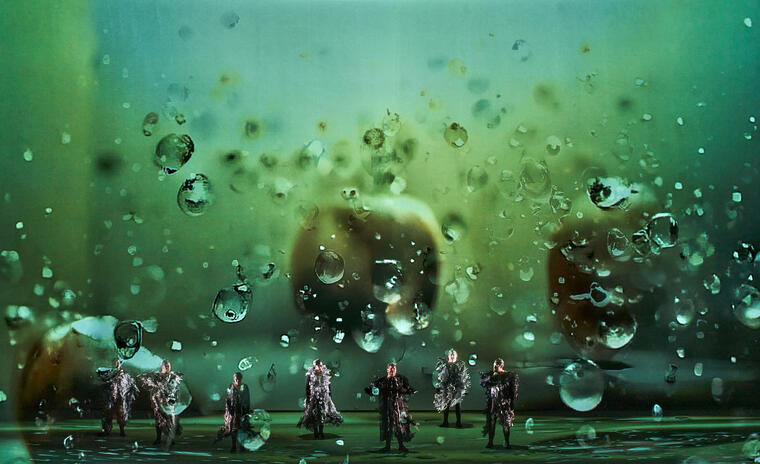
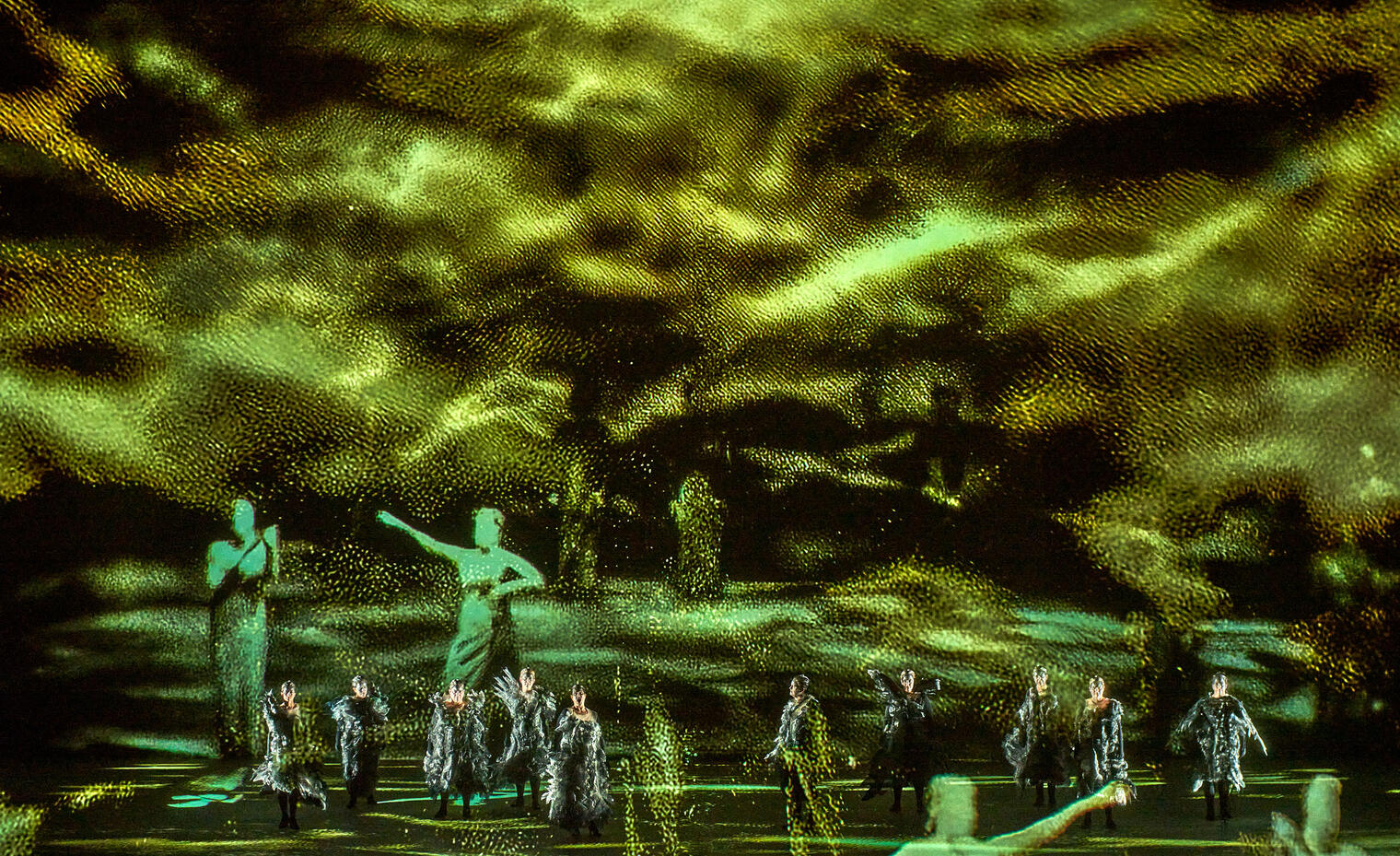
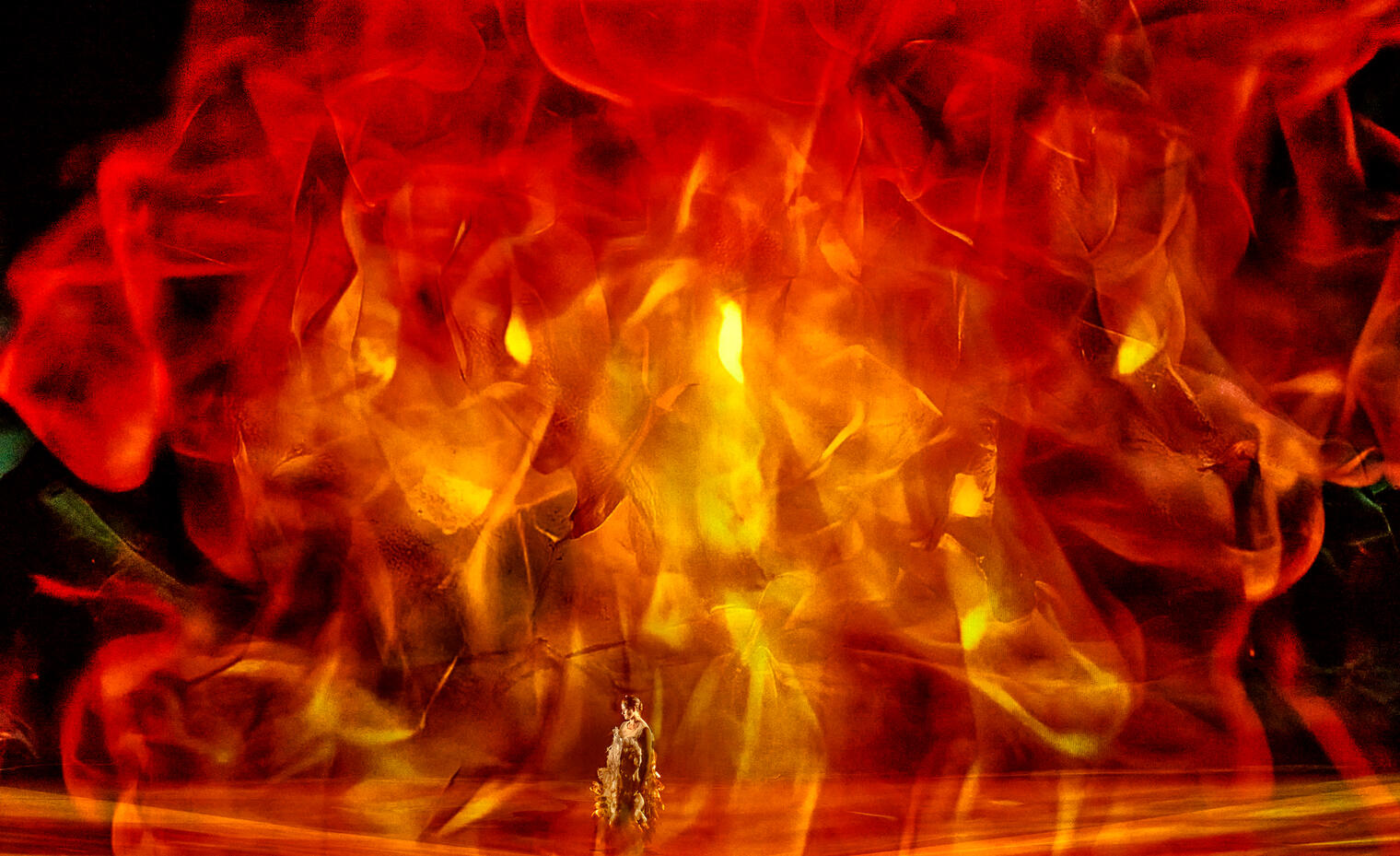
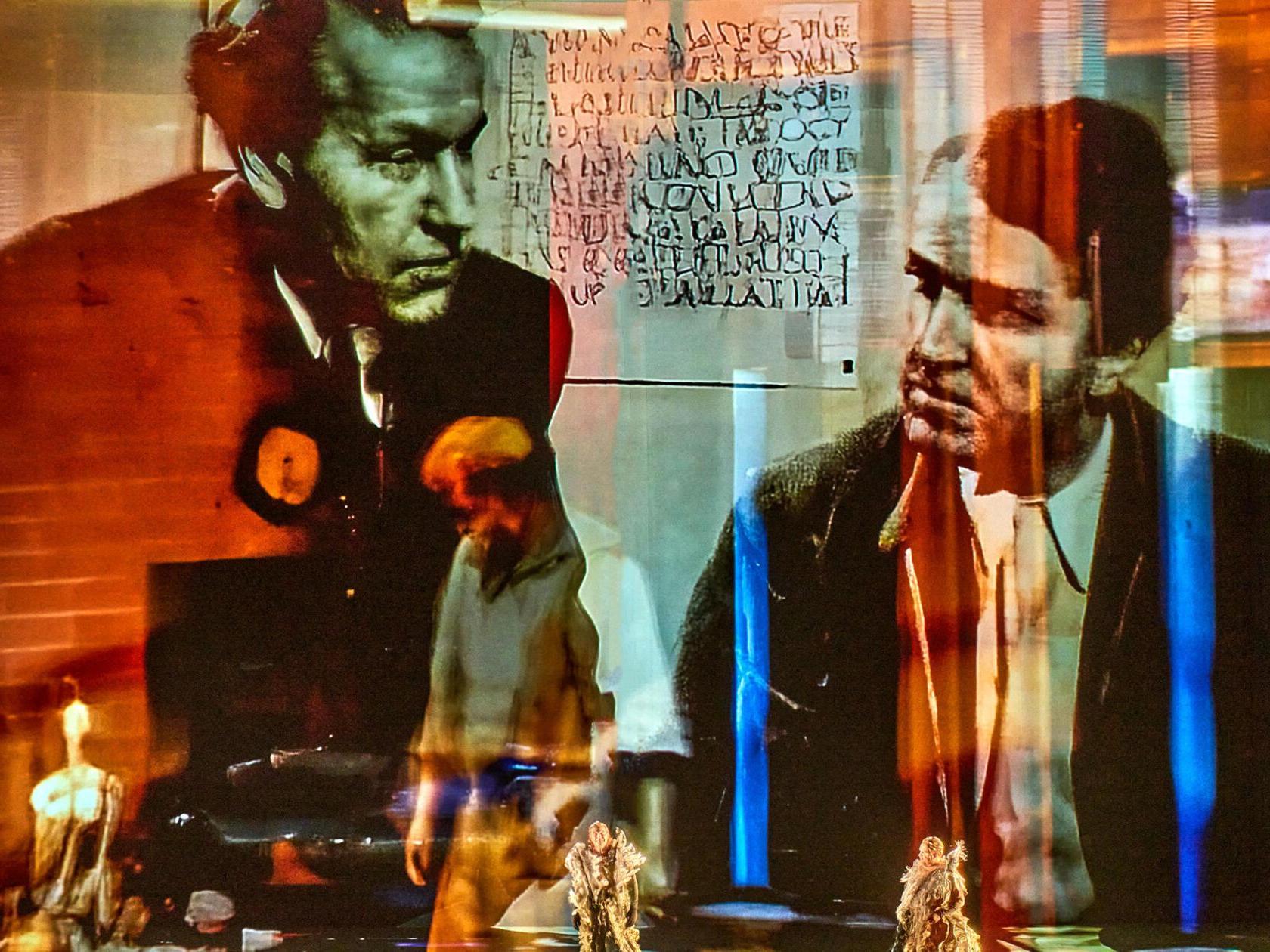
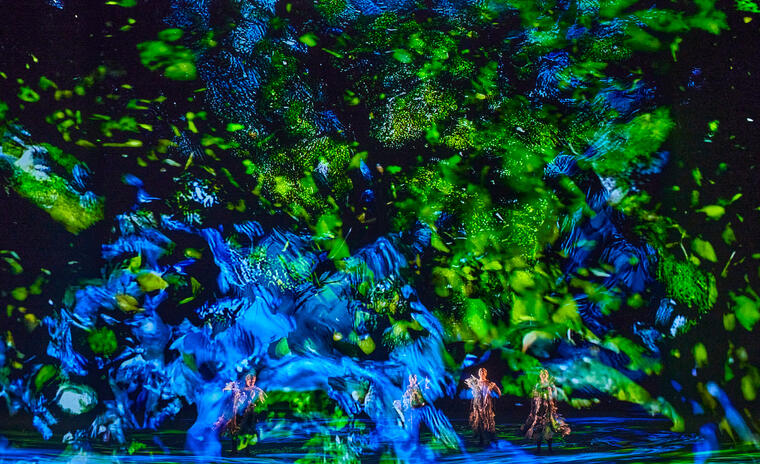
The resulting anticipation, for better or for worse, has resulted in a failure, judging by press reports and the accounts of those attending the performances. Press photographs show an empty stage onto which various images are projected:  fire, water, forest, and gold, or even historical photographs of the brothers Wieland and Wolfgang Wagner, as well as images from every Ring Cycle production in the history of the Bayreuth Festival: images from the historic productions by Wieland Wagner and Chéreau, as well as those by Flimm, Kupfer, Castorf, and Schwarz. To facilitate the projection, the performers had to wear s black plastic-like costumes, more like garbage bags, with a texture looking reminiscent of disposable supermarket gloves. The result: many boos at the end of the performances. What if Wagner, who was so wrong in his pamphlet "Jewishness in Music," had concluded that instead of Jews, it is Artificial Intelligence that is incapable of creating true art? The Bayreuth audience certainly thinks so.
This Sesquicentennial Ring cycle, judging by what I've heard and read in the press about the production, will go down in the festival's history as a mere footnote, compared to the historic and exceptional production of Rienzi mentioned earlier. But this early opera isn't the only cause; the evident failure of entrusting the set design (because there is no real staging) to Artificial Intelligence, and the cast, with voices that are sometimes too lyrical for the roles they perform, also play a role. What will be remembered, but isn't enough, is Christian Thielemann 's conducting of the Bayreuth Festival Orchestra. Thielemann, now with Daniel Barenboim semi-retired, is the world's leading Wagnerian conductor. He has truly been so for years, but for many, he shared the throne with the Argentinian. Furthermore, Thielemann has a special connection with the Bayreuth Festival, with which he has been working since 2000. Between 2006 and 2010, he conducted the Ring Cycle at the Festival in an anthological performance. And he has conducted the entire Wagnerian canon at the Festspielhaus, to the point of being associated with it.

In recent years, following the custom of his mentor Herbert von Karajan, for whom he served as assistant at the Salzburg Festival, he has employed casts of lyric voices for operas. His renditions of , Wagner's music, rooted in the German tradition of slow tempi that allow each section to shine and convey the epic nature of the scores, lead him to focus meticulously on the voices, which results in a slight loss of spectacle. In Das Rheingold, he delivers a beautiful but somewhat rushed interpretation of the prelude, especially from the moment the string passage enters. The orchestra strikes powerful chords during the entrance of the giants and Erda. Die Walküre is arguably the best of this cycle in terms of orchestral accompaniment: from the electrifying and tense prelude to the first act, Thielemann gives a majestic, yet also lyrical, performance when necessary. In Siegfried, his performance shines in moments such as the prelude to the first act, whose slowness conveys the gloom of Mime's cave, or in the spectacular third act, where the always marvelous strings were at their most brilliant when Siegfried enters the Valkyries' rock, following a spectacular performance of the interlude. Equally opulent, and at the same time slow, he is evident in Götterdämmerung, where there are memorable moments such as the interlude between the first and second scenes of the first act, or in the funeral march. The finale was, as always, deeply moving.
Klaus Florian Vogt , the indispensable tenor at Bayreuth, has taken on the titanic task of singing the four most important tenor roles in the Ring Cycle: Loge, Siegmund, and Siegfried. As Loge, he sounds quite lyrical, a middle ground between the traditional heroic and grotesque approaches to the character. As Siegmund, he is lyrical and passable in the first act, but there are moments when his voice is too bland. As Siegfried, and all this after having sung the solo tenor role in Beethoven's Ninth Symphony, also with Thielemann. This tenor has a very peculiar voice, with a youthful timbre but at the same time so lacking in heroism that it doesn't suit all the roles he usually sings. Regarding Siegfried, it's a role that overwhelms him: he's a mixed bag. There are moments when his voice seems to fit in terms of timbre, provided one doesn't forget that there are tenors with larger voices who convey more personality for this role than his. And in others, it's simply insufficient and even bland. With Schager already past his prime, it seems that Vogt, despite not being a true Wagnerian heldentenor, is the most sought-after, due to his stamina and ability to sing many roles without showing much fatigue... even with the voice he has.
Camilla Nylund is another one who tries but fails to reach the role of Brunhilde. There are moments when she reminds me a little of Eva Marton, but without her volume or vocal power. She reminds me of her because of her raw, raspy low voice. Like Vogt, there are moments when she seems to fit the role, but others when her voice tends toward shouting, and she also has an annoying vibrato. Pity, because roles like Eva in Meistersinger or Elisabeth in Tannhäuser are better suited to her voice. 

Elza van der Heever is high-pitched and dramatic Sieglinde, and as in the Ring cycle at La Scala, it would have been ideal if she had swapped roles with Nylund.

Michael Volle possesses a mature voice that allows him to embody the role, conveying its irony and worldly experience, especially in Siegfried. But in Rheingold and  Walküre, he is able to portray, even if his voice lacks a certain fullness, the character's nobility and inner conflicts. The character's fragility or irony is musically reflected in his ability to attack with a soft, pianissimo delivery, as in his grand finale in The Valkyrie, although he had some troubles in the concluding line.
It's a relative joy to have an Alberich like Jochen Schmeckenbecher 's. Not because he's the new Gustav Neidlinger: This baritone has had a long career and his voice is noticeably mature. But after having had such a light baritone as Olafur Sigurdarson in the role in recent years, hearing an Alberich with a deep, villainous dark timbre is almost a blessing. 

Gerhard Siegel's voice is now mature and even a little deep, like Mime's, after decades as one of the leading interpreters of the role, and arguably the most important spieltenor in the German operatic world. His performances demonstrate experience and mastery, and he delivers an excellent portrayal of the character's grotesque nature.
Christa Mayer has a mature voice, though with stage presence, for Erda and Waltraute. But she lacks the depth and presence that Anna Kissjudit has in the roles of Fricka and the First Norn—an impressive voice. 

Mika Kares performs Fasolt, Hunding, and Hagen with a solid and spectacular deep bass voice. Michael Kupfer-Radecky is good as Gunther, and Magdalena Hintendobler as Gutrune. Siyabonga Maqungo , a regular at the Festival, is a beautifully sung Froh with a lovely lyric voice.

The rest of the cast ranged from competent to remarkable. And they were always accompanied, though only at sunset, by the brilliant Festival Chorus.
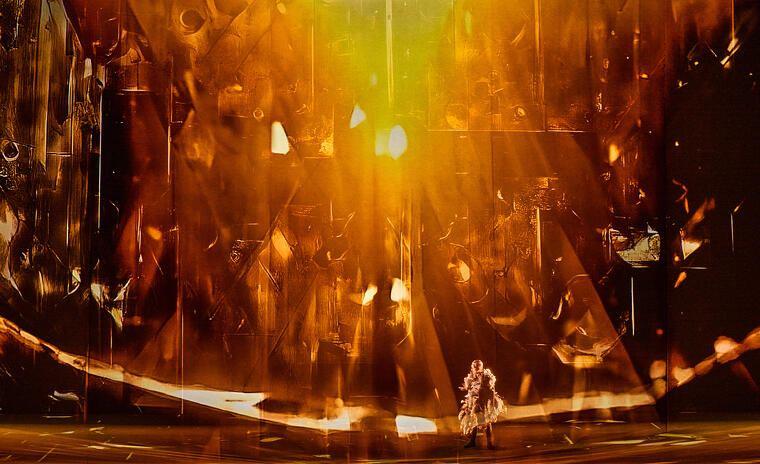

This Ring-AI will remain in the memory of those who saw it at the Festspielhaus, but thanks to the audio from the radio broadcasts, we can enjoy the return of maestro Thielemann to the Ring in the theater for which it was created. We eagerly await the 2028 Ring.

My reviews are not professional and express only my opinions. As a non English native speaker I apologise for any mistake.

Most of the photographs are from the internet and belong to its authors. My use of them is only cultural. If someone is uncomfortable with their use, just notify it to me.

Any reproduction of my text requires my permission. 

La IA en la música: el Anillo del sesquicentenario en Bayreuth.


Ya me habría gustado estar allí presente, pero no me es posible ir todos los años. Además, pese a la presencia de Thielemann en el foso, mis reservas con la producción, o la ausencia de ella, hacían que me interesase menos que el fabuloso Rienzi que hemos visto y oido en streaming. Por eso, me he limitado a oír este Anillo por la radio.

Cuando Wagner dijo aquello de "niños, cread algo nuevo" en una carta a su suegro Liszt, poco se imaginaría cómo terminarían interpretándolo futuros miembros de su familia. En épocas más recientes, su bisnieta Katharina Wagner, directora artística del Festival, ha llevado eso a las últimas consecuencias: en 2023, hubo una producción de Parsifal que se podía ver a través de unas gafas de realidad virtual. Para este Festival del 150 aniversario, además de la nueva gran producción de Rienzi, se ha decidido experimentar con algo aún más novedoso: una nueva producción de El Anillo del Nibelungo, exclusivamente para esta edición (dado que en 2028 se estrenará la que sustituirá a la ya retirada de Valentin Schwarz) cuya decoración corra a cargo de la Inteligencia Artificial, a cargo del curador Marcus Lobbes. La expectación creada, para bien y para mal, se inclinó hacia lo malo, a juzgar por lo leído en prensa y por lo que cuentan los que están asistiendo a las representaciones. Las fotografías de la prensa muestran un escenario vacío, en el que se proyectan diferentes imágenes: desde fuego, agua, bosque, oro, hasta fotografías históricas de los hermanos Wieland y Wolfgang Wagner, así como de todas las producciones del Anillo en la historia del Festival de Bayreuth: imágenes de las históricas producción de Wieland Wagner o de Chéreau, como otras pertenecientes a las de Flimm, Castorf o Schwarz. Para facilitar la proyección, los artistas han debido llevar un vestuario de plástico con tintes de color negro, más parecido a una bolsa de basura y con una textura que evoca a guantes descartables de supermercado. El resultado, muchos abucheos al final de las representaciones. ¿Y si Wagner, que tan equivocado estaba en su panfleto "El Judaísmo en la Música", hubiese llegado a la conclusión de que en lugar de los judíos, fuera la Inteligencia Artifical la que no es capaz de crear arte de verdad? El público de Bayreuth sí que lo piensa.

Este Anillo del sesquicentenario, a juzgar por lo oído y por lo leído en prensa sobre la producción, quedará en la historia del festival como una anécdota, comparada con la histórica y excepcional producción de Rienzi antes referida. Pero no será solamente esta ópera de juventud la única causa, sino también el evidente fracaso de haber confiado la decoración (porque no hay una puesta en escena como tal) a la Inteligencia Artificial, y al elenco, con unas voces en ocasiones demasiado líricas para los roles que interpretan. Lo que ha quedado para la historia, pero no es suficiente, es la dirección de Christian Thielemann al frente de la Orquesta del Festival de Bayreuth. Thielemann es, ya con Daniel Barenboim semiretirado, el principal director wagneriano del mundo. Realmente lleva años siéndolo, pero para muchos compartía el trono con el argentino. Además, Thielemann tiene una química especial con el Festival de Bayreuth, con el que lleva trabajando desde el año 2000. Ya entre 2006 y 2010 dirigió el Anillo en el Festival, en una interpretación antológica. Y ha dirigido todo el canon wagneriano en el Festspielhaus, hasta el punto de verse asociado con el mismo.

En los últimos años, y siguiendo la costumbre de su maestro Herbert von Karajan, del que fue asistente en el Festival de Salzburgo, cuenta con elencos de voces líricas, como se ha dicho antes, para óperas wagnerianas. De este modo, sus interpretaciones, enraizadas en la tradición alemana, de tempi lentos en los que permite a cada sección lucirse, así como transmitir lo épico de las partituras, hace que se centre en cuidar mucho las voces, lo que hace que pierda un poco de espectacularidad.  En El Oro del Rin, realiza una bella pero un poco rápida interpretación del preludio, especialmente desde que suena el motivo de las cuerdas. La orquesta da unos golpes impactantes en la entrada de los gigantes y en la de Erda. La Valquiria es posiblemente lo mejor de este ciclo en cuanto a orquesta: desde el preludio del primer acto, electrizante y tenso, Thielemann da una interpretación majestuosa, pero también lírica cuando ha de serlo. En Sigfrido, su interpretación destaca en momentos como el preludio del primer acto, cuya lentitud transmite lo lúgubre de la cueva de Mime, o en el espectacular tercer acto, en el que las siempre maravillosas cuerdas tuvieron un lucimiento en el momento en que Sigfrido entra en la roca de las valquirias, tras una interpretación espectacular del interludio. Igualmente opulento, y al mismo tiempo lento, se muestra en el Ocaso, donde hay momentos memorables como el interludio del primero al segundo cuadro del primer acto, o en la marcha fúnebre. El final fue como siempre emotivo.

Klaus Florian Vogt, el tenor imprescindible en Bayreuth, ha asumido la tarea titánica de cantar los cuatro roles de su cuerda más importantes en el Anillo: Loge, Siegmund y Como Loge, suena bastante lírico, como un término medio entre las tradicionales aproximaciones heroicas y grotescas a la hora de interpretar el personaje. Como Siegmund, es lírico y pasable en el primer acto, pero tiene momentos en los que la voz es demasiado inane. Siegfried, y todo ello después de haber cantado el rol de tenor solista en la Novena de Beethoven, también con Thielemann. Este señor tiene una voz muy peculiar, de un timbre juvenil pero al mismo tiempo tan poco heroico que no encaja con todos los roles que suele cantar. En lo referente a Siegfried, es un rol que le excede: da una de cal y otra de arena. Hay momentos en que la voz parece encajar por timbre, siempre que no se olvide que hay tenores de voces más grandes y que transmiten más personalidad que la suya. Y en otros, simplemente es insuficiente e incluso insulsa. Con un Schager ya tocado, parece que Vogt es, sin serlo por cuerda, el heldentenor wagneriano más solicitado, debido a su resistencia y capacidad de cantar muchas funciones sin mostrar mucho agotamiento... aunque sea con esa voz que tiene.

Camilla Nylund es otro quiero y no puedo como Brunilda. Hay momentos en que me recuerda un poco a Eva Marton, pero sin tener su volumen ni su su fuerza vocal. Me la recuerda por su voz desgarrada. Igual que Vogt, hay momentos en que parece encajar, pero otros en los que la voz tiende al grito, además de contar con un vibrato molesto. Y es una pena, porque roles como Eva en Maestros o Elisabeth en Tannhäuser se adaptan mejor a su voz. 

Elza van der Heever es una Sieglinde muy aguda y de timbre dramático, y como en el Anillo de la Scala, habría sido ideal que se cambiara los roles con Nylund.

Michael Volle tiene una voz madura que le permite encajar con el rol, transmitiendo su ironía y su experiencia con el mundo, especialmente en Sigfrido, pero en Oro y Valquiria es capaz de mostrar, incluso aunque a la voz le falte más rotundidad, la nobleza y los conflictos del personaje. La fragilidad o ironía del mismo, musicalmente se traduce en su capacidad para atacar en piano, como en su gran final en La Valquiria, aunque la frase final la cantó con algún que otro apuro.

Es una alegría, relativa, el contar con un Alberich de la talla de Jochen Schmeckenbecher. Y no porque sea el nuevo Gustav Neidlinger. Este barítono ya lleva muchos años de carrera y se le nota la voz madura. Pero después de haber contado con un barítono tan ligero como Olafur Sigurdarson en el rol los últimos años, el oír a un Alberich con grave y timbre villanesco, es casi una bendición. 

Gerhard Siegel tiene la voz ya madura y hasta un poco grave como Mime, tras décadas siendo uno de los referentes del rol, y siendo posiblemente, el spieltenor más importante del mundo operístico alemán. En sus interpretaciones se nota experiencia y tablas, una caracterización excelente de lo grotesco del personaje.

Christa Mayer tiene la voz ya madura, aunque con entrega escénica, para Erda y Waltraute. Pero le falta el grave y la presencia que Anna Kissjudit tiene en el rol de Fricka y la primera norna, una voz impresionante. 

Mika Kares interpreta a Fasolt, Hunding y Hagen, con una solvente y espectacular voz de bajo profundo. A buen nivel Michael Kupfer-Radecky como Gunther y Magdalena Hintendobler como Gutrune. Siyabonga Maqungo, habitual en el Festival, es un Froh bellamente cantado, con una preciosa voz lírica.

El resto del elenco, entre cumplidor y notable. Y siempre acompañados, aunque solo en el Ocaso, del genial Coro del Festival.

Este Anillo-IA quedará en la memoria de los que fueron a verlo en el Festspielhaus, pero gracias al audio de las transmisiones radiofónicas, podemos disfrutar del regreso del maestro Thielemann al Anillo en el teatro para el que fue creado. Esperamos ya con ganas el Anillo de 2028.

Las fotografías y vídeos escénicos no son de mi autoría, si alguien se muestra disconforme con la publicación de cualquiera de ellas en este blog le pido que me lo haga saber inmediatamente. Cualquier reproducción de este texto necesita mi permiso.

sábado, 1 de agosto de 2026

Rise and fall of a tyrant: Rienzi's exceptional and amazing debut at the Bayreuth Festspielhaus.

Every year that I comment on the live stream of the Bayreuth Festival's opening night, I celebrate another year of blogging. This year marks my ninth. For these nine years, I have tried, through this humble blog, to convey to readers the vibrant atmosphere of Madrid's operatic scene, hoping that in doing so, the world will learn a little more about the grandeur of the operatic productions in the capital, and the passion with which we Madrileños love opera. Once again, thanks to the generosity of the Bayreuth Festival, Stage+, German television, and finally the internet, millions of Wagnerians and music lovers around the world can enjoy the magic of each new production on the Green Hill, year after year. 

This year, 2026, is special because the Bayreuth Festival celebrates its 150th anniversary. The unwavering will of Richard Wagner, who was revolutionizing opera, transforming it into a total art form, led him to build a theater where he could put his visionary musical and theatrical ideas into practice. The small and charming city of Bayreuth was chosen. Thus, in 1876, he made history with the first performance of the complete cycle of The Ring of the Nibelung, in a theater with seating capacity that mimicked that of Greek-Roman amphitheaters. With its structure, it was the spectacle itself, not the great families and their luxurious attire, what truly mattered. Wagner died seven years later, but his revolutionary theater would acquire an importance for his country that went far beyond music, for better and for worse. The Bayreuth Festival would become the main sanctuary of a religion that was at its zenith: German nationalism, with fatal consequences decades later. Since the Second World War, the Festival would return to the Wagnerian spirit, but from an unexpected approach for the still nationalist public: that of a constant and increasingly radical artistic experimentation.

For the festival's sesquicentennial, its current artistic director and the composer's great-granddaughter, Katharina Wagner, has opted for a quite special, as well as daring, celebration: nine performances of Rienzi, the early grand-opéra that the maestro disowned, in its program. The Festival, and with it the operatic tradition, has reduced the Wagnerian canon— which recognizes his grandiose and revolutionary musical style—to ten of his thirteen complete operas, from The Flying Dutchman (his fourth opera) to Parsifal (his thirteenth and last). Rienzi, Wagner's third opera, however, enjoyed great popularity during his lifetime and was frequently performed in Europe until the Second World War. In fact, it was the first Wagnerian opera seen in Spain, in 1876 at the Teatro Real in Madrid. Today it is a rarity and does not enjoy the same popularity as the canon, not even among the most ardent Wagnerians. It is a work that, although it has many great moments, in which one can hear hints of the grandeur to come, suffers from others where it is noticeable that Wagner's music had not yet reached its full maturity. Furthermore, by adopting conventions of the then-fashionable but now outdated genre of grand opera, it includes too many choruses, dances, and military marches, making it excessively long. This could explain why the fabulous overture and, to some extent, the tenor's prayer in Act Five are  the only  known excerpts from this opera today. 

It seems impossible to discuss this opera today without mentioning a tragic coincidence: it was a favorite of the abhorrent Nazi dictator and genocidal leader Adolf Hitler. As a teenager, in January 1905, Hitler attended a performance of Rienzi with his friend August Kubizek. The future tyrant was captivated by this grandiose opera, which tells the story of a medieval Roman nobleman who, in an attempt to liberate his people from the tyranny of the aristocrats, becomes a leader seeking to restore Rome to its former glory. Years later, he would tell Kubizek that "in that hour it began," referring to his devastating political mission. Ironically, the historical Rienzi, Cola di Rienzo, would become the very kind of tyrant he wished to combat and was ultimately overthrown. And we all know how Hitler and the Germany he sought to "restore" to its former grandess, ended up. Because of Hitler, we cannot know the original version of Rienzi, because the original manuscript was given to him for his fiftieth birthday, and it perished with him during the Battle of Berlin. In Wagner's work, the people overthrow Rienzi, and he dies cursing this "degenerate"(a favorite word of the Nazis) people, unworthy of him. Hitler committed suicide, abandoning the people he led to disaster, believing they were no longer the superior people for whom he had fought so hard. It is always annoying to mention the Rienzi-Hitler connection, but circumstances around its first and only staging at the Festspielhaus made it necessary, because this theater that was a cultural sanctuary for the Nazis; and which, in its umpteenth—and necessary—exercise of atonement, held a concert-lecture in homage to the Jewish artists persecuted by the Nazis, with music by Mahler and Haas. Furthermore, the German press has sensationalized this unfortunate coincidence in all its headlines, reducing it to "Hitler's favorite opera". 

Despite everything, Rienzi is  more than a renegade work. The fascinating story of this medieval Roman nobleman corrupted by power, accompanied by its powerful music, gains immensely when staged. 

Although the festival organized performances in 2013—marking the Wagner bicentennial—conducted by Christian Thielemann with the Leipzig Gewandhaus Orchestra, those took place in a stadium, the Oberfrankenhalle. So, this marks the first time the opera has been performed on the stage of the Festspielhaus. These performances are a reason for joy, given Rienzi's relevance to the early history of Wagnerism, to finally see it performed at Wagner's theater, with its brilliant chorus and orchestra, and at the same time a shame that it is only being performed this year. For this unique occasion, an all-female team has been assembled for its production. Hungarian stage directors Alexandra Szemerédy and Magdolna Parditka  have taken the plot of Rienzi and, in a parallel with its history, transposed the action to the present day. In a polarized and increasingly unequal world like ours, new Rienzis rise to power promising to restore lost greatness, appealing to sensationalism to win people over. As a result, this opera surprisingly proves to adapt very well to a modernization, which the directors have successfully achieved. The Rome of Misses Szemerédy and Parditka is a poor and unequal city, where tension hangs in the air. In this production, we witness the rise and fall of a tyrant and his people in a world of social media and violence.

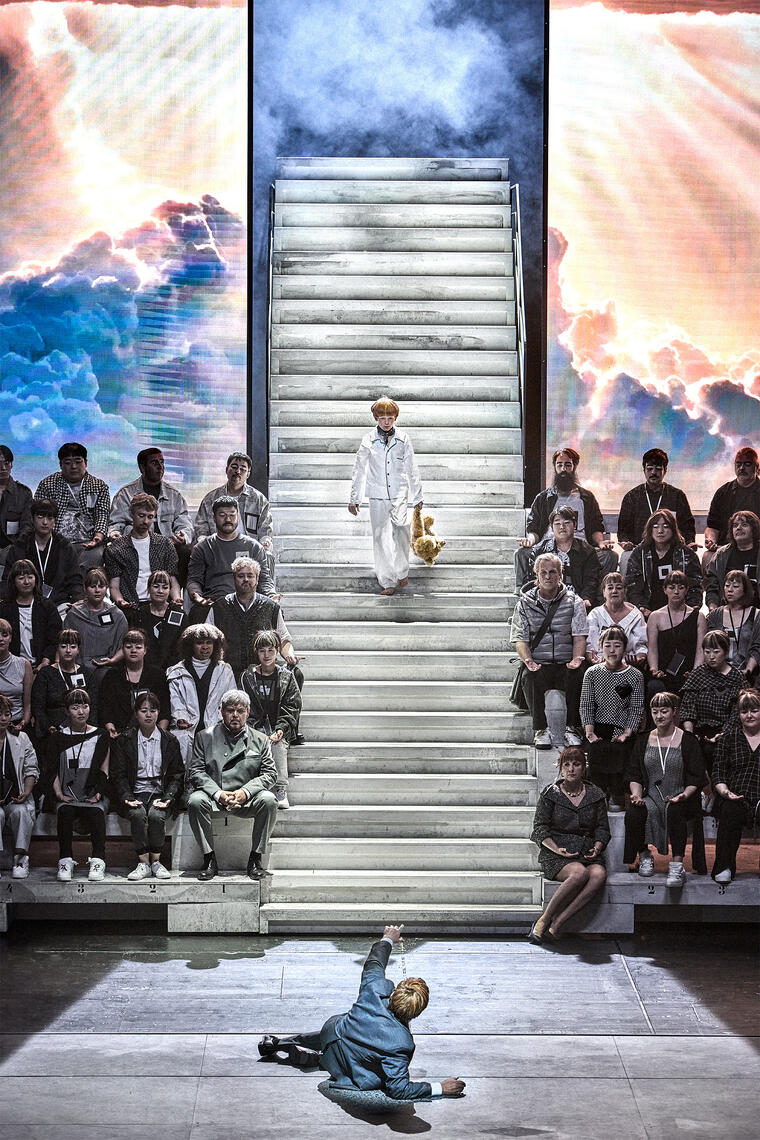
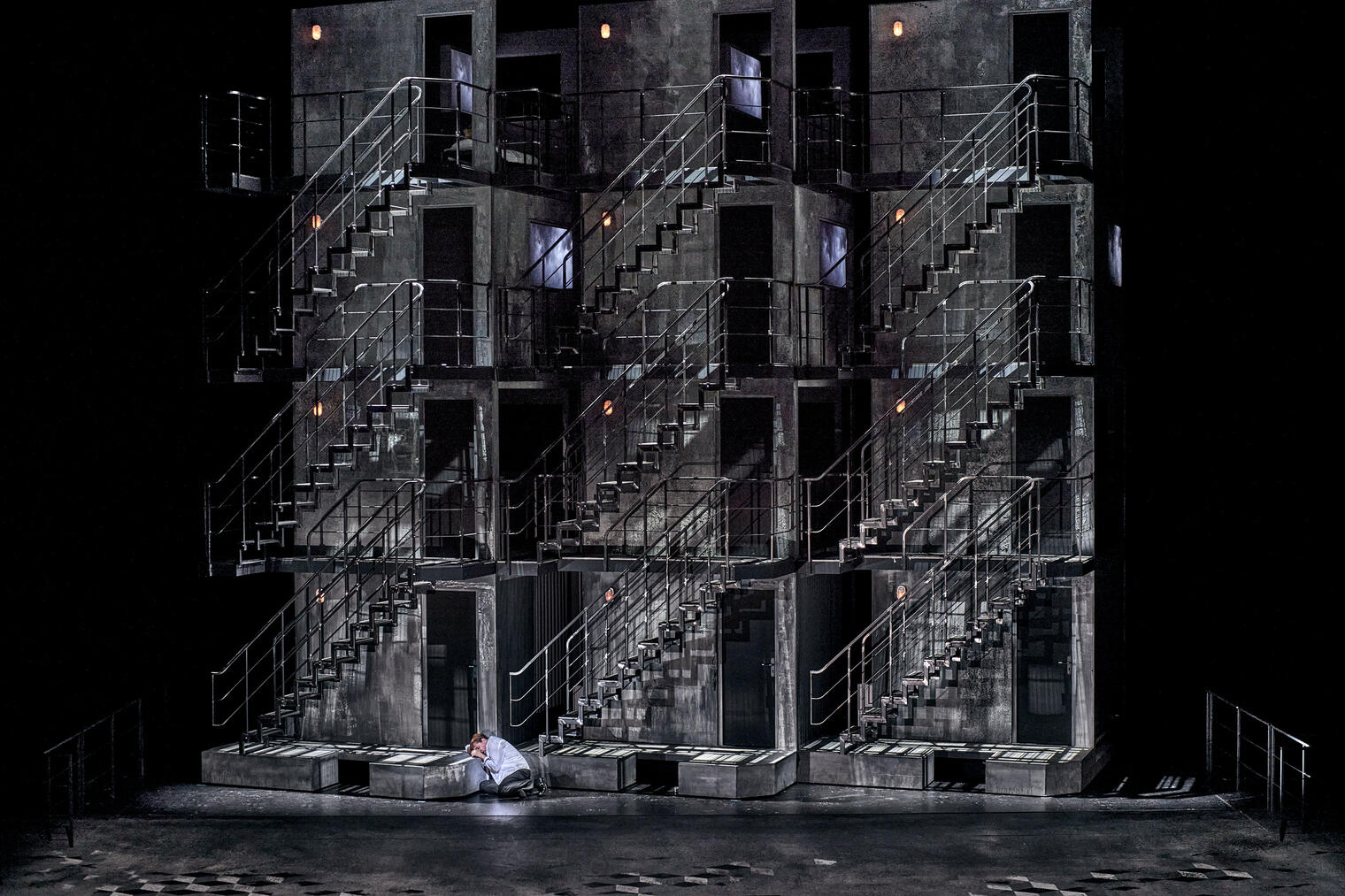
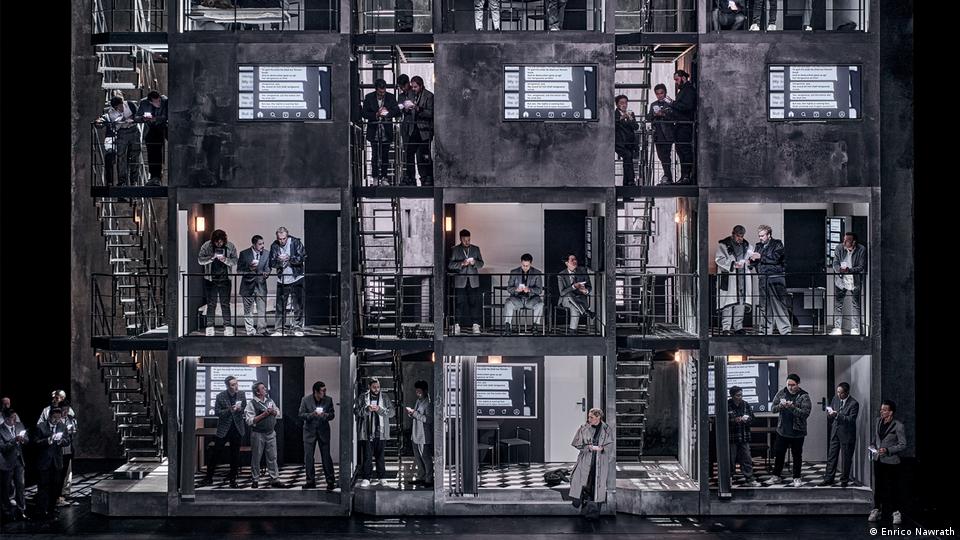
The curtain rises shortly after the overture begins, revealing a three-room house. Rienzi lives there with his sister Irene and their frail son. Rienzi works in his office; halfway through the piece, the son dies. The upper and lower floors are then illuminated, revealing a gray building, typical of Eastern European Bloc countries, with several televisions displaying social media comments and news reports. The screens show people commenting on Rienzi and Irene's incestuous relationship. The first act is a political rally featuring Rienzi, Orsini, and Colonna, who are running for office. They are surrounded by reporters with cameras and people glued to their smartphones. While the organ plays, we see the Romans voting. Rienzi wins the election, as shown on a screen displaying the results and the seats won in the Roman Curia. It must be said that all the news reports on television, as well as the banners supporting the candidates, are in English, which contrasts sharply with the opera being sung in German. The second act depicts the Curia and a staircase where Rienzi's dead son appears, while offstage the Messenger of Peace sings, as if in this version, he were appearing as the ghost of his son. Between some scenes, a wall covered with propaganda posters in English, German, and Latin about the political situation appears. The ballet is the highlight of this act. It is a comic pantomime from the Bayreuth Festival itself, directed by a child dressed as a gilded statue by Ottmar Hörl, featuring actors in costumes from the Ring, Lohengrin, Tannhäuser, Tristan, Die Meistersinger von Nürnberg, and Parsifal. This pantomime includes an imitation of the intermissions, with a food stand and restrooms that mimic those of the theater itself, and even the fanfares. 

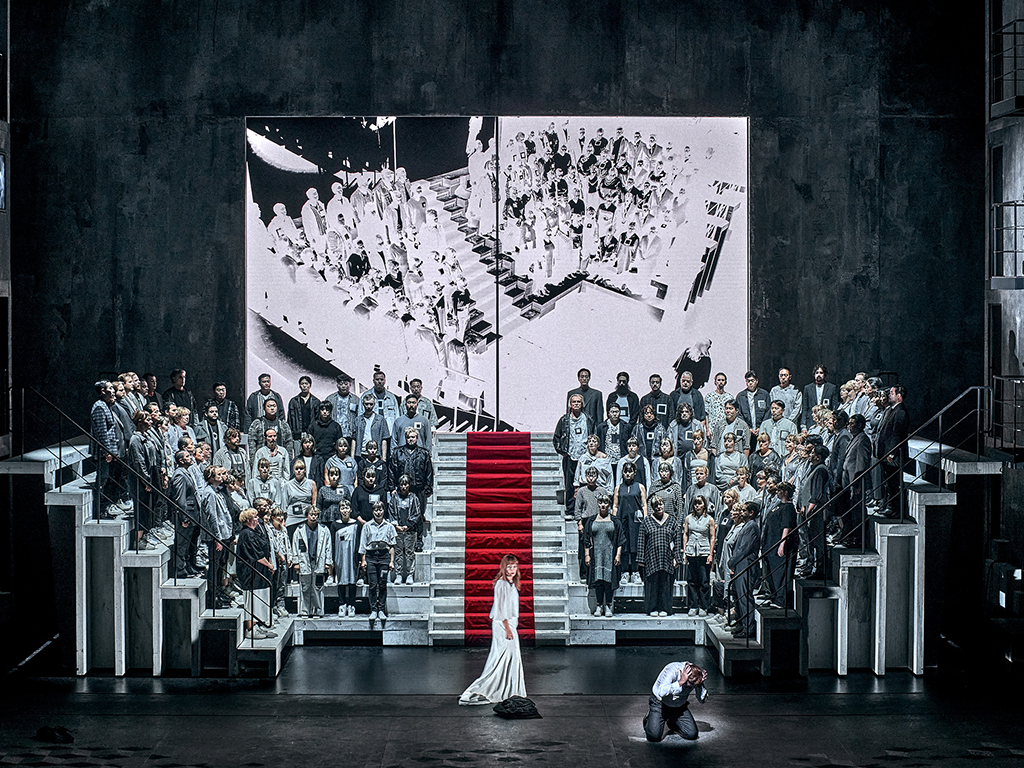
The third act shows Irene and Adriano living together as a couple, as the Romans prepare for war. A rebellion, led by Orsini and Colonna, requieres the conscription of even child soldiers, and a mother is seen bidding farewell to her recruited son. The rebellion ends with the weary and dirty Romans receiving medals, the rebels being executed (which displeases Adriano, because his father is shot), and the aforementioned mother weeping over her son's body before receiving his military uniform. The fourth act begins, surprisingly, with Rienzi's prayer, which should open the fifth. Rienzi, drunk and holding a bottle, attempts suicide before launching into his famous song. We return to the Curia, where the child soldier's mother is seen applauding disgusted, but Rienzi is not the same man as in the second act; every time he hears the Te Deum, he collapses. Adriano even tries to shoot him from a building, but Irene is standing nearby. In Act Five, during the brothers' duet, they self-harm. At the end, Rienzi is seen at the top of the steps, collapsing with a cry of pain, while the Curia collapses, and Irene does not die, but embraces Adriano, free to love him after the death of her domineering brother, whom she had grown weary of throughout the opera. 

Rienzi is a work that is usually performed in abridged form. Wagner himself prepared a shortened version to be performed in a single day, which is the edition of the classic EMI recording with René Kollo. The closest we have to hearing what Wagner premiered, is Edward Downes' recording for the BBC, which lasts 280 minutes. On this occasion, a "Bayreuth edition" has been prepared, which has reduced the work to three and a half hours, preserving most of the vocal parts. Nathalie Stutzmann , a regular at the Festival, conducts the Bayreuth Festival Orchestra. One of the things that generated anticipation was how this music would sound with this orchestra. The result is as expected: a perfect match. Ms. Stutzmann conducts with verve and dramatic flair, excellent in the overture, the ballet, and the marches, reflecting the martial atmosphere of the music. The strings were excellent in Rienzi's famous aria, here repositioned by the stage directors. The Bayreuth Festival Chorus , conducted by Thomas Eitler-de Lint, maintained a high musical level, especially in their scenes from the second act, and the breathtaking chorus in the fourth act, the only case  of Latin  Gregorian chant used in Wagner's operas.

Andreas Schager has held the throne of the heldentenors for many years, and along with Vogt, he is the principal tenor of Bayreuth. Moreover, the role is not unfamiliar to him; he sang it in Madrid in 2012 with great success. However, on this occasion, his voice sounded somewhat tired and vibrant, which affected his famous prayer aria, where he struggled a bit. Nevertheless, his stage experience and musical resources (attacking phrases in piano to manage his voice) allowed him to pull off the performance.

Gabriela Scherer plays Irene, Rienzi's sister and partner. In this version, Irene is not the virtuous and virginal young woman of the libretto, but a mature woman tired of her brother, with whom she has had a child, and who seems to be dominated by him (an allusion to the relationship between Hitler and his niece Geli Raubal, or even a mock on that of Donald and Melania Trump?). Scherer's dark voice -inherited from her mezzo-soprano days- may be better suited to the more dramatic parts, in addition fitting the image the directors create for her, but it strips the character of all lyricism, in addition to her rather not so pleasant highest notes.

Jennifer Holloway was an excellent Adriano, well acted and sung. 

The rest of the supporting cast is formed by Bayreuth regulars, and their level is consistently excellent. Vitali Kowaljow's voice sounds a bit aged as the Cardinal, while Michael Nagy and Andreas Bauer Kanabas are well-sung Orsini and Colonna, respectively. Matthias Stier was an excellent Baroncelli, with a beautiful and promising spieltenor voice. Cecco del Vecchio was sung by a remarkable Michael Kupfer-Radecky , and Victoria Randem has a very sweet voice as the Messenger of Peace.

The performance was a resounding success, judging by the enthusiastic applause and the critical acclaim. This was also due to the exceptional nature of the event: Rienzi is only scheduled to be programmed this year, as it has been stated. We hope not, and we also hope that it will return in future editions. It's true that Wagner didn't want it in Bayreuth, that it isn't easy for many Wagnerians due to its length and grandeur, but it gains considerably live and with a stage production. Even so, the orchestra and chorus are a perfect fit, and this is already the Rienzi of the 21st century, thanks to the superb stagecraft and musical quality. Those who attend these performances at the Festspielhaus are fortunate... and the rest of the world looks on with a touch of envy on them.

My reviews are not professional and express only my opinions. As a non English native speaker I apologise for any mistake.

Most of the photographs are from the internet and belong to its authors. My use of them is only cultural. If someone is uncomfortable with their use, just notify it to me.

Any reproduction of my text requires my permission.