
I would have loved to be there, but I can't afford going every year. Besides, despite Thielemann's presence in the pit, my reservations about the production, or rather the lack thereof, made it less interesting to me than the fabulous Rienzi we've seen and heard via streaming. Therefore, I've limited myself to listening to this Ring cycle on the radio.
When Wagner wrote "children, create something new" in a letter to his father-in-law Liszt, he could hardly have imagined how future members of his family would end up interpreting his words. More recently, his great-granddaughter Katharina Wagner, the Festival's artistic director, has taken this idea to its extreme: in 2023, there was a production of Parsifal that could be viewed through virtual reality glasses. For this 150th anniversary Festival, in addition to the new major production of Rienzi, they have decided to experiment with something even more innovative: a new production of The Ring, exclusively for this edition (since the one replacing Valentin Schwarz's now-retired one will premiere in 2028), with set design by Artificial Intelligence, curated by Marcus Lobbes.
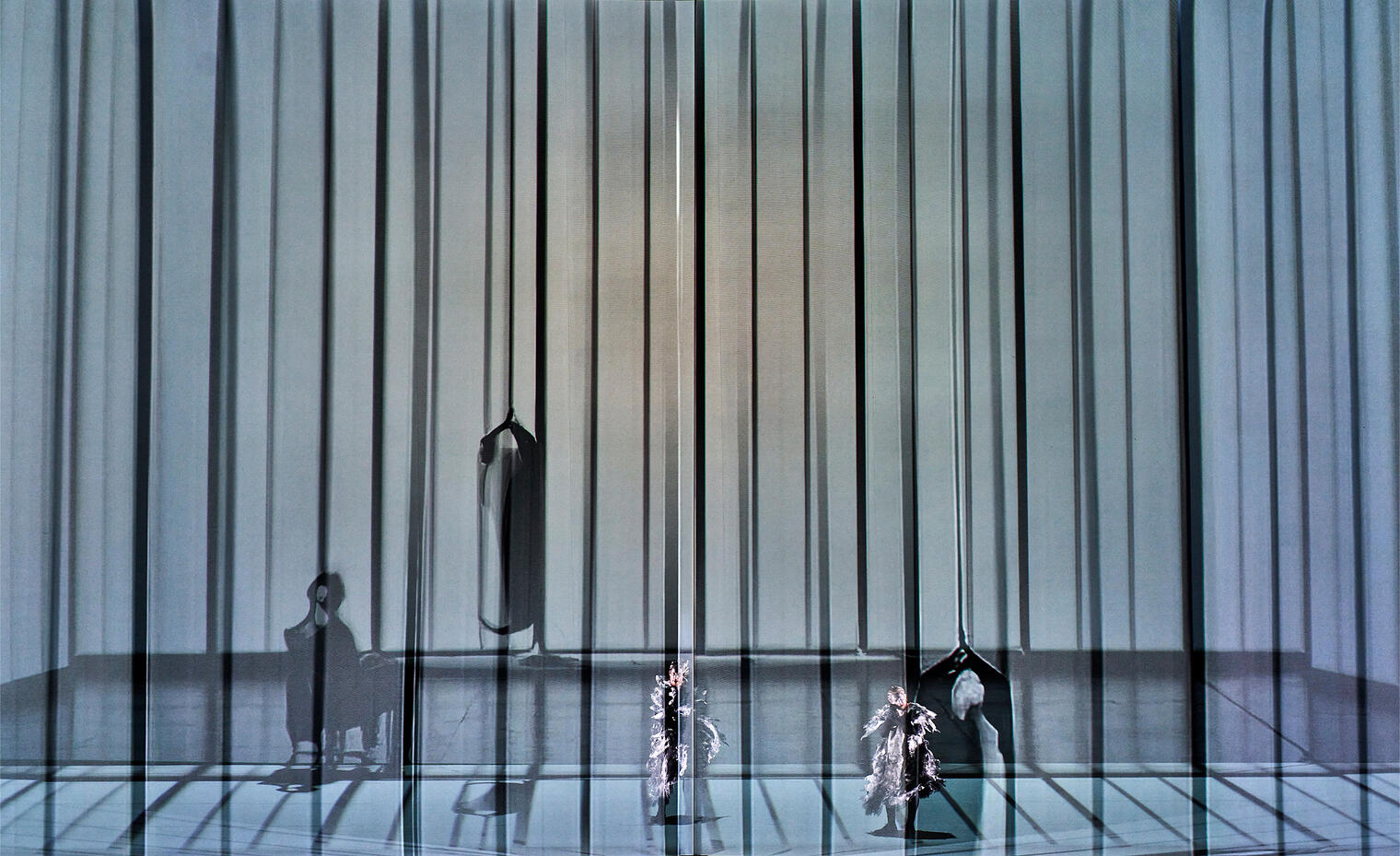
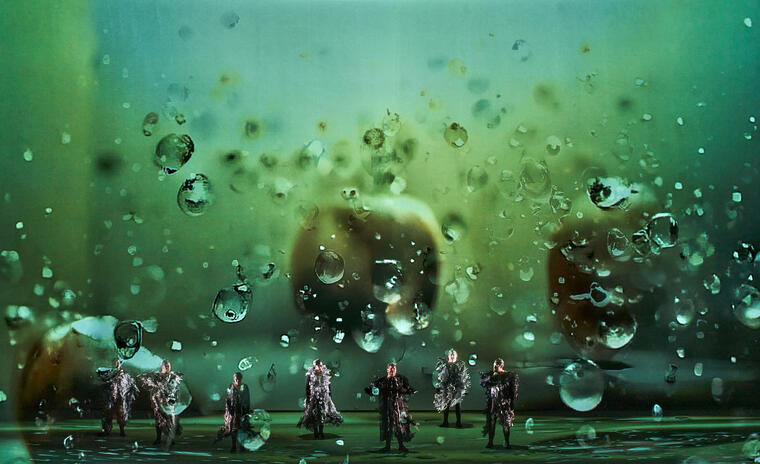
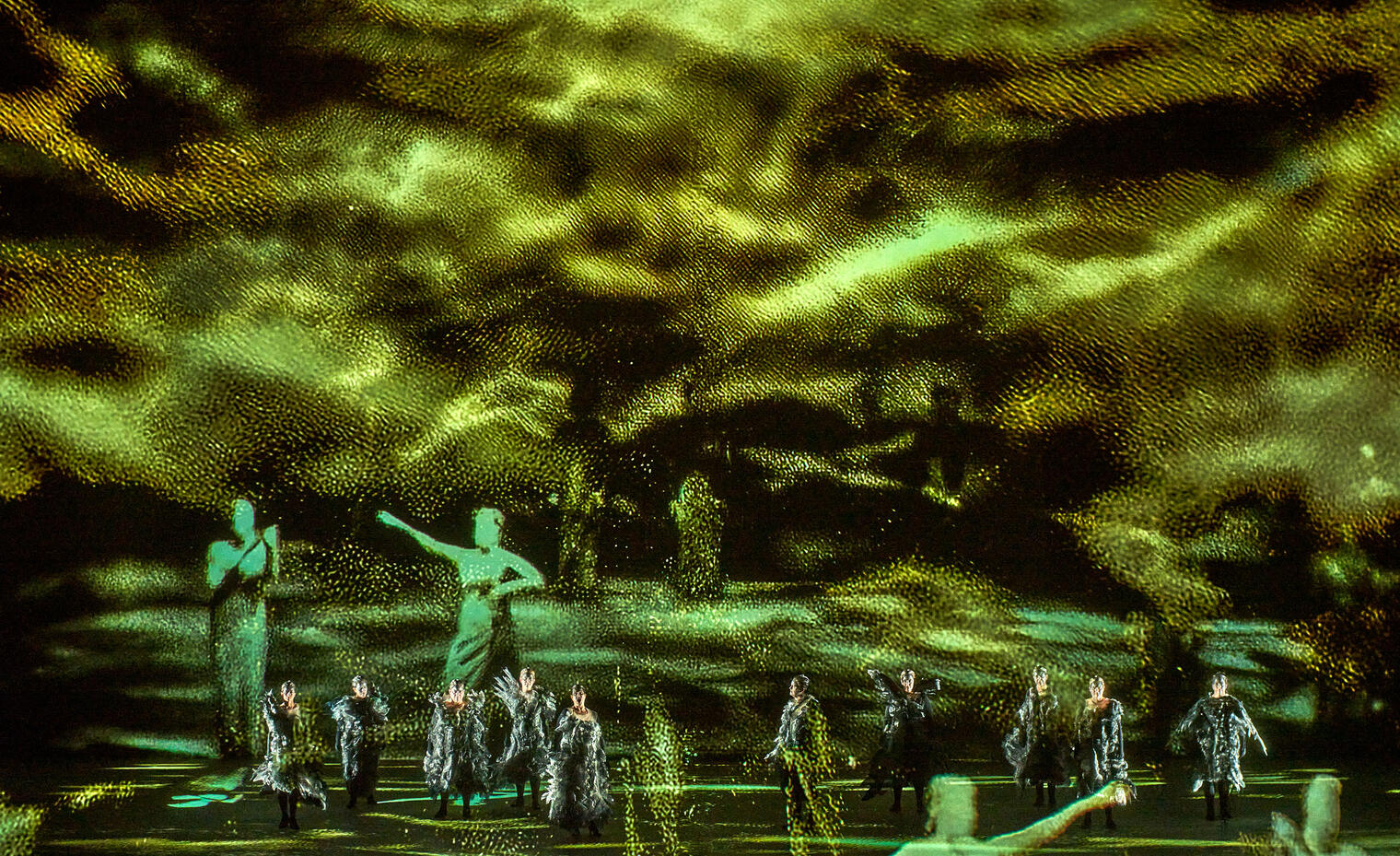
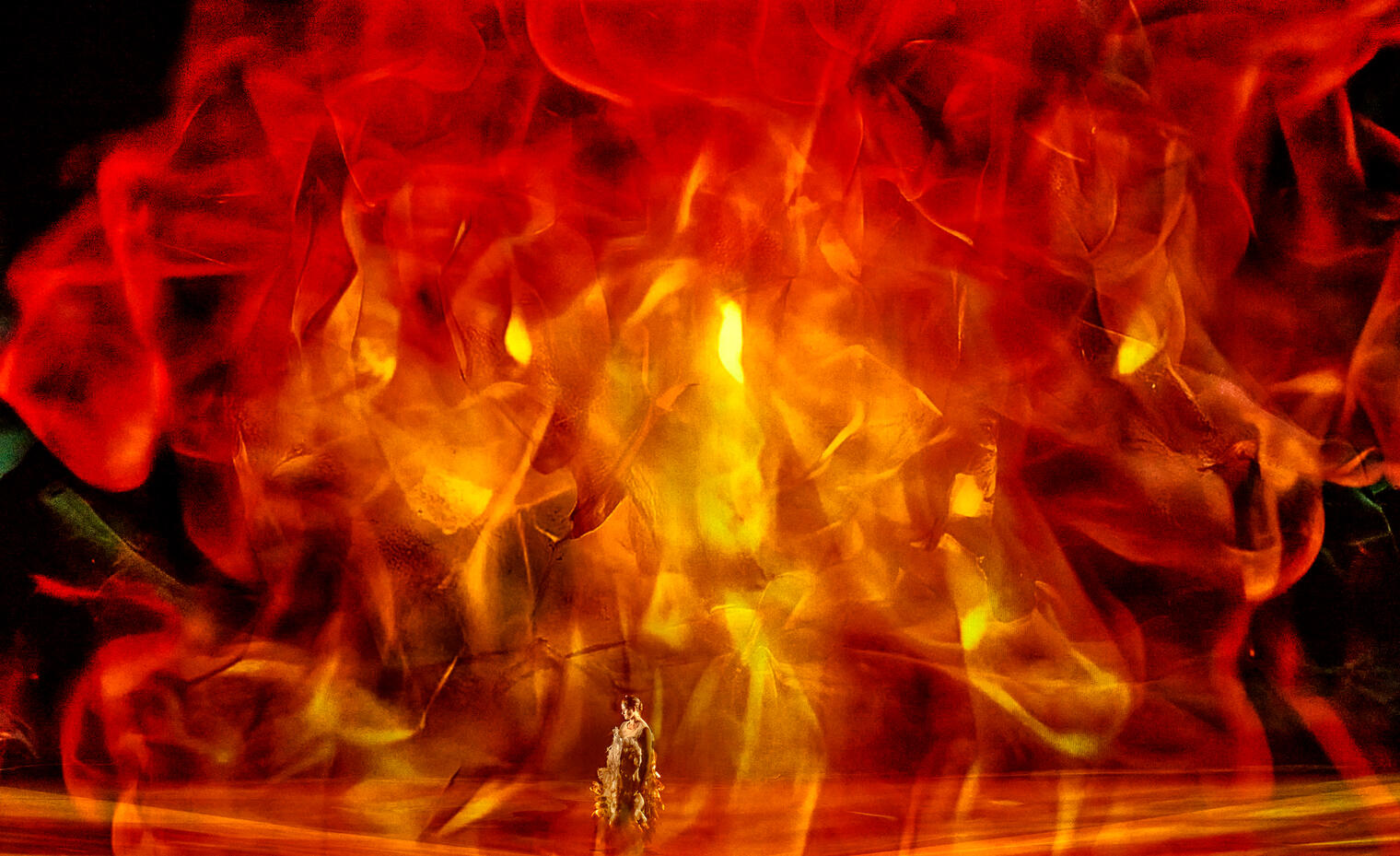
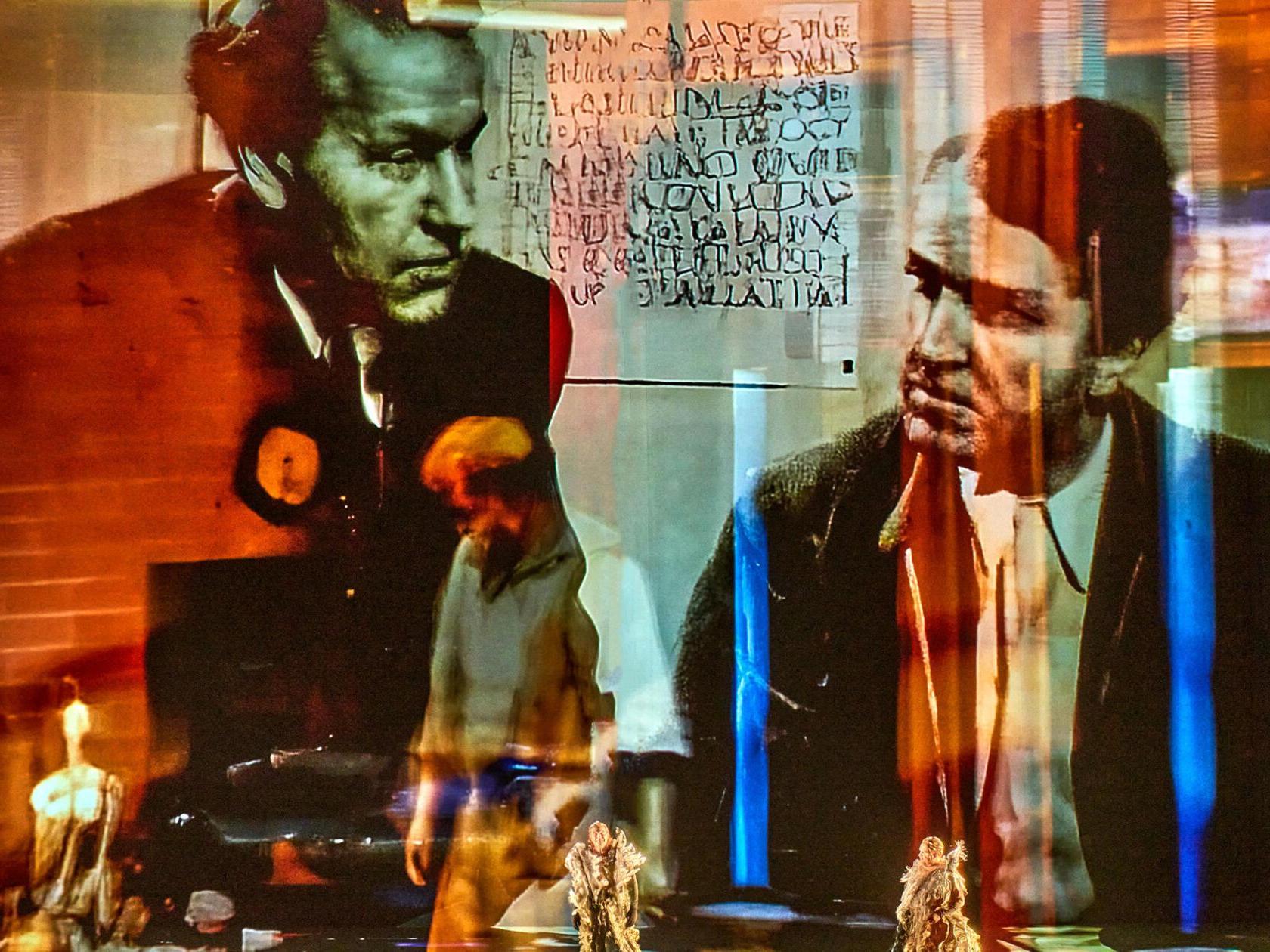
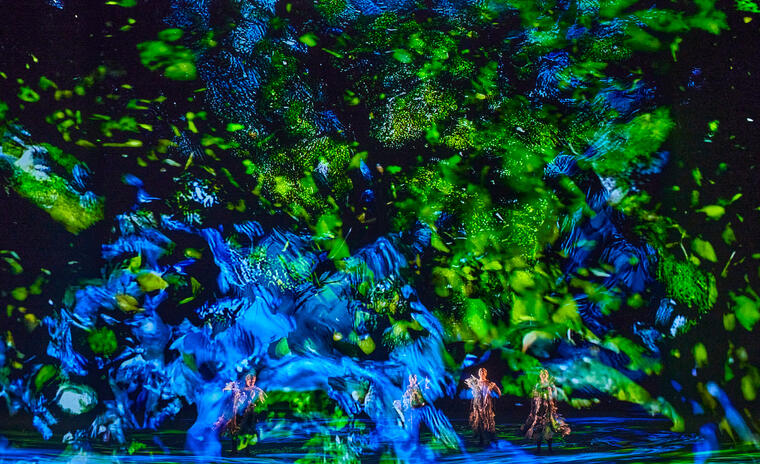
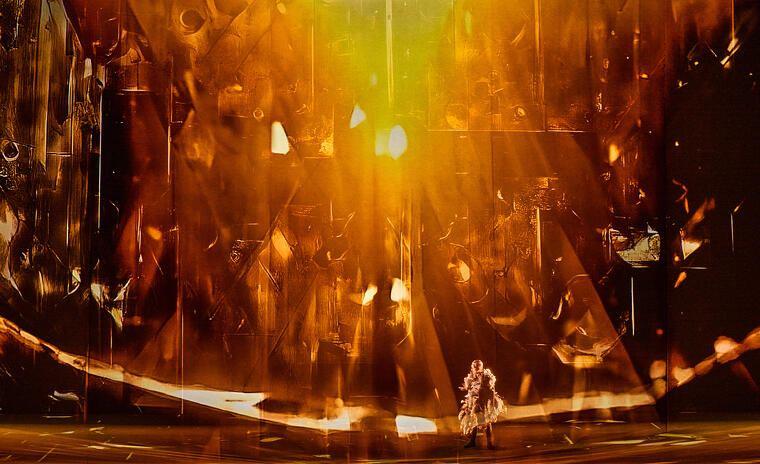
The resulting anticipation, for better or for worse, has resulted in a failure, judging by press reports and the accounts of those attending the performances. Press photographs show an empty stage onto which various images are projected: fire, water, forest, and gold, or even historical photographs of the brothers Wieland and Wolfgang Wagner, as well as images from every Ring Cycle production in the history of the Bayreuth Festival: images from the historic productions by Wieland Wagner and Chéreau, as well as those by Flimm, Kupfer, Castorf, and Schwarz. To facilitate the projection, the performers had to wear s black plastic-like costumes, more like garbage bags, with a texture looking reminiscent of disposable supermarket gloves. The result: many boos at the end of the performances. What if Wagner, who was so wrong in his pamphlet "Jewishness in Music," had concluded that instead of Jews, it is Artificial Intelligence that is incapable of creating true art? The Bayreuth audience certainly thinks so.
This Sesquicentennial Ring cycle, judging by what I've heard and read in the press about the production, will go down in the festival's history as a mere footnote, compared to the historic and exceptional production of Rienzi mentioned earlier. But this early opera isn't the only cause; the evident failure of entrusting the set design (because there is no real staging) to Artificial Intelligence, and the cast, with voices that are sometimes too lyrical for the roles they perform, also play a role. What will be remembered, but isn't enough, is Christian Thielemann 's conducting of the Bayreuth Festival Orchestra. Thielemann, now with Daniel Barenboim semi-retired, is the world's leading Wagnerian conductor. He has truly been so for years, but for many, he shared the throne with the Argentinian. Furthermore, Thielemann has a special connection with the Bayreuth Festival, with which he has been working since 2000. Between 2006 and 2010, he conducted the Ring Cycle at the Festival in an anthological performance. And he has conducted the entire Wagnerian canon at the Festspielhaus, to the point of being associated with it.

In recent years, following the custom of his mentor Herbert von Karajan, for whom he served as assistant at the Salzburg Festival, he has employed casts of lyric voices for operas. His renditions of , Wagner's music, rooted in the German tradition of slow tempi that allow each section to shine and convey the epic nature of the scores, lead him to focus meticulously on the voices, which results in a slight loss of spectacle. In Das Rheingold, he delivers a beautiful but somewhat rushed interpretation of the prelude, especially from the moment the string passage enters. The orchestra strikes powerful chords during the entrance of the giants and Erda. Die Walküre is arguably the best of this cycle in terms of orchestral accompaniment: from the electrifying and tense prelude to the first act, Thielemann gives a majestic, yet also lyrical, performance when necessary. In Siegfried, his performance shines in moments such as the prelude to the first act, whose slowness conveys the gloom of Mime's cave, or in the spectacular third act, where the always marvelous strings were at their most brilliant when Siegfried enters the Valkyries' rock, following a spectacular performance of the interlude. Equally opulent, and at the same time slow, he is evident in Götterdämmerung, where there are memorable moments such as the interlude between the first and second scenes of the first act, or in the funeral march. The finale was, as always, deeply moving.
Klaus Florian Vogt , the indispensable tenor at Bayreuth, has taken on the titanic task of singing the four most important tenor roles in the Ring Cycle: Loge, Siegmund, and Siegfried. As Loge, he sounds quite lyrical, a middle ground between the traditional heroic and grotesque approaches to the character. As Siegmund, he is lyrical and passable in the first act, but there are moments when his voice is too bland. As Siegfried, and all this after having sung the solo tenor role in Beethoven's Ninth Symphony, also with Thielemann. This tenor has a very peculiar voice, with a youthful timbre but at the same time so lacking in heroism that it doesn't suit all the roles he usually sings. Regarding Siegfried, it's a role that overwhelms him: he's a mixed bag. There are moments when his voice seems to fit in terms of timbre, provided one doesn't forget that there are tenors with larger voices who convey more personality for this role than his. And in others, it's simply insufficient and even bland. With Schager already past his prime, it seems that Vogt, despite not being a true Wagnerian heldentenor, is the most sought-after, due to his stamina and ability to sing many roles without showing much fatigue... even with the voice he has.
Camilla Nylund is another one who tries but fails to reach the role of Brunhilde. There are moments when she reminds me a little of Eva Marton, but without her volume or vocal power. She reminds me of her because of her raw, raspy low voice. Like Vogt, there are moments when she seems to fit the role, but others when her voice tends toward shouting, and she also has an annoying vibrato. Pity, because roles like Eva in Meistersinger or Elisabeth in Tannhäuser are better suited to her voice.
Elza van der Heever is high-pitched and dramatic Sieglinde, and as in the Ring cycle at La Scala, it would have been ideal if she had swapped roles with Nylund.
Michael Volle possesses a mature voice that allows him to embody the role, conveying its irony and worldly experience, especially in Siegfried. But in Rheingold and Walküre, he is able to portray, even if his voice lacks a certain fullness, the character's nobility and inner conflicts. The character's fragility or irony is musically reflected in his ability to attack with a soft, pianissimo delivery, as in his grand finale in The Valkyrie, although he had some troubles in the concluding line.
It's a relative joy to have an Alberich like Jochen Schmeckenbecher 's. Not because he's the new Gustav Neidlinger: This baritone has had a long career and his voice is noticeably mature. But after having had such a light baritone as Olafur Sigurdarson in the role in recent years, hearing an Alberich with a deep, villainous dark timbre is almost a blessing.
Gerhard Siegel's voice is now mature and even a little deep, like Mime's, after decades as one of the leading interpreters of the role, and arguably the most important spieltenor in the German operatic world. His performances demonstrate experience and mastery, and he delivers an excellent portrayal of the character's grotesque nature.
Christa Mayer has a mature voice, though with stage presence, for Erda and Waltraute. But she lacks the depth and presence that Anna Kissjudit has in the roles of Fricka and the First Norn—an impressive voice.
Mika Kares performs Fasolt, Hunding, and Hagen with a solid and spectacular deep bass voice. Michael Kupfer-Radecky is good as Gunther, and Magdalena Hintendobler as Gutrune. Siyabonga Maqungo , a regular at the Festival, is a beautifully sung Froh with a lovely lyric voice.
The rest of the cast ranged from competent to remarkable. And they were always accompanied, though only at sunset, by the brilliant Festival Chorus.

No hay comentarios:
Publicar un comentario