jueves, 8 de junio de 2023

Supreme art amidst evil, and serving it: Die Meistersinger von Nürnberg at the Bayreuth Festival, 1943.


Bayreuth, 1943.

World War II starts to go wrong for criminal Nazi Germany, although it was still far from being completely defeated. The Germans, after Joseph Goebbels' total war speech, start to suffer from more and more economic deprivations, but many are still convinced that this is necessary for the final triumph that their "Führer" promised so much, and also many still believing that they were the Herrenvolk, the master race. Just few movements like the White Rose, are enough corageous to stand for liberty and peace amidst such evil. On the other hand, millions of people classified as "inferior" or "undesirable" were dying under repression, starvation and genocide encouraged by the Third Reich throughout all the nations the Nazis were occupying, and the Jews, the regime's main enemy, were rotting for a long time in heinous, polluted ghettos across Eastern Europe or already being deported en masse to concentration camps from all parts of the continent, heading to their own annihilation.

Handbill of the 1943 Festival, including the extremely antisemitic article by Richard Wilhelm Stock, "Richard Wagner and his Mastersingers"

Meanwhile, the charming city of Bayreuth seemed to be aloof from all this. The Wagner Festival, which had become one of the cultural banners of Nazism since 1933, sponsored directly by Hitler and with the approval of the composer's family, continued, despite the war, to be held every year, despite the fact it was also affected by war limitations. Miraculously during the pre-war years it had not only maintained excellence but its independence, from Goebbels' talons, under whose yoke were other opera houses throughout the country. Since the beginning of the war, and fulfilling Hitler's dream that the working class would attend the festival, the so-called Kriegsfestspielen, or "War Festivals" were organized, exclusively for soldiers and other members of the army such as SS, Wehrmacht, and so on, as well as workers from industries and military hospitals, among others. Held by the notorious organization Kraft durch Freude, these Festivals were organized under a strong ideologization, in addition to which the programming criteria were quite curious, since the organizers came to believe that the soldiers could understand the suffering Siegmund in the Valkyrie, but feel identified by the pain of Tristan during Act 3, reason for which this opera wasn't programmed since the beginning of the war. Finally, in 1943, the decision was made to brighten things up a bit, and during that year and the following one, the most "German" work of the Wagnerian canon was scheduled, Die Meistersinger von Nürnberg, a favorite of the regime, and the only one in the bill in '43 and '44. The ideologising conferences prior to the performance, instructed the guests to feel inspired by this opera, to defend the "German" pure world that it represented, from the danger of the international Jewry and Bolshevism. To make things worse, given the limitations of the war, the help of SS musicians was used both for the choir - in decline these years - and to play the fanfares at the beginning of each act.

Depravity in C major: Soldiers attending Bayreuth Festival and SS troops playing the fanfares. Courtesy by Wagneroperas.

From left to right: Wilhelm Furtwängler, Hermann Abendroth, Heinz Tietjen and young Wieland Wagner.

And in this athmosphere of moral and material misery, one of the greatest conductors of all time, Wilhelm Furtwängler, conducted one of the most notable versions of Die Meistersinger, ever recorded, and remembered. The most famous Wagnerian conductor of the time with the quintessential Wagnerian orchestra. The only almost complete testimony of the German conductor at the festival, since the first scene and the quintet are missing, it also shows us the excellent chemistry he had with the orchestra, with a good number of musicians from the Berlin Philharmonic. Furtwängler performs a more modern direction than what the old "Bayreuth style" dictated, with an agile, powerful musical conducting but at the same time full of freshness, in which his interpretation gives a breath of humanity to a work then taken as a nationalist banner. And this is noticeable from the prelude, done with ease, with the composer's own majesty, but at the same time theatrical and with touches of comedy, since this is not Tristan und Isolde. During the first and third acts, the orchestra shines for this approach, connecting with listeners from all time. The second act is a delight. The prelude to the third is perhaps the best orchestral moment. That moment of reflection, so deep, the calm after the whirlwind of the fight of the previous act, which is reflected in a strong, resounding sound of the strings, which, taking into account the time that was passing, giving this rendition a dramatic dimension, a moment of serenity in the midst of barbarity outside the Festspielhaus. The final scene sounds festive, happy, vibrant, in a conducting that seems to announce the post-war Bayreuth and its theatricality. The Festival Chorus, despite not going through its best moment, sounds as sublime as possible in a work that it not only knows but feels and vibrates with.

Act One

It's a pity that we only have the photos and a one-minute video of the production by Heinz Tietjen, who had Wieland Wagner as set designer, in a new classic production, different from the one Tietjen himself made in 1933, in the first edition of the Nazi tyranny. Here there were hundreds of people on stage, although one can hear quite a bit of stage noise, as well as some strange "olé" screams in the arrival of the masters of the third act, from what comes to us from the recordings. Although Wieland was already training in Altenburg (where he directed a Ring in which he simplified the sets and experimented with lighting) and Berlin, his then conservative aesthetics, so tied to the period and so associated with this work, the most "German" of the Wagnerian canon, pales in front of that of an experienced Preetorius, who did the set design in 1933, and judging by the sets, with nods to German expressionism, then recently banned. And in this way, also to exacerbate nationalist feelings among the public, added to the Nazi penchant for staging massive crowds (just like their mass rallies in real life), Wieland and Tietjen spare no resources. The first act is more reminiscent of a large Gothic cathedral than of the simpler St. Catherine's Church in Nuremberg. The second act tries to faithfully reconstruct a street in Nuremberg from the 16th century, being the most successful set. Wieland's conservatism, more tending to postcard portrait than realism, clashes with the photographs that come to us of the 1933 set design by Preetorius, with some slight expressionist traces. The second scene of the third act, called "Festswiese", whose final minute survives, is the most spectacular, as a massive choir appears, barely leaving space for the singers, with the city of Nuremberg in the background (being the penultimate production where would see) and a tribune with an impressive shield of the Holy Roman Empire.


Furtwängler's cast, from left to right.: Maria Müller (Eva), Max Lorenz (Stolzing), Jaro Prohaska (Sachs), Josef Greindl (Pogner), Eugen Fuchs (Beckmesser), Erich Zimmermann (David)

The cast of Furtwängler's recoring is of a supreme level, but it does not mean that the renditions were perfect. At this moment, Jaro Prohaska, Max Lorenz and Maria Müller were a bit vocally aged for their parts, but that doesn't mean that they won't be able to use their experience and enormous sense of drama and music, and their still rich vocal means to give unforgettable performances. Prohaska is a Sachs not so vocally  deep, but in his "light" voice, his character acquires a humanity and a sensitivity that we do not find other singers that give the role more authority. Its culminating moment is the monologue of the second act, beautifully sung. Lorenz was at the peak of his career then, but his voice sounds too heroic. In this year he recorded his spectacular, referential Tristan with Heger, but such force does not fully fit into Stolzing. The singing is aristocratic, sublime, but sometimes it goes too far, as evidenced by the Am Stillen Herd, although the prize song is excellent. Müller, despite having a mature voice, and also a bit dramatic for Eva, is nonetheless one of the greatest performers of this role, and proof of this is given in the second act, where her singing is just delightful, in addition to having that beautiful tone, which makes her Eva a beautiful, fragile, virginal but also strong-willed young woman.

Act Two

At this time Beckmesser was performed as a comical character. And in this tradition Eugen Fuchs sings his character, which I find fun and convenient, although it has a less serious timbre than others, serves well to this portrait of this grouchy and low-tempered man. A very young Josef Greindl, only 30 years old, is already one of the greatest Wagnerian basses of all time, creating an anthological Pogner, as in his aria from the first act "Das schöne fest", as solemn as it is venerable, despite the fact that there would still be time for that artistry to  grow and give those classic performances in the 50s and 60s. Erich Zimmermann, also in a mature age, is a referential David, not only because of his youthful and comic tone, but also because of his beautiful and lyrical spieltenor voice. A tenor like this today would sing Florestan, Max or even Walther, although the good Zimmermann couldn't skip his decades-lasting indentification with the role of Mime (which can be noticed in his brief part in the recording of Siegfried's Forge with Lorenz in 1936). At the acting level, the candor and mischief of this adolescent character in the voice of Zimmermann is felt. Camilla Kallab is a correct Magdalena, and the almost tenorile voice of Erich Pina's Night Watchman is surprising.

Act 3 Finale, with Furtwängler's cast.

"Not even I could do it better"

Furtwängler was believed to tell this to his wife during a performance of the second cast, conducted by Hermann Abendroth, the conductor who alternated with him in the orchestra pit, during those performances. 

Act 3 Finale, with Abendroth's cast.

If Furtwängler's, despite not being complete, has risen to the altars of Wagnerian discography, this alternative version is at the same level, as well as being complete and with a better sound. And although it is legendary and well-known, it does not enjoy the same status as that by the legendary director of the Berlin Philharmonic. A disciple of the historical Felix Mottl, Hermann Abendroth represented the old Germanic style. However, in his musical direction, although we find that Germanic majesty and opulence, and which elevated the Nazis so much, it is also quite fresh and modern at the same time. Perhaps imbued with the theatricality of Bayreuth, despite the mannerisms of the Nazi era, Abendroth achieves an electrifying renditon, which is never boring and which has nothing to envy either  Furtwängler's or Knappertsbusch's ones. It's a pity that by staying in East Germany after the war, his recording legacy hasn't been as well known as it deserves (we've got a lot of wonderful Bruckners in the late '40s there).

Video of the Finale, with Abendroth's cast. Copyright by Critical Past.

Differences between these two versions have always been sought, but the truth is that, as far as casts are concerned, they are complementary. Furtwängler had a cast full of legendary names, many of them the same ones who sang at the premiere of this production in 1933; but Abendroth has a cast that is younger and in better vocal shape than the first one.


Abendroth's cast, left to right: Paul Schöffler (Sachs), Ludwig Suthaus (Stolzing), Erich Kunz (Beckmesser), Hilde Scheppan (Eva), Friedrich Dalberg (Pogner), Erich Witte (David)

Paul Schöffler is one of the most important Sachs of all time, and here he surpasses the veteran and overacting Prohaska, showing a firm, deep, authoritative voice at his best. His monologues in acts two and three are the best moments in the recording. Ludwig Suthaus, who would sing and record with Furtwängler after the war, is in better shape than Lorenz, and the voice, also unlike his famous post-war records, sounds youthful at base, albeit with that characteristic baritone tone, although sometimes the voice has some trouble, as in the Fanget An, where he has problems with some high notes. Hilde Scheppan was at that time a young soprano, more closely linked to Verdi, with a rather light voice and a pristine and delicious timbre, which makes her Eva fresh and youthful, although she does not have the magnetism of a diva such as Müller. Friedrich Dalberg is Pogner, who is still in top form. Erich Kunz is a Beckmesser who, unlike Fuchs and what was done at the time, sings his role, and also beautifully, focusing more on singing properly than several of his colleagues at the time who focused more on the comic and buffoonery of the character. That is why his Beckmesser can measure up to the rest of the cast in musicality, and not remain a grotesque nemesis of a Sachs. Erich Witte is a fresh David with a beautiful tone, who was just beginning his career. Compared to the mature voice of a veteran Zimmermann that sounds like  Mime, Witte shows us another way of interpreting the young apprentice: giving him youth and lyricism, singing with his voice to the full. Like Zimmermann, this tenor today would also sing Lohengrin, Tannhäuser, and everything else that came his way and he would be king of nowadays' opera houses.

The rest of the cast is the same as in Furtwängler's.

The remaining cast, from left to right: Camilla Kallab (Magdalena), Helmut Frenn (Nachtigall), Gerhard Witting (Zorn), Karl Krollmann (Moser), Herbert Grösebuch (Ortel), Franz Sauer (Schwarz), Fritz Krenn (Kothner)

The choir benefits from the good sound and seems to sound better, albeit still facing the musical limitations, and the depravity of having SS members among them.

Act 3, scene 1

Why do I end my post with this photograph with the empty stage of the first scene of the third act? Because when the war ended, the set was already set for the 1945 festival, which according to Hitler was going to be the "Festival of Peace." However, far from having a festival, the city of Bayreuth was devastated and Wagner himself fell from grace. A Jewish US Army sergeant, who fled his native Czechoslovakia after the 1938 Nazi annexation, Joseph Wechsberg, is said to have entered the Festspielhaus and seeing it empty, dilapidated, went to the set and sang the "Wahn" Monologue from Sachs with no more public than the empty seats. What was to be the glorious Festival of "Peace" (sic) was replaced by tremendous loneliness.

Every lover of Wagner's work should know both recordings, which show us a golden age, with two excellent batons, featuring singing legends in both casts, a traditional and old way of understanding Wagner that would be replaced by the visceral and theatrical portraits in the stagings by Wieland and Wolfgang Wagner since 1951. It also shows us how art can flourish amidst of absolute evil, serving it and shining despite it, in the most wicked political regime in Contemporary History.

My reviews are not professional and express only my opinions. As a non English native speaker I apologise for any mistake.
Most of the photographs are from the internet and belong to its authors. My use of them is only cultural. If someone is uncomfortable with their use, just notify it to me.
Any reproduction of my text requires my permission.

El arte en medio del mal, y al servicio de él: Los Maestros Cantores de Núremberg en el Festival de Bayreuth de 1943.


Bayreuth, 1943.

La Segunda Guerra Mundial empieza a torcerse para la criminal Alemania Nazi, aunque todavía estaba lejos de ser derrotada completamente. Los alemanes, tras el discurso de guerra total de Goebbels, empiezan a sentir privaciones, pero convencidos de que son necesarias para el triunfo final que tanto prometía su gobierno, la mayoría creyendo aún que eran el pueblo superior. Mientras tanto, millones de personas calificadas como "inferiores" o "indeseables", morían bajo la represión, el hambre y el genocidio alentados por el perverso Tercer Reich en toda la Europa ocupada por los nazis, y los judíos, el principal enemigo del régimen, hacía tiempo que se pudrían en guetos por toda Europa Oriental o ya eran deportados en masa a campos de concentración desde todos los puntos del continente, rumbo hacia su propia muerte.

Programa del Festival de 1943, con el infame artículo antisemita "Richard Wagner y sus Maestros Cantores", de Richard Wilhelm Stock. Cortesía: Tamino Autographs.

Mientras tanto, la bella ciudad de Bayreuth, parecía estar en una burbuja. El Festival Wagner, convertido desde hacía 10 años en uno de los estandartes culturales del nazismo, auspiciado directamente por Hitler y con el beneplácito de la familia del compositor, seguía, pese a la guerra, celebrándose, pese a que las limitaciones también le hacían mella. Milagrosamente durante los años previos a la guerra no solo había mantenido la excelencia sino su independencia, de las garras de Joseph Goebbels, bajo cuyo yugo estaban otros teatros del país. Desde que comenzó la guerra, y cumpliendo el sueño de Hitler de que el pueblo "llano" acudiera al festival, se organizaron los -hoy tristemente- famosos festivales de guerra, exclusivamente para soldados y demás miembros del ejército, además de obreros de todas las industrias y hospitales militares. Organizados por la infame organización Kraft durch Freude, estos Festivales se organizaron bajo una fuerte ideologización, además de que los criterios de programación eran bastante curiosos, ya que los organizadores llegaron a creer que los soldados podrían entender al sufriente Siegmund en la Valquiria, pero sentirse identificados por el dolor de Tristán, razón por la que no se programaba esta obra desde el inicio de la guerra. Finalmente, en 1943, se tomó la decisión de alegrar un poco la cosa, y durante ese año y el siguiente se programó la más "alemana" obra del canon wagneriano, Los Maestros Cantores de Núremberg, favorita del régimen. Las conferencias ideologizantes previas a la representación, aleccionaban a los invitados a sentirse inspirados por esta ópera, para defender el mundo "alemán" que esta representaba, del peligro del judío y del bolchevismo internacionales. Para más inri, dadas las limitaciones de la guerra, se recurrió a la ayuda de músicos de las SS tanto para el coro - en declive estos años- como para  tocar las fanfarrias del inicio de cada acto.

Perversión en re mayor: Los soldados asistiendo al festival y las SS tocando las fanfarrias.
Fuente: Wagneroperas.

De izquierda a derecha: Wilhelm Furtwängler, Hermann Abendroth, Heinz Tietjen y Wieland Wagner.

Y en este clima de miseria moral y material, uno de los directores de orquesta más grandes de todos los tiempos, Wilhelm Furtwängler dirigió una de las más notables versiones de Los Maestros Cantores que se recuerdan. El director wagneriano más famoso de la época con la orquesta wagneriana por antonomasia. Único testimonio casi completo del director germano en el festival, ya que faltan la primera escena y el quinteto, también nos muestra la excelente química que tenía con la orquesta, con un buen número de músicos provenientes de la Filarmónica de Berlín. Furtwängler realiza una dirección más moderna de lo que dictaba el "estilo Bayreuth", con una dirección musical ágil, potente pero al mismo tiempo llena de frescura, en la que su interpretación le da una humanidad a una obra entonces tomada como un estandarte nacionalista. Y esto se advierte desde el preludio, interpretado con soltura, con la majestuosidad propia del autor, pero al mismo tiempo teatral y con toques de comedia, pues esto no es Tristán. Durante el primero y el tercer acto, la orquesta brilla por este enfoque que conecta con todas las épocas. El segundo acto es una delicia. El preludio del tercero es quizá el mejor fragmento orquestal. Ese momento de reflexión, tan profundo, la calma tras el torbellino de la pelea del acto anterior, que se refleja en un fuerte, rotundo sonido de las cuerdas, que teniendo en cuenta la época que transcurría, daba a este preludio una dimensión dramática, un momento de serenidad en medio de la barbarie. El cuadro final suena festivo, alegre, vibrante, en una dirección que parece anunciar el Nuevo Bayreuth y su teatralidad. El coro del Festival, pese a no pasar por su mejor momento, suena lo más excelso posible en una obra que no solo conoce sino que la siente y vibra con ella.

Primer acto: los maestros.

Lástima que solo nos queden las fotos y un vídeo de un minuto del montaje de Heinz Tietjen, quien tuvo a Wieland Wagner de escenógrafo, en una nueva producción clásica, distinta de la que el propio Tietjen hizo en 1933, y que inauguraba la tiranía nacionalsocialista. Aquí había cientos de personas en escena, aunque se oyen bastantes ruidos escénicos, así como unos extraños "oles" en la llegada de los maestros del tercer acto, por lo que nos llega de las grabaciones. Aunque Wieland ya se estaba formando en Altenburgo (donde dirigió un Anillo en el que simplificó los decorados y probaba con la iluminación) y Berlín, su estética conservadora, tan ligada a la época y tan asociada a esta misma obra, la más "alemana" del canon wagneriano, palidece frente a la de un experimentado Preetorius, quien hizo la escenografía en 1933, y a juzgar por los decorados, con guiños al expresionismo alemán, el cual ya estaba prohibido. Y de esta forma, también para exacerbar los sentimientos nacionalistas entre el público, sumado al gusto nazi de poner multitudes en escena (justo como sus mítines multitudinarios en la vida real), Wieland y Tietjen no escatiman en recursos. El primer acto recuerda más a una gran catedral gótica que a la más sencilla iglesia de Santa Catalina de Núremberg. El segundo acto intenta reconstruir fielmente una calle del Núremberg del siglo XVI, siendo el decorado más logrado. El conservadurismo, más de postal que realista, de Wieland, choca con las fotografías que nos llegan de la escenografía de 1933 de Preetorius, con unos trazos que hacían guiño al expresionismo alemán antes mencionado. El cuadro segundo del tercer acto, llamado "Festswiese", cuyo minuto final sobrevive, es el más espectacular, pues aparece un coro masivo, apenas si dejando espacio a los cantantes, con la ciudad de Núremberg al fondo (siendo la penúltima producción donde se vería) y una tribuna con un impresionante escudo del Sacro Imperio Romano Germánico.

Primer Reparto, izq. a der.: Maria Müller (Eva), Max Lorenz (Stolzing), Jaro Prohaska (Sachs), Josef Greindl (Pogner), Eugen Fuchs (Beckmesser), Erich Zimmermann (David)

El reparto de esta obra es de un nivel excelso, pero no quiere decir que el total de las prestaciones sea la más redonda. En este momento, Jaro Prohaska, Max Lorenz y Maria Müller ya son mayores para sus partes, pero no quiere decir que no sean capaces de tirar de sus tablas y sus aún ricos medios vocales para dar interpretaciones de antología. Prohaska es un Sachs no tan grave ni profundo, pero en su voz "ligera", su personaje adquiere una humanidad y una sensibilidad que no encontramos otros cantantes que le dan al rol más autoridad. Su momento culminante es el monólogo del segundo acto, cantado bellísimamente. Lorenz estaba en la cima de su carrera entonces, pero su voz suena demasiado heroica. En este año grabó su espectacular Tristán con Heger, pero tanta fuerza no aplica del todo a Stolzing. El canto es aristocrático, sublime, pero en ocasiones se pasa de todo ello, como prueba en el Am Stillen Herd, aunque la canción del premio es excelsa. Müller, pese a tener la voz ya madura, y también un poco dramática para Eva, es sin embargo una de las más grandes intérpretes de este rol, y prueba de ello da el acto segundo, donde su interpretación es el de una mujer con fuerza y decidida, además de tener ese timbre bellísimo, que hace de su Eva una bella joven de carácter, pero también con su lado frágil y virginal.

Final de la obra, con el primer reparto.

En esta época Beckmesser se interpretaba como un personaje cómico. Y en esta tradición interpreta Eugen Fuchs su personaje, que a mí me resulta divertida y conveniente, teniendo además Fuchs una voz que si bien tiene un timbre menos grave que otros, sirve a la creación de este hombre rastrero y malhumorado. Un jovencísimo Josef Greindl, de tan solo 30 años, es ya"uno de los más grandes bajos wagnerianos de todos los tiempos, creando un Pogner de antología, como en su aria del primer acto "Das schöne fest", tan solemne como venerable, pese a que aún habría tiempo de perfeccionar el grave en sus memorables prestaciones diez y veinte años después. Erich Zimmermann, también ya mayor, es un David referencial, no solo por su tono juvenil y desenfadado, sino también por su bella y lírica voz de spieltenor. Un tenor así hoy en día cantaría Florestan, Max o incluso el Walther, aunque al bueno de Zimmermann no le deje de pasar factura todo el tiempo que cantó Mime, además de la identificación (que puede notarse en lo poco que canta en la grabación de la Forja de Sigfrido con Lorenz en 1936). A nivel actoral se siente la candidez y las travesuras de este personaje adolescente en la voz de Zimmermann. Camilla Kallab es una Magdalena cumplidora, y sorprende la casi tenoril voz del sereno de Erich Pina.

Fragmento del final de la representación, con el segundo reparto. Derechos de autor correspondientes a Critical Past.

"Ni yo podría hacerlo mejor"

Fue lo que le dijo Furtwängler a su esposa durante una función del reparto alternativo, dirigido por Hermann Abendroth, maestro que se alternó con él en el foso, en el festival de aquél año, dirigiendo ambos la misma obra, la única en cartel en esa edición.

Primer acto.

Si la de Furtwängler, pese a no estar completo, ha subido a los altares de la discografía wagneriana, esta versión alternativa se sitúa al mismo nivel, además de estar completa y con mejor sonido. Y aunque es legendaria y conocida, no goza del mismo estatus que la del legendario director de la Filarmónica de Berlín. Discípulo del histórico Felix Mottl, Hermann Abendroth representaba al viejo estilo germánico. Sin embargo, en su dirección musical, si bien encontramos esa majestad y opulencia teutonas, y que tanto elevaban a los nazis, resulta también bastante fresca y moderna a la vez. Quizá imbuido de la teatralidad de Bayreuth, pese a los manierismos de la época nazi, Abendroth logra una versión electrizante, que no aburre en ningún momento y que no tiene que envidiar nada ni al maestro Furtwängler ni a posteriores interpretaciones más modernas como las de Knappertsbusch o Karajan en la década posterior. Una pena que al quedarse en Alemania Oriental después de la guerra, su legado discográfico no haya sido tan conocido como merece (ahí tenemos un montón de Bruckners maravillosos a finales de los años 40)

Acto segundo: Paul Schöffler y Erich Kunz

Siempre se han buscado diferencias entre estas dos versiones, pero lo cierto es que, en lo que a reparto se refiere, son complementarias. Furtwängler contó con un reparto plagado de nombres legendarios, muchos de ellos los mismos que cantaron en el estreno de esta producción en 1933; pero Abendroth cuenta con un reparto más joven y en mejor forma vocal que el otro en líneas generales.

Segundo Reparto, izq. a der.: Paul Schöffler (Sachs), Ludwig Suthaus (Stolzing), Erich Kunz (Beckmesser), Hilde Scheppan (Eva), Friedrich Dalberg (Pogner), Erich Witte (David)

Paul Schöffler es uno de los Sachs más importantes de todos los tiempos, y aquí supera al veterano y sobreactuado Prohaska, mostrando una voz firme, grave, autoritaria, en su mejor momento. Sus monólogos de los actos segundo y tercero son los mejores de la grabación. Ludwig Suthaus, quien cantaría y grabaría con Furtwängler después de la guerra, está en mejor forma que Lorenz, y la voz, también a diferencia de sus famosos registros de posguerra, suena juvenil de base, aunque con ese timbre baritonal característico, aunque en algunos momentos la voz no llega, como en el Fanget An, donde tiene problemas con algún agudo. Hilde Scheppan era en ese entonces una joven soprano, más ligada a Verdi, con una voz más bien ligera y de timbre níveo y delicioso, lo que hace que su Eva sea fresca y juvenil, aunque no tiene la enjundia y la belleza de una diva de verdad como Müller. Friedrich Dalberg es Pogner, quien se encuentra en plena forma igualmente. Erich Kunz es un Beckmesser que a diferencia de Fuchs y de lo que se hacía entonces, canta su rol, y además bellamente, centrándose más en el canto que sus colegas de entonces que lo hacían más en lo cómico y bufo del personaje. Por eso su Beckmesser puede medirse al resto del elenco en musicalidad, y no quedarse en un némesis grotesco, con tintes de comparsa de Sachs. Erich Witte es un David fresco y de bello timbre, que empezaba su carrera. Frente a la vis cómica, la voz ya madura de un veterano Zimmermann que suena como un Mime, Witte nos muestra otra forma de interpretar al joven aprendiz: dotándole de juventud y lirismo, cantando con la voz en plenitud. Este tenor hoy en día también cantaría Lohengrin, Tannhäuser, y todo lo que se le pusiera por delante y sería el rey.

El resto del reparto es el mismo que en el de Furtwängler. 

Resto del reparto, por el siguiente orden: Camilla Kallab (Magdalena), Helmut Frenn (Nachtigall), Gerhard Witting (Zorn), Karl Krollmann (Moser), Herbert Grösebuch (Ortel), Franz Sauer (Schwarz), Fritz Krenn (Kothner)

El coro se ve beneficiado por el buen sonido y parece sonar mejor, aunque con las limitaciones y la depravación de contar con miembros de las SS entre sus filas.

Final de la obra.

¿Por qué termino mi entrada con esta fotografía con el escenario vacío del primer cuadro del tercer acto? Porque cuando terminó la guerra, el decorado ya estaba montado para el festival de 1945, el que según Hitler iba a ser el "Festival de la Paz". Sin embargo, lejos de haber festival, la ciudad de Bayreuth estaba arrasada y el propio Wagner caído en desgracia. Se dice que un sargento judío del ejército estadounidense, quien huyó de su natal Checoslovaquia tras la anexión nazi del país en 1938, Joseph Wechsberg, entró al Festspielhaus y al verlo vacío, ruinoso, fue hasta el decorado y cantó el Monólogo "Wahn" de Sachs sin más público que las butacas vacías. El que iba a ser el glorioso Festival "de la Paz" (sic) era sustituido por una tremenda soledad.

Acto tercero, primera escena. 

Todo amante de la obra wagneriana debe conocer ambas grabaciones, que nos muestran una edad de oro, con dos excelentes batutas, plagadas de leyendas en ambos repartos, una forma tradicional y añeja de entender a Wagner que desaparecería con el fin de la guerra dos años más tarde, y que se vería reemplazado por lo visceral y teatral de Wieland y Wolfgang Wagner desde 1951. De cómo el arte puede florecer en medio del mal absoluto, al servicio de él y a pesar de él, en el régimen político más perverso de la historia contemporánea.


Las fotografías y vídeos no son de mi autoría, si alguien se muestra disconforme con la publicación  de cualquiera de ellas en este blog le pido que me lo haga saber inmediatamente. Cualquier reproducción de este texto necesita mi permiso.

sábado, 13 de mayo de 2023

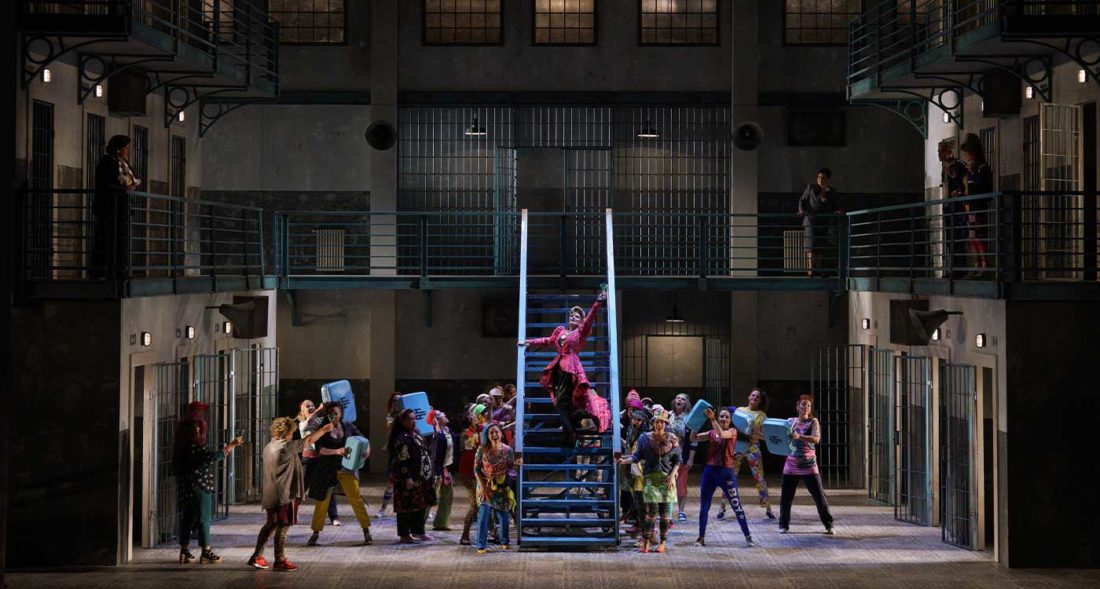
Estrambótica modernidad: Trato de favor en el Teatro de la Zarzuela.


Madrid, 12 de mayo de 2023.

Hace pocos días, Daniel Bianco, director del Teatro de la Zarzuela, presentaba la que sería su última temporada al frente de este teatro. Desde su llegada, Bianco siguió la necesaria política de modernizar el género en lo que le ha sido posible, no solo en la creación de las exitosas temporadas del Proyecto Zarza, sino en el encargo de nuevas obras. Tras la accidentada "Policías y Ladrones", que tuvo que sortear la huelga y la pandemia, como la producción de Mario Gas de la clásica "La Tabernera del Puerto"; ahora llega "Trato de Favor", un encargo hecho a Lucas Vidal, un exitoso compositor de música para cine, y al escritor y presentador de televisión venezolano Boris Izaguirre, todo un icono popular. 

Más de uno podría preguntarse qué podría salir de un encargo así. Y el resultado ha sido una historia estrambótica, con un argumento que al público le puede sonar de un caso real: Ana Mía,una diva de la música en prisión por un fraude a Hacienda. La prisión en escena no es algo que sea ajena al público de la lírica; ya en Leos Janacek compuso en los años 20 su última ópera, "Desde la Casa de los muertos" ambientada en una prisión masculina de la Rusia zarista, ni tampoco será ajena al público más o menos profano que vaya a verla: las series de televisión "Vis a Vis" y "Orange is the new Black" de Netflix, acercan al respetable en épocas recientes a la representación de una prisión femenina.


En "Las Albricias", una lejana prisión de España, la esperan la directora que está enamorada de ella, y con la que mantendrá una relación sentimental en el segundo acto, la supervisora general de prisiones que en principio impedirá que ella tenga privilegios, el hombre que la catapultó al estrellato y que es el único que cumple condena en dicha prisión por fraude, y sus compañeras, todas expectantes ante su llegada. Con este punto de partida, una historia en la que el amor (de Juan Miguel y Mayka hacia Ana Mía, y de la Venenosa a Juan Miguel), los celos, la corrupción solapada bajo una capa de aparente respetabilidad, la presencia de la televisión, resultan en una obra  de humor estrambótico plagado de referencias que el público conoce, lo que aumenta la diversión. La presencia de la diva en la cárcel, y la posibilidad de rentabilizar dicha estancia por parte de la supervisora, hacen que la prisión se convierta en una especie de local de moda, con espectadores asistiendo cada noche al show de Ana Mía, quien pone de moda el estar en prisión, tanto, que no solo es elegida para representar a España en Eurovisión, sino que su actuación se transmite desde allí. Y cómo no, este es el momento en que Boris Izaguirre, aparece para presentar dicha actuación, una canción llamada "Viva la Reina Isabel". Ver esta obra el día antes del verdadera Festival de Eurovisión, en un año en el que la actuación española no despierta demasiado entusiasmo, y que además las alusiones de superar al "tercer puesto" del año pasado, lo hacen todavía más desternillante.


La puesta en escena de Emilio Sagi, con la excelente escenografía de Daniel Bianco, nos pone en situación con el decorado de la prisión que da la sensación no solo de ser más amplia, sino también de hacernos tan prisioneros como las señoras de la historia. Incluso, de hacérnosla olvidar en la reconstrucción del plató de Eurovisión, acompañados de la excelente iluminación de Albert Faura. Si hay algo que no falla es indudablemente la puesta en escena, una de las mejores del año en la temporada lírica de Madrid, y posiblemente la mejor de toda la temporada del Teatro de la Zarzuela.

La música de Vidal es una mezcolanza de estilos, en la que no puede dejar de reconocerse la música para cine, como en el preludio del acto segundo, pero también aludiendo a la música castiza como en la llegada de Ana Mía a la prisión o la romanza de su asistente y rival Chelo. Andrés Salado dirige a la Orquesta del Teatro de la Zarzuela que el martes pasado interpretó tan bien la Cuarta Sinfonía de Bruckner en el Auditorio Nacional, que acometió todo lo bien que pudo hacerse una obra de la que no hay referencias anteriores debido a que se trata de un estreno. No obstante estaba al servicio de la misma, y se veía a la orquesta entregada.


Un rol como Ana Mía, solo podía ser pensado para una gran diva. Y eso en el panorama lírico nacional lo representa Ainhoa Arteta, una artista temperamental y tan ligada a este género y a este teatro, y tan conocida por el público general por su belleza, su presencia glamurosa y sus intervenciones en diversos programas de televisión, además de su emotivo regreso a la lírica, tras una enfermedad cubierta mediáticamente, con dos conciertos en este escenario, prometiendo en el último de ellos que lejos de estar acabada, habría Arteta para rato. Es evidente que la soprano vasca, a sus 58 años, ya está en un bien entrado período de madurez vocal. Si aún mantiene el centro que con la edad ha conseguido dar más dramatismo a sus interpretaciones, el agudo es cada vez más problemático para ella. La escena de la entrada en prisión es un ejemplo claro de esto último. Pero si hay algo que se mantiene todavía firme es su garra escénica, ya que a nivel actoral, en escena es capaz de bordar el rol de diva de Ana Mía, con sus todos sus gestos, sus ademanes, para pasar al enorme drama de la escena final.

Nancy Fabiola Herrera interpreta a Mayka, la directora del centro que ama a Ana Mía. La mezzosoprano canaria dio una interpretación conmovedora de este personaje, con su bella y delicada voz, lo que contribuyó a que esta directora, lejos de dar una imagen dura, fuese la de una mujer frágil y enamorada. Amparo Navarro en el rol de Chelo, la secretaria y rival de Ana Mía dio una de las mejores intervenciones de la velada,  tanto en el primer acto como en la escena final con su romanza "Mi Chanel", en la que dio unos pianissimi que con justicia hicieron que fuese muy ovacionada al final de la pieza. Destacables las intervenciones de Gurutze Beitia como Mercedes, la supervisora y corruptible supervisora de prisiones, así como Amelia Font y María José Suarez como la Colombiana y la Venenosa, dos mujeres tan perversas como divertidas. Enrique Ferrer como Juan Miguel, el descubridor de Ana Mía, y que aún sigue enamorado de ella, destacó a nivel actoral, además de que su tesitura es complicada cuanto menos, aunque su personaje tiene menos presencia en el acto segundo. 


Esta zarzuela no tiene pretensiones, más allá de divertir al público, cosa conseguida por los comentarios y las risas que se oían. Algo que choca con la hostilidad que esta obra ha recibido de varios sectores, incluido algunos autoproclamados como defensores de la zarzuela. Desde su propio anuncio el año pasado como parte de esta temporada, algunos se llevaron las manos a la cabeza con tan solo ver el nombre de Boris Izaguirre en el cartel. Pero incluso después de su estreno hemos tenido críticas profesionales de tan solo dos palabras, o comentarios en redes sociales que hablan de mafia rosa, o de que los grandes autores debían estar llorando. Sobre todo porque en esta obra se glorifica al género: en la cárcel se hace un festival de zarzuela, la protagonista es una célebre intérprete de la misma y en el final se glorifica el género. Al fin y al cabo, un arte sigue vivo cuando se crean nuevas obras, con indiferencia de que la obra en cuestión tenga o no calidad o se olvide. Porque si se quiere disfrutar, no se puede ir pensando en que se va a encontrar a Bretón o a Chapí. 


Las fotografías no son de mi autoría, si alguien se muestra disconforme con la publicación  de cualquiera de ellas en este blog le pido que me lo haga saber inmediatamente. Cualquier reproducción de este texto necesita mi permiso.

viernes, 12 de mayo de 2023

ESP/ENG: Una íntima resurrección. Segunda Sinfonía de Mahler como cierre de la temporada de la ORTVE.


For English, please scroll down.

Madrid, 11 de mayo de 2023.

Con Mahler empieza y con Mahler termina la presente temporada de la Orquesta y Coro de Radiotelevisión Española, en la que será la última de Pablo González como maestro titular de la agrupación. Esta temporada llamada "Raíces", con una importante presencia mahleriana en la programación, se abrió con la Tercera Sinfonía y ahora se cierra con la Segunda, llamada "Resurrección".

Una de las obras más majestuosas y populares del compositor austrohúngaro, la Segunda Sinfonía requiere una gran orquesta, dos solistas, especialmente una contralto de enjundia, y un potente coro. Mahler empezó a trabajar en esta obra poco después de terminar la Primera Sinfonía, pero empezó a trabajar en serio tras la muerte de Hans von Bülow, tras oír en su funeral el coral de Gottlieb Klopstock, Auferstehung, o "resurrección", en español. Gracias a la "revelación" que tuvo tras oírlo, decidió, siguiendo la estela de Beethoven, el utilizar la voz humana en su nueva sinfonía, que si bien tras su estreno no contó con el apoyo masivo del público, sí que contó con el de sus colegas directores de orquesta y compositores. 

Esta sinfonía apoteósica en cinco movimientos supone un viaje, una búsqueda de lo espiritual, algo que a Mahler, judío convertido al catolicismo, le hizo obsesionarse con la búsqueda de Dios y la resurrección en esta obra. Este viaje inicia con un primer movimiento épico, seguido de un segundo movimiento más íntimo, para seguir con un tercero más festivo, folclórico, cuya música es heredera del segundo movimiento de la primera sinfonía, al que recuerda bastante, para luego adquirir tintes más épicos. Pero el inicio del cuarto movimiento, donde entra en juego la voz humana, supone un cambio radical. La voz de contralto es la primera en anunciar la resurrección, una voz angelical de esperanza que alivia el dolor, acompañada de una música celestial. A diferencia del pesimismo a partir de la quinta sinfonía, aquí la esperanza, la llamada a un mundo mejor es una constante. El quinto movimiento, el coral y posiblemente el más importante, se inicia con una larga introducción orquestal, en la que un solo de trompeta fuera de escena nos recuerda a la música que este instrumento tendrá en la Quinta Sinfonía. Entonces llega el coro, con reminiscencias a Bach e incluso  a la música polifónica renacentista, pronunciando levemente la palabra "Auferstehen" (resucitar, en alemán), como un susurro, abriéndose paso en la sala, sumándose luego la soprano y la contralto. Si el coro de la Novena de Beethoven canta a la amistad y la alegría, el de esta Sinfonía lo hace a la esperanza, en un mensaje lleno de optimismo donde el dolor y la muerte son sustituidos por la resurrección de la vida, cerrando la obra con un tutti final con el coro y orquesta en máxima apoteosis.


Pablo González, conocedor de la música mahleriana, ha interpretado esta gran sinfonía en una versión notable, más íntima y humana que majestuosa, pese al desempeño de las cuerdas (impresionantes en el primer movimiento) y la percusión (que tenía a dos coristas tapándose los oídos), además del metal, en transmitir el vigor que requiere. El tercer y el quinto movimiento fueron memorables. El coro estuvo espléndido en su cometido, haciendo que incluso un susurro como el inicio de la obra se oyese por toda la sala y al mismo tiempo se impusiera haciendo que el potente mensaje de la obra llegue a sobrecoger y emocionar como es requerido. 

Gerhild Romberger y Berna Perles fueron las solistas, mezzosoprano y soprano respectivamente. Romberger interpretó el famoso y celestial Urlicht con un timbre inicialmente oscuro pero al mismo tiempo capaz de sonar aterciopelado,  agudo, más seductor que imponente, sonando más a un ángel que susurra que a una voz sobrenatural y autoritaria. En su breve intervención, Perles cumplió sobradamente, incluso haciendo notar sus agudos.

Hoy el Teatro Monumental estaba casi lleno, muestra de la popularidad de Mahler entre el público, quien estalló en una fuerte ovación al terminar la obra.


ENGLISH: An intimate resurrection. Mahler's Second Symphony to close ORTVE's current season.


With a Mahler symphony begins and with Mahler  symphony is going to end the current season of the Orchestra and Choir of Radiotelevisión Española, which will be the last one for Pablo González as its principal conductor. This season called "Raíces" (roots), with an important Mahlerian presence in the programming, opened with the Third Symphony and now closes with the Second one, called "Resurrection". One of the Austro-Hungarian composer's most majestic and popular works, the Second Symphony requires a large orchestra, two soloists, especially a powerful contralto, and a powerful choir. Mahler began to work on this work shortly after the First Symphony was finished, but only after the death of Hans von Bülow, after hearing during his funeral the Gottlieb Klopstock's chorale Auferstehung, or "resurrection," in English. Thanks to the "revelation" he had after hearing it, he decided, following in the footsteps of Beethoven, to use the human voice in his new symphony, which although after its premiere it did not have the massive support of the audiences, it did have that of his fellow conductors and composers.

This tremendous symphony in five movements is a journey, seeking  the spirituality, something that made Mahler, a Jew converted to Catholicism, obsessed with the search for God and the resurrection in this work. This journey begins with an epic first movement, followed by a more intimate second movement, to continue with a more festive, folkloric third one, whose music is heir to the second movement of the first symphony, which it is quite reminiscent of, to later acquire more epic overtones. But the beginning of the fourth movement, where the human voice begins to be heard, marks a radical change. The contralto voice is the first to announce the resurrection, an angelic voice of hope that eases pain, accompanied by heavenly music. Unlike the pessimism from the fifth symphony onwards, here hope, the call for a better world is a constant. The fifth movement, the chorale and possibly the most important, begins with a long orchestral introduction, in which an offstage trumpet solo reminds us of the music this instrument will play in the Fifth Symphony. Then the choir arrives, reminiscent of Bach and even Renaissance polyphonic music, faintly pronouncing the word "Auferstehen" (to be resurrected, in German), like a whisper, making its way into the hall, then joining the soprano and contralto. If the choir of Beethoven's Ninth symphony sings a celebration friendship and joy, Mahler's second one does so of hope, in a message full of optimism where pain and death are replaced by the resurrection of life, closing the work with a final tutti with the choir and orchestra in complete apotheosis.  


Pablo González, connoisseur of Mahler's music, has conducted this great symphony in a remarkable version, more intimate and human than majestic, despite the performance of the strings (impressive in the first movement) and the percussion (which had two choristers behind covering their ears), in addition to metal, in transmitting the vigor it requires. The third and fifth movements were done in a very accomplished way. The choir was splendid in its role, making their entrance to sound like a whisper, but heard throughout the room and at the same time prevailing, making the powerful message of the work to overwhelm and move as required.

Gerhild Romberger and Berna Perles were the soloist singers, mezzo-soprano and soprano respectively. Romberger sang the famous and heavenly Urlicht with a tone beginning dark, but at the same time capable of sounding more seductive than imposing, sounding more like an angel whispering than a supernatural and authoritative voice. In her brief intervention, Perles sang well, even making her high notes stand out.

Last night the Teatro Monumental was almost full, a sign of Mahler's popularity among the public, who gave  a loud ovation to the performers at the end of the concert.

Las fotografías no son de mi autoría, si alguien se muestra disconforme con la publicación  de cualquiera de ellas en este blog le pido que me lo haga saber inmediatamente. Cualquier reproducción de este texto necesita mi permiso.

My reviews are not professional and express only my opinions. As a non English native speaker I apologise for any mistake.
Most of the photographs are from the internet and belong to its authors. My use of them is only cultural. If someone is uncomfortable with their use, just notify it to me.
Any reproduction of my text requires my permission.

miércoles, 10 de mayo de 2023

ESP/ENG Naturaleza, espiritualidad y romanticismo: La Cuarta Sinfonía de Bruckner por la ORCAM


For English, please scroll down.

Madrid, 9 de mayo de 2023.

Todo empezó hace dos años cuando escuché la Cuarta Sinfonía de Anton Bruckner, llamada la Romántica, por primera vez por televisión, con Christian Thielemann dirigiendo la Orquesta Filarmónica de Viena en Barcelona. Como ya dije en mi crítica sobre mi primer Bruckner en vivo, no me conquistó a la primera. Y solo lo hizo tras varias escuchas, pero el reto me gustó. 

Ahora, tengo la oportunidad de escuchar en vivo por primera vez esta obra maestra. La Orquesta de la Comunidad de Madrid, titular del Teatro de la Zarzuela, ha elegido para su ciclo sinfónico de este año, interpretar la Romántica, en un programa que incluye obras de Brahms en su primera parte. 

Bruckner compuso esta obra en 1874, aunque la estrenó pocos años después, siendo este su primer gran éxito como compositor. Inspirado por la música de Wagner, a quien dedicó su Tercera Sinfonía, en su cuarta sinfonía alabó la naturaleza, en el marco de un día en la Edad Media. Se ha llamado "romántica" a esta sinfonía por su inspiración en óperas como Tannhäuser y Lohengrin, grandes hitos del romanticismo alemán. De ellos, aunque alejado de la pasión wagneriana, extrae temas como la caballerosidad y el amor virtuoso. En los cuatro movimientos de esta obra Bruckner retrata el amanecer, la luz del sol asomándose por un castillo medieval, del que a media mañana saldrá una comitiva real, luego el amor, aunque no tan carnal, o  la caza (con los metales que recuerdan a Tannhäuser) 

La maestra polaca Marzena Diakun dirigió una versión que me sorprendió gratamente, por su interpretación enérgica con unos tempos ágiles, nada lentos. En el primer movimiento, es bastante emocionante oír el trémolo de la cuerda del que emerge la trompa, recreando el amanecer, algo que la solista Anaís Romero acometió tan bien que la hizo merecedora de una ovación. En el segundo movimiento las cuerdas brillaron, y el metal, pese a algún que otro desliz, lo hizo en el tercero y el cuarto, con una destacada participación de las trompetas. En general el tercer y cuarto movimientos fueron interpretados con un ímpetu que la señora Diakun supo dejar en la orquesta, en una lectura amena de la obra.
 

No sé si por el precio de las localidades o por la diferencia con otros ciclos más populares ( como los de la OCNE) o incluso la supuesta poca popularidad de Bruckner en España, pero el Auditorio no estaba lleno del todo. Sin embargo, aquello le dio un ambiente íntimo, casi de familia, que resultó en ovaciones generosas para el metal y para la cuerda. Desde luego, la Cuarta sí es popular en nuestro país.


ENGLISH: Nature, spirituality and romanticism: Bruckner's Fourth Symphony by the ORCAM.

Madrid, May 9, 2023.

It started two years ago, when I heard Anton Bruckner's Fourth Symphony, called the Romantic one, with Christian Thielemann conducting the Vienna Philharmonic Orchestra in Barcelona. 

As I already said in my review of my first Bruckner live last Marchhe didn't win me over the first time. But it happened, however after several hearing sessions, but I liked the challenge. Now, I have the opportunity to hear this masterpiece live for the first time. The Orquesta de la Comunidad de Madrid, the orchestra of the Teatro de la Zarzuela, has chosen for tonight's program, to play the Romantic, in a program that also includes works by Brahms in its first part (which I sadly missed).

Bruckner composed this work in 1874, although he premiered it a few years later, this being his first important success as a composer. Inspired by the works Wagner, to whom he dedicated his Third Symphony, in his fourth one he praised nature, in a background of a day in the Middle Ages. This symphony has been called "romantic" because of its inspiration in operas such as Tannhäuser and Lohengrin, great milestones of German Romanticism. From them, although far from Wagnerian passion, he extracts themes such as chivalry and virtuous love. In the four movements of this work, Bruckner portrays the dawn, the sunlight bathing a medieval castle, from which a royal procession will leave at midday; love (more spiritual or nature-praising), or hunting (with metals reminiscent of to Tannhauser).

The Polish female maestro  Marzena Diakun conducted a version that surprised me in a very pleasant way, due to her energetic interpretation with agile tempos, not slow at all. In the first movement, it is quite moving to hear the tremolo of the string from which the horn emerges, recreating the dawn, something in which the soloist Anaís Romero was so accomplished so it earned her an ovation at the end. In the second movement, the strings shone, and the brass, despite some  occasional ups and downs, did so in the third and fourth ones, with an outstanding participation of the trumpets. In general, those movements were played with such a vigour that Mrs. Diakun knew how to leave in the orchestra, in a pleasant reading of the work.


I don't know if it was because of the price of the ticketd or because of the difference with other more popular cycles (such as those of the OCNE) or even the supposed lack of popularity of Bruckner in Spain, but the Auditorium was not completely full. However, that gave it an intimate, almost family atmosphere, which resulted in generous ovations for the brass and the strings. For sure, the Fourth is popular and celebrated by Spanish audiences.

Las fotografías no son de mi autoría, si alguien se muestra disconforme con la publicación  de cualquiera de ellas en este blog le pido que me lo haga saber inmediatamente. Cualquier reproducción de este texto necesita mi permiso.

My reviews are not professional and express only my opinions. As a non English native speaker I apologise for any mistake.
Most of the photographs are from the internet and belong to its authors. My use of them is only cultural. If someone is uncomfortable with their use, just notify it to me.
Any reproduction of my text requires my permission.


lunes, 1 de mayo de 2023

Love beyond life and death: a dazzling Tristan und Isolde, in concert version, in Madrid.

Madrid, April 29, 2023.

When musical works become masterpieces, it is not without a reason, although their constant presence and fandom may seem hackneyed. Richard Wagner's Tristan und Isolde is a capital work in the history of music, and particularly in opera, as its  famous inaugural chord, changed definitely the route that music would follow in the next century. And the admiration for this masterpiece, which depicts a tragic, psychological and metaphysical love story, is shown in Madrid, because of the several productions staged last twenty years, and by the enthusiastic response of the public to them, always with the tickets sold out. 

In the remote past, in the turmoil times the city witnessed between the Teatro Real closing in 1925, and the first regular and A-class operatic seasons hosted by the Teatro de la Zarzuela in late 60s, Tristan was almost the only Wagner opera shown in town, alongside Lohengrin and Walküre.

In 1989, Montserrat Caballé sang the opera at the Teatro de la Zarzuela. After the Teatro Real re-opening in 1997, in 2000, it hosted perfrormances conducted by Daniel Barenboim on tour with the Berlin Staatsoper, with Siegfried Jerusalem as Tristan. In 2008, the madrileño operagoers had the privilege of seeing the legendary Waltraud Meier as Isolde, and in 2014, the famous video-staging by Peter Sellars and Bill Viola delighted the audience. In addition, in 2019 the National Orchestra of Spain gave two performances of this opera in a concert version, brilliantly directed by David Afkham, at the Auditorio Nacional.. Now it  returns after four years since his last performance in Madrid and nine years since his last performance at the Teatro Real, again in a concert version, although with some stage indications by Justin Way, who places the orchestra on stage and the singers on the edge, moving along it. Lighting also plays an important role, which illuminates the entire hall at the end of the first and third acts, and in the love duet with a blue light that recreates the night. In addition, the young sailor and Brangäne are placed in the boxes in their off-stage interventions.

Semyon Bychkov returns to the Teatro Real after his unforgettable Parsifal 7 years ago. The Russian maestro is capable of making the Teatro Real Orchestra sound like a German one. This time, the orchestra was on stage, which made the sound lose a bit of the impact which usually emanates from the orchestra pit, now covered. Even so, Bychkov, one of the greatest Wagnerian conductors of today, achieved a majestic orchestral rendition, with  slower tempi, despite some initial sound difficulties in the Prelude. But by the end of the first act it sounded rather tragic, elegy-like (especially the metal when the arrival of Tristan is announced), to conclude it spectacularly. In the second act, the love duet was quite an experience, since the orchestra's rendition became more intimate. The third act began with an interpretation of its prelude in which pathos was breathed, to then continue advancing with the same orchestral force of the preceding acts. Once again, Álvaro Vega, as he did in 2008 and in 2014, gave a beautiful and magical interpretation of the cor anglais solo in the third act, creating a special atmosphere. In fact, he was ovationed at the end. The Teatro Real Choir in its male section, shone in its brief intervention in the first act, exhibiting its outstanding tenor section.

In 2014, during the previous production of this work in this opera house, several tenors took replaced the scheduled Robert Dean Smith as Tristan, who due to illness had to cancel some performances. One of those replacements was the Austrian tenor Andreas Schager, who since his Madrid debut in 2012 with Rienzi, has become a sort of heldentenor of the house, having sung here Rienzi, Siegfried and again Tristan. Nowadays, being one of the most demanded Wagnerian tenors worldwide, he returns to this opera house, that has always applauded him enthusiastically, and this time as the leading Tristan. Schager was radiant in the first two acts, singing at the top of his voice with his heroic tone and vocal stamina. That could have rised some worry for the third act, but the tenor rose to the challenge: sometimes he was reserved, and in other moments he sang at the top of his voice as always, without sounding bad, which is an achievement in this score.

If Tristan was indisposed in 2014, it seemed this time it's Isolde's turn. The scheduled Ingela Brimberg has been replaced by Catherine Foster for the complete run of performances. Foster is one of the most sought-after Wagnerian sopranos today, having succeeded in Bayreuth as Brünnhilde, and last year as Isolde. The British soprano has surprised the audience with her performance, which has exceeded expectations. Foster has a youthful tone, more lyrical than dramatic, which makes her Isolde to sound as a very young woman. Her voice has enough volume to be heard all over the hall, and her intonation reveals her command of the character, which she handles with a certain sense of drama. The treble is firm and doesn't sound bad, without being too dazzling on the other hand. This lyrical approach to the role made her rendition sensitive and tender in the second and third acts, leaving a beautiful version of Liebestod. As a curiosity, Schager and Foster made history when they starred in the first performance of "Tristan und Isolde" after the pandemic global lockdown, in a reduced version for voice, violin and piano, performed at the Wiesbaden Opera in late May 2020, in a time when going to the opera was still a distant hope, just a longing for most operagoers worldwide.

However, it was Ekaterina Gubanova,  with her outstanding Brangäne, who stole the scene every time she appeared on stage. The Russian mezzo-soprano had already sung the role in 2014 in this theater, but now with her beautiful and powerful voice, her imposing, authoritative tone and her stage presence, demonstrating her acting skills, she was able to overcome Foster as Isolde throughout the first act. In the second act, her vigil singing in the middle of the love duet, Einsam Wachend in der Nacht, was one of the highlights of the evening.

Thomas Johannes Mayer sang a good Kurwenal, with an already mature voice, but still terrific and above all a convincing acting, as Tristan's faithful vassal, especially in the third act.

Franz Josef-Selig sang the King Marke. He had already sung it in 2014 here, and as then, his performance was dazzling, among the best of the night. He sang his great monologue in the second act with a powerful voice, with  beautiful and firm low voice, as if time didn't dent too much his singing in nine years.

The rest of the cast was at the same excellent level, although Neal Cooper's Melot sounded too "Mime-like", closer to the nibelung than to a medieval knight, but without detracting to the remaining cast. Jorge Rodríguez-Norton was an excellent Shepherd in the second act, in the same way that David Lagares sang the Steersman with a beautiful tonee in his very brief role. Alejandro del Cerro sang  the Voice of the young sailor, a beautiful but not so easy intervention despite its brevity, but he approached it with his lyrical and youthful voice.

The passion of the  Madrid audience for this opera is noticed, as I already pointed out at the beginning, with a full seat occupation, and above all with strong ovations at the end, for what could be the most complete cast of the current operatic season. We suppose, and we hope, that it won't take so many years to see this work again in the Spanish capital, which curiously alternates with some performances, this time staged, in Valencia, of the same title. Something that accounts for the popularity of this opera in Spain.

My reviews are not professional and express only my opinions. As a non English native speaker I apologise for any mistake.
Most of the photographs are from the internet and belong to its authors. My use of them is only cultural. If someone is uncomfortable with their use, just notify it to me.
Any reproduction of my text requires my permission.