
Madrid, September 3, 2026.
Each year, at the end of the Bayreuth Festival season, its chorus and orchestra disband, so their members can return to their original ensembles (comprising the best orchestras in Germany and the rest of the world). Its productions are also rarely seen in other opera houses. Part of the magic of the Green Hill is that its artistic excellence is confined within the four walls of the theater designed by Richard Wagner, so people from all over the world come year after year to experience it there. Given these circumstances, a tour by the festival's temporary company might seem almost impossible. However, it happened in some occasions. And of those, two have taken place in Spain.
In April 1955, the Bayreuth Festival productions of Parsifal, Tristan und Isolde, and Die Walküre, directed by Wagner's grandson, Wieland Wagner, visited the Gran Teatre del Liceu in Barcelona, the Wagnerian capital of Spain. They featured the legendary conductor Joseph Keilberth (who led the Bamberg Symphony Orchestra, as the festival orchestra was not yet formed), the Festival Chorus directed by Wilhelm Pitz, and the cast was formed by legend singers such as Hans Hotter, Ramón Vinay, Martha Mödl, Ludwig Weber, Wolfgang Windgassen, Gustav Neidlinger, Gerhard Stolze, Hermann Uhde, Georgine von Milinkovic, and Gré Brouwenstijn, in addition to the excellent supporting cast. Fifty-seven years later, in September 2012, the orchestra, choir and the full casts of that year's festival returned to the same Barcelona coliseum to perform Der Fliegende Holländer, Tristan und Isolde and Lohengrin in concert version.
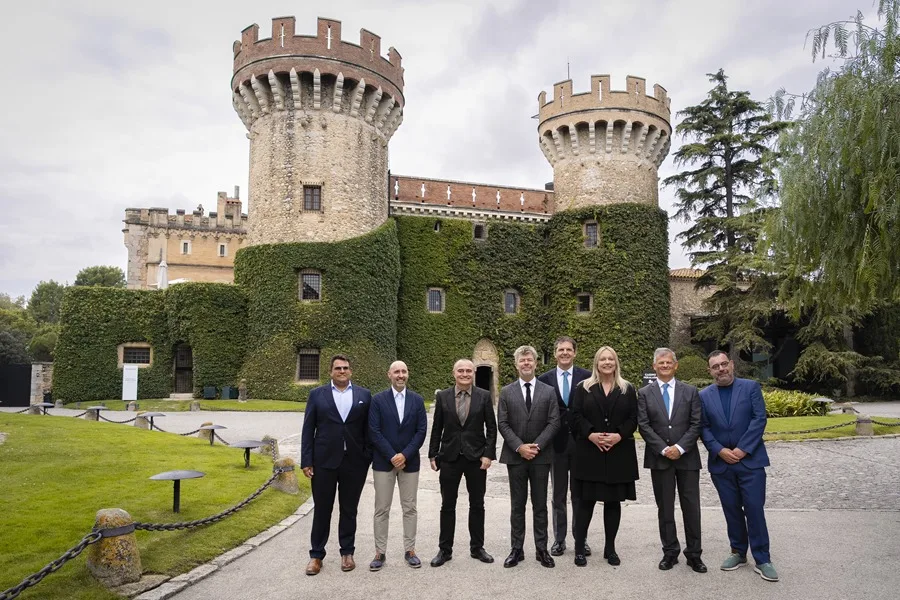
If there is one thing to be acknowledged about the festival's artistic director and the composer's great-granddaughter, Katharina Wagner, it's her efforts to bring the institution into the 21st century. Among these reforms is taking the orchestra on tour to other cities more frequently than before. In 2021, the orchestra toured Paris, Cologne, and Riga; and in recent years, in Grafenegg, Austria. Frau Wagner has expressed her admiration for Spain on several occasions: she staged Tannhäuser and Lohengrin here. At the end of 2025, Spanish Wagnerians received suprising news: to mark its 150th anniversary, the Bayreuth Festival Orchestra would tour five Spanish cities—Barcelona, Santander, Seville, Madrid, and Valencia—to perform a selection from The Ring of the Nibelung after the festival's conclusion. A photograph of Ms. Wagner and the artistic directors of those five theaters at Peralada Castle serves as a memento.
As expected, the Teatro Real hosted the Madrid concert, scheduled for September 3rd. For the first, and hopefully not the only, time, the festival orchestra visited the capital. However, it wasn't the first attempt: in 1899, the theater's then-manager, the legendary Luis París, tried to bring the Festival to the Teatro Real to perform six cycles of the Ring. This would have made Madrid the first city outside of Bayreuth to stage the complete cycle, and moreover, in German—a rarity at a time when all operas in Spain were sung in Italian. Despite the uncertain feasibility of this enterprise, the press reported on the undertaking, and even non-seated suscriptions were sold. Wagner was all the rage in the city's highest intellectual circles, and it was thought that it might be possible. But the Teatro Real's lack of funds and a lack of agreement with German artistic agents ultimately doomed the attempt.
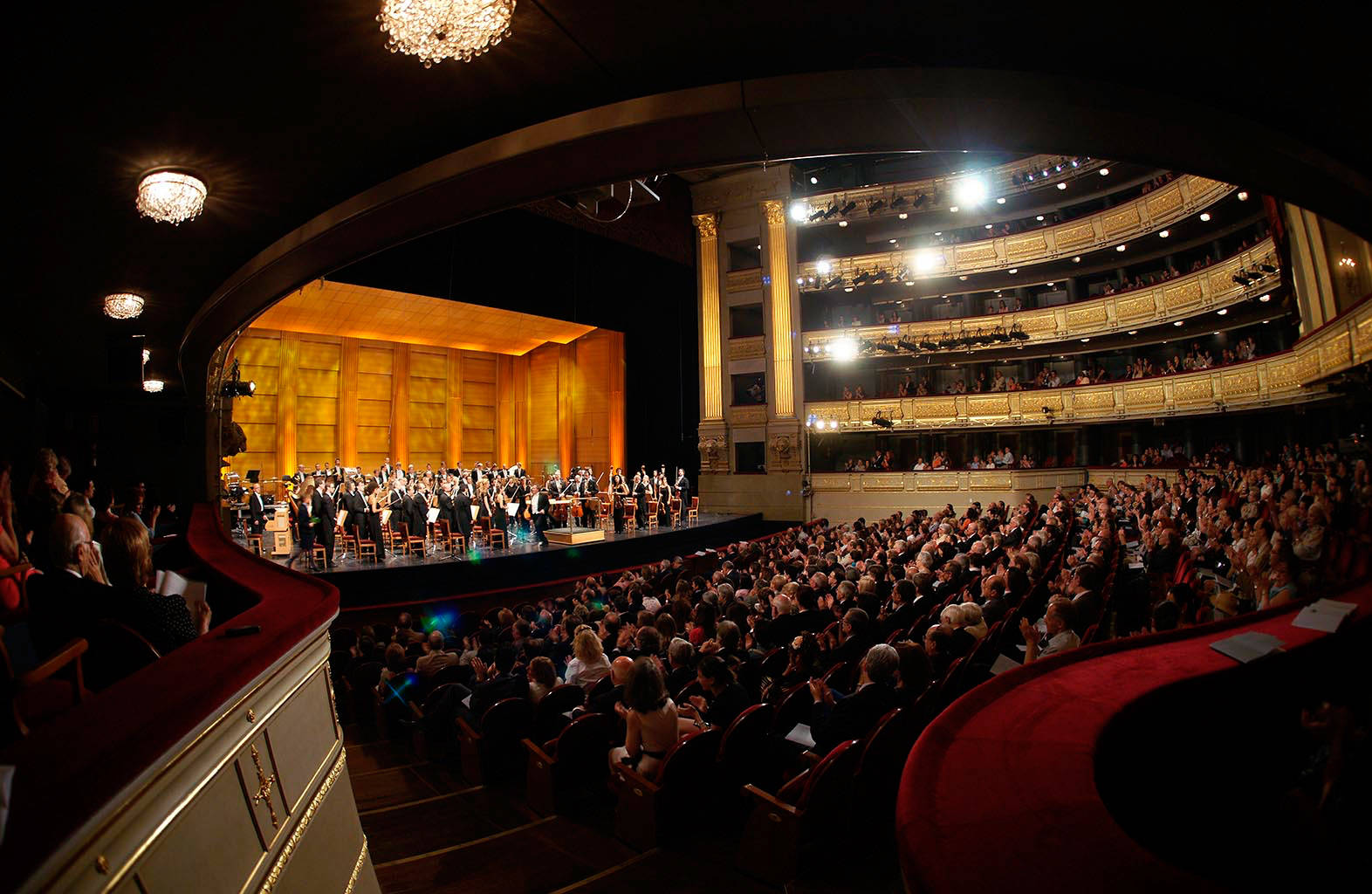
With tickets sold out months ago (they went on sale last November), the event was a must-see for Wagnerians and opera lovers in the city. As previously mentioned, the program consisted of the most celebrated excerpts from the tetralogy. Throughout the tour, the orchestra is under the baton of Pablo Heras-Casado, a regular conductor of the Wagnerian repertoire at the Teatro Real (having conducted the Ring, Der Fliegende Holländer, and Die Meistersinger von Nürnberg), and highly regarded in Bayreuth after his successful debut conducting Parsifal there in 2023, leading it until 2026. In 2028, Heras-Casado will conduct the new Ring production at the festival. Three singers, well-known and highly acclaimed at the Green Hill, performed some of the excerpts: tenor Klaus Florian Vogt, soprano Catherine Foster, and bass-baritone Nicholas Brownlee. The program was as follows:
Das Rheingold:
Etnrance of the gods to Valhalla, with the aria "Abendlich strahlt der Sonne Auge", sung by Nicholas Brownlee.
Die Walküre:
"Ein Schwert verhieß mir der Vater", sung by Klaus Florian Vogt.
"Leb' wohl du kühnes herrliches Kind!", sung by Nicholas Brownlee.
Siegfried:
The Murmurs of the Forest, orchestral.
«Ewig war ich…» and the rest of the final duet, sung by Catherine Foster and Klaus Florian Vogt.
Götterdämmerung:
Dawn and Siegfried's Journey on the Rhine, orchestral
"Brünnhilde, heilige Braut!", sung by Klaus Florian Vogt, and Funeral March
"Starke Scheite schichtet mir dort...", sung by Catherine Foster.
Encore: The Ride of the Valkyries, orchestral, from Die Walküre.
After leaving the scorching sun outside, the Teatro Real main hall welcomed the audience with empty music stands and a concert version set illuminated in warm, golden light. As the lights dimmed, an increasingly common practice in concert performances, the orchestra members entered as the audience applauded enthusiastically, and then Heras-Casado began the concert.
Expectations for the concert were high, not only because of the unique nature of the event, but also because this is the best available orchestra for Wagner. Those of us who don't usually travel for opera are accustomed to seeing this composer's operas performed by competent national orchestras, so thanks to this concert, we could finally witness this excellence live without having to travel to Bayreuth. If we only had to judge the quality of the instruments and the musicians' performance alone, then expectations are more than fulfilled. However, in my seat on the seventh floor in the highest zones, the sound didn't reach as far as in the lower sections. In fact, when I had the opportunity to move to the gallery on the fourth floor, the difference was striking.
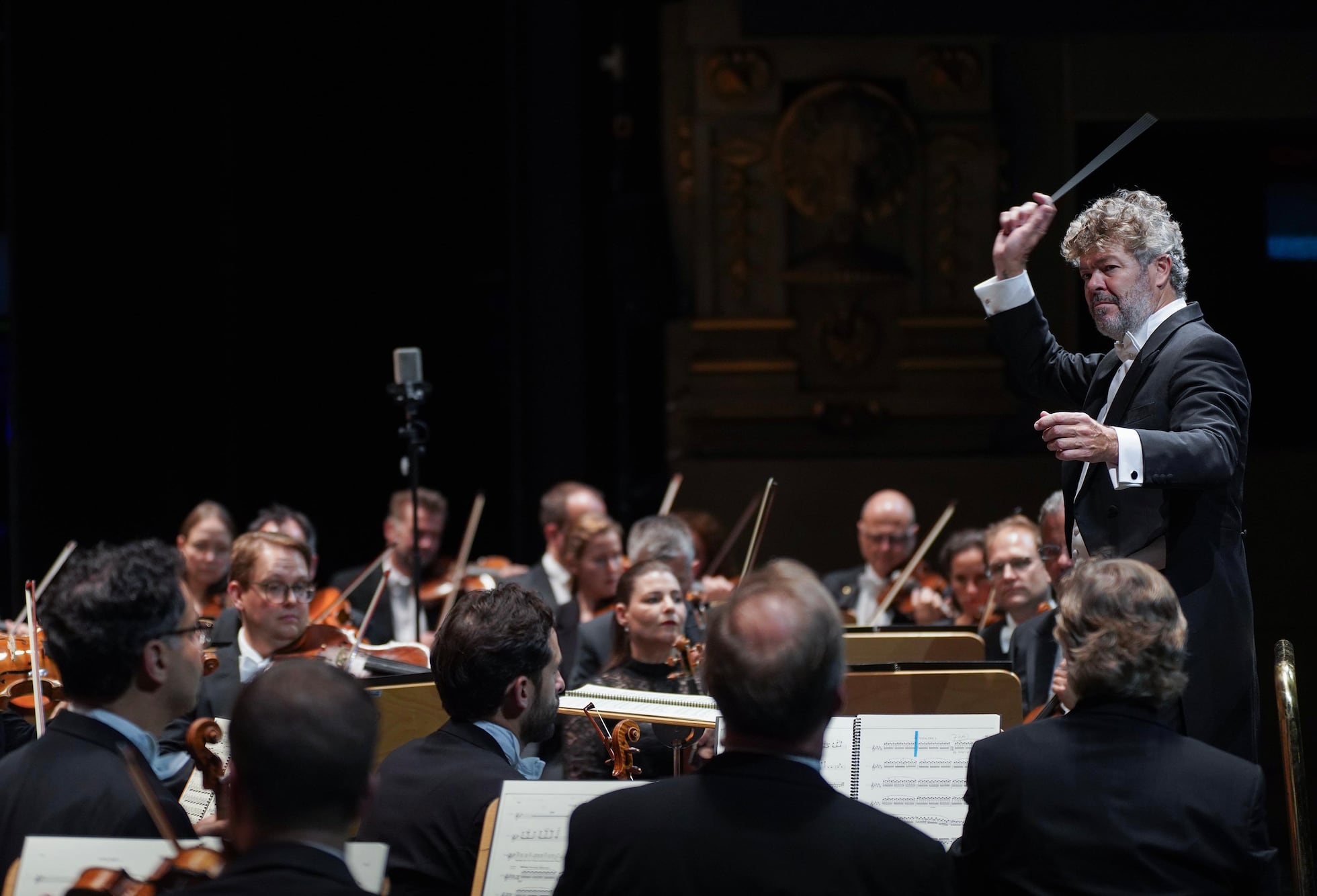
The orchestra began with the finale of Das Rheingold, the strings opening the piece with a soft piano sound, answered by the powerful brass, which played Donner's invocation. The wind instruments, in general, were spectacular, and so was the percussion. The strings showcased their powerful tremolo in the tenor's first aria. During Wotan's long Farewell scene, the strings sounded melancholic and intimate, while the brass was as spectacular as usual. In addition, in the Magic Fire music that closes the piece, the excellent glockenspiel deserves special mention. I venture to say that the best orchestral moment of the first part was Siegfried's Forest Murmurs. The strings began as a whisper, ideal for such descriptive music. Here, the woodwinds shone; both clarinets and flutes were excellent, and once again the glockenspiel sounded wonderful, as did the French horns.
The second half was the one I enjoyed the most, as the sound reached the area where I had moved much better. And it was then when I could finally appreciate, savor that spectacular sound, so far superior to what we usually hear in Madrid, and exactly as I remembered it from my 2024 Tannhäuser performance at the Festspielhaus. This part was dedicated to Götterdämmerung. The cellos at the beginning of the first piece sounded velvety, and the orchestra gradually swelled, offering a playful interpretation of Siegfried's journey up the Rhine. Orchestrally, the best was yet to come. Because the performance of the Funeral March was perhaps the best moment of the concert, as the orchestra attacked with powerful tutti that resonated deep within the listener. It was a memorable performance due to its impactful percussion, and the powerful brass, preceded by intense strings, which shone during Siegfried's death, the preceding number. Brunhilde's Immolation was also powerful. Even so, the second best moment of the night came with the only encore: the Ride of the Valkyries, with an electrifying performance by each and every one of its members, who received an outstanding ovation at the end of the piece.
As for the three soloists, there was a clear winner: the American bass-baritone Brownlee, for whom this tour is proving to be a personal triumph. His powerful voice, which can be heard throughout the hall due to its generous volume, even overpowered the powerful orchestra. It is a voice at its prime, with a superb lower register, powerful high notes as in "so grüss ich die burg" at the end of Das Rheingold, or in the famous final words of the farewell in Die Walküre, and a dramatic intonation at times, as in "der freier als ich der gott" shortly before in the same piece. Brownlee debuted the role a few years ago, and there is no doubt, he is the Wotan of our time.
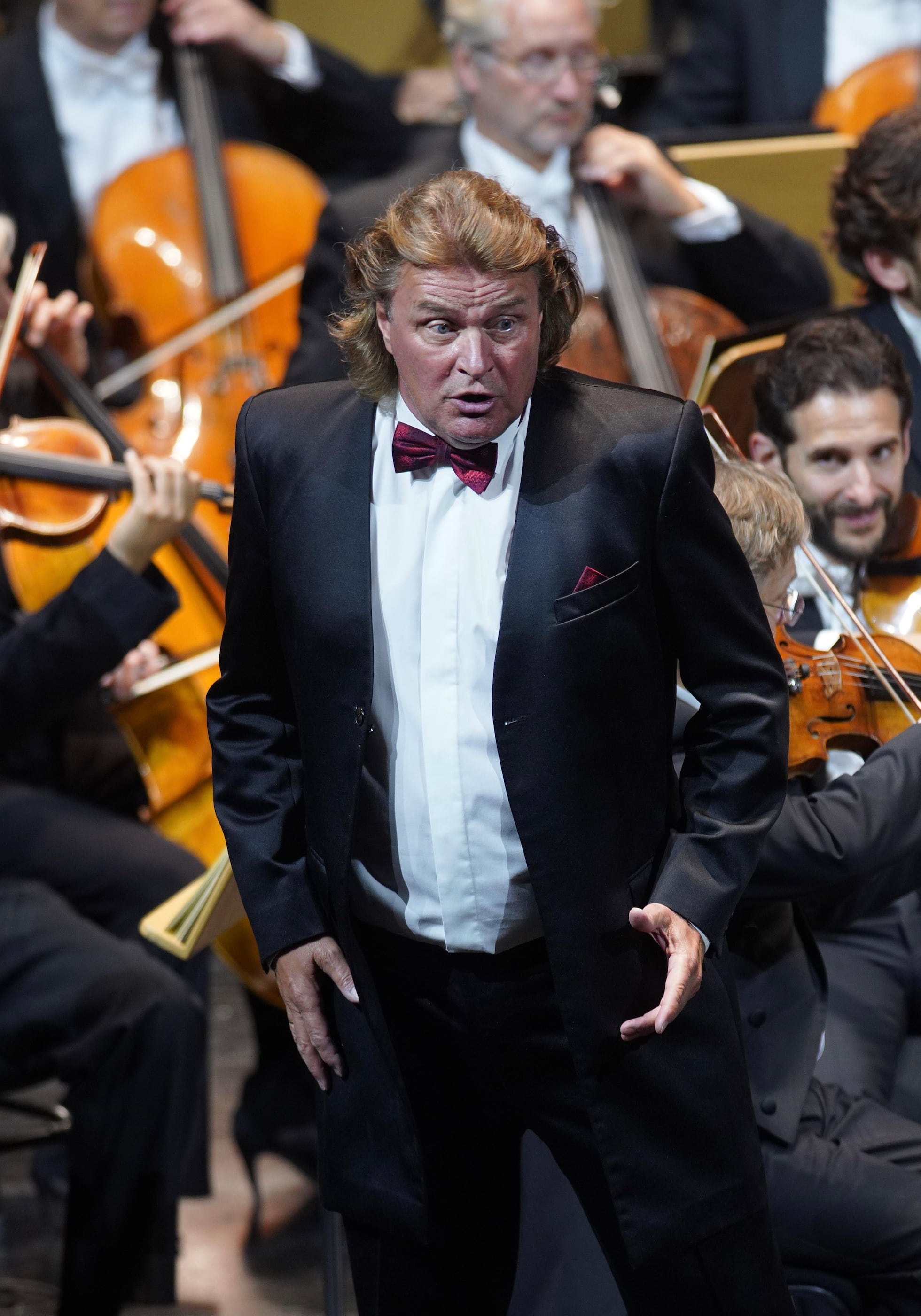
Vogt, the indispensable lyric tenor of the Bayreuth Festival, had three pieces. The first one was the powerful aria "Ein schwert verhiess mir der Vater" from Die Walküre, in which he discovers the sword Nothung. This tenor has a somewhat lyric timbre, although quite light for the heldentenor roles he usually sings, as he lacks the necessary vocal range. Live, his voice has a generous volume, and he tries to convey all the nuances he can, within the limitations of his instrument. Even so, in roles like Siegmund or Siegfried, Mr. Vogt's performance is inconsistent, as remarkable moments alternate with others where his voice sounds too weak for the required characterization. This happened in his first appearance, because after the somewhat strenuous "Wälse, Wälse," he delivered a weak "Wo ist dein schwert?", clearly highlighting this contrast. His duet with Brunhilde sounded more youthful and lyrical, especially with some remarkable (though I still find it lacking in intensity) "Sei mein, sei mein." However, his performance of Siegfried's death in the second part was an improvement, with a more dramatic and committed interpretation, a more lyrical approach to this number.
As an aside, the concert versions increasingly feature theatrical gestures from the soloists. For example, in Siegfried and Brünnhilde's love duet, the singers moved around, looked at each other, and embraced as if they were on stage. The same happened in Siegfried's death scene, but it began in a way I found amusing: when the orchestra starts attacking, and since it represents Hagen's attack on Siegfried from behind with his spear, Mr. Vogt performed it as well. But viewed from above, it looked as if the poor guy had suffered a sudden low back pain attack before collapsing to the ground and performing his number.
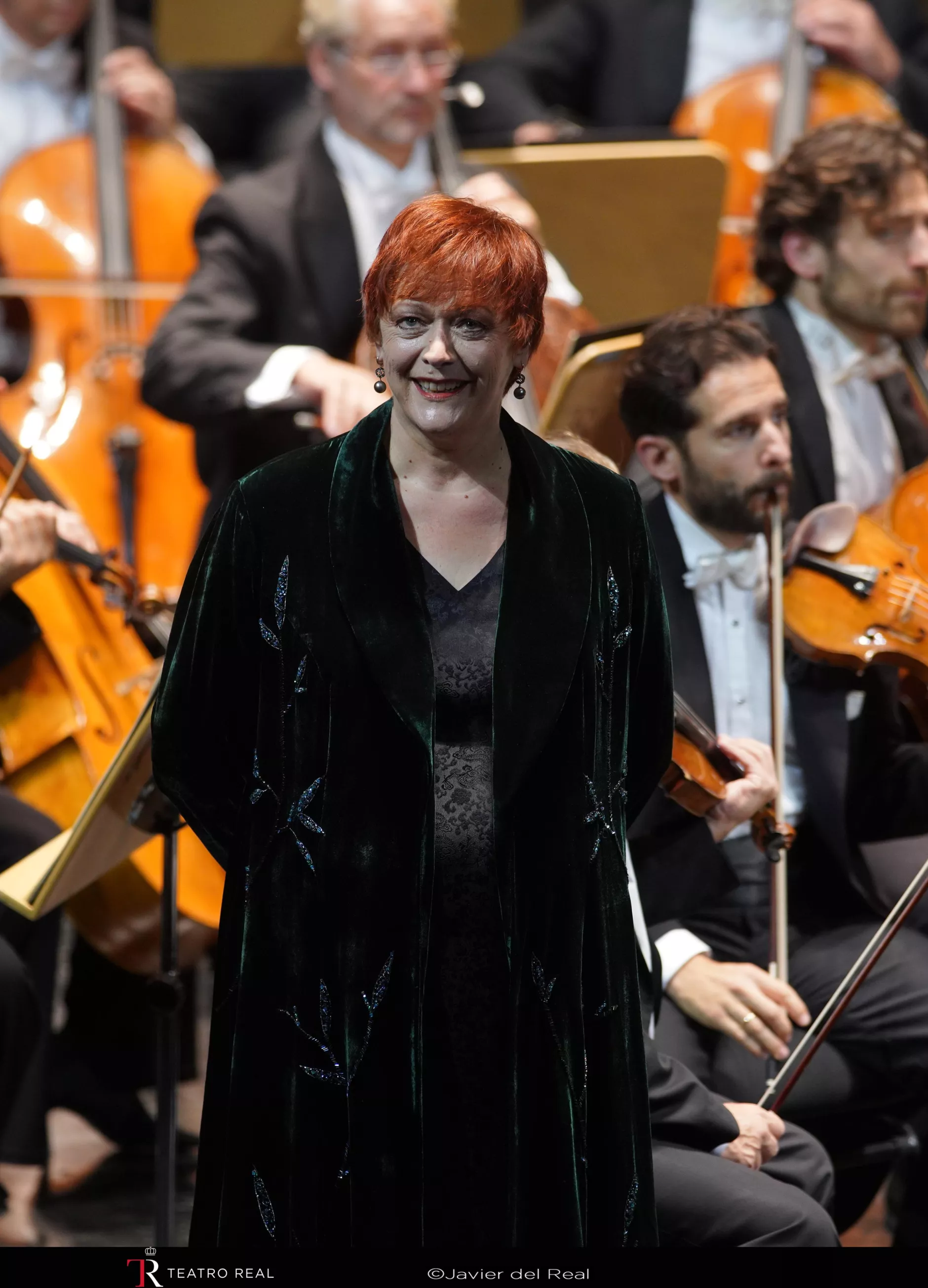
Between 2013 and 2025, Foster was the principal Brünnhilde at the Bayreuth Festival, with her rather lyrical voice (like her predecessor at Bayreuth, the British soprano Anne Evans, more than thirty years earlier), a deep understanding of the character, and great commitment. However, although she still possesses these qualities, her voice is already showing signs of fatigue. In her famous aria "Ewig war ich" her voice seemed to wobble a bit, and her high notes now sound a bit more shouted. However, in her great moment, Brünnhilde's Immolation, she was much better. Her lyrical timbre and middle register sounded excellent, and she also managed to convey both the solemn and introspective aspects of her character's long monologue. Even the high notes in the final part of it were improved.
The tour is proving to be a resounding success at every stop: the audience's enthusiasm is visible, especially for the orchestra and for Brownlee. This was certainly the case in Barcelona and Santander. The same would have happened in Seville, had it not been for a power outage in the theater area that forced the concert to be suspended halfway through. And in the capital, it was no different from the first two cities for the audience: after each number, and especially after Wotan's farewells, the duet between Brunhilde and Siegfried, and the final encore, the ovations were thunderous. The reviews, however, were mixed: they praised the opportunity to see this glorious orchestra, but found ups and downs in the singing and conducting.
I am still surprised by the fact that, despite the sold-out sign having been up for some time, in the second part of the show, there were numerous empty seats in the stalls and on the first floor, quite a contrast to the stands and the upper balcony, which were packed to capacity. Many local wagnerians and operagoers attended the concert, so just entering the Teatro Real, I met several acquaintances, specially in the intermission wasn't really a pause: I walked all over the theatre meeting people who wanted to comment the show. I am mostly shy, but in that moment I felt like a celebrity.
Only the Valencia concert remains, but all of us who attended these concerts will remember them forever. Even with their ups and downs—because in the first half, at times, I felt like I was witnessing a luxury gig, but the second half was pure ecstasy. I hope they will delight us again, although it won't be anytime soon. Hearing that orchestral level, the best for Wagner, is a true gift; it also confirms Spain's important place on the world Wagnerian map.

Regarding the attempt to bring the Bayreuth Festival to Madrid in 1899, Enrique Mejías' article has been a reference:
“«Bayreuth en Madrid» (1899): un capítulo del wagnerismo madrileño”, en Javier Marín López, Germán Gan Quesada, Elena Torres Clemente y Pilar Ramos López (eds.): Musicología global, musicología local, España, Sociedad Española de Musicología (SEdeM), 2013, pp. 1421-1442.

Thanks. Intersting. I have heard Vogt in Bayreuth 2011 as Lohengrin. Excellent performance. Miss Fpster I saw in Budapest as Brunhilde (2022) and was impressed. Ah, lucky you. Amatzia Wolloch
ResponderEliminarתודה רבה!
Eliminar